Space heaters can make a cold room comfortable fast—but they also come with one of the biggest household risks: fire. That’s why this question is so common: is it safe to keep a space heater on all night?
For most U.S. households, the safest practical advice is avoid running a portable space heater while you sleep. If you absolutely must use one overnight, you should use a modern heater with key safety features (tip-over shutoff, overheat protection, thermostat, and ideally a timer), plug it directly into a wall outlet (no extension cords), keep it far from bedding/curtains, and keep clear space around it.
Quick Answer
It’s not recommended to keep a portable space heater on all night while you sleep. The risk comes from overheating, tip-overs, and heaters being too close to bedding, curtains, clothing, or furniture. If you need overnight warmth, the safer approach is to heat the room earlier, use central heat or a fixed heating system, improve insulation, and use warm bedding. If overnight heater use is unavoidable, use a modern heater with safety shutoffs + thermostat + timer, plug it directly into a wall outlet, and keep it at least 3 feet from anything that can burn.
Why Space Heaters Are Risky Overnight
Most heater incidents come from predictable problems that are more dangerous when you’re asleep:
- A heater gets too close to bedding, curtains, clothing, or paper.
- A heater tips over (pets, kids, cords, or unstable placement).
- Overloaded outlets or damaged cords overheat.
- Extension cords or power strips heat up and fail.
- Dust buildup or blocked airflow causes overheating.
- People leave heaters running unattended for long hours.
The overnight part matters because a small problem can grow for minutes before anyone notices.
Which Space Heater Types Are Safer for Overnight Use?
No portable heater is ‘zero-risk,’ but some designs reduce the chance of open ignition or extreme surface temperatures.
Oil-filled radiator style heaters (often safer-feeling)
- Generally provide steady heat and don’t glow red.
- Often run quieter and with less exposed hot elements.
- Still must be kept away from bedding and plugged directly into the wall.
Ceramic heaters with a thermostat
- Heat with a ceramic element and fan; many have overheat protection.
- Thermostat prevents continuous full-power operation.
- Fan noise and dust can be factors; keep intake/exhaust clear.
Heaters to avoid for sleep (higher risk behavior)
- Very old heaters without modern safety shutoffs.
- Heaters with visibly glowing elements near fabric.
- Anything with a damaged cord, loose plug, or overheating smell.
The Safety Features You Want (Non-Negotiables)
If you’re considering overnight use, the heater should have these features:
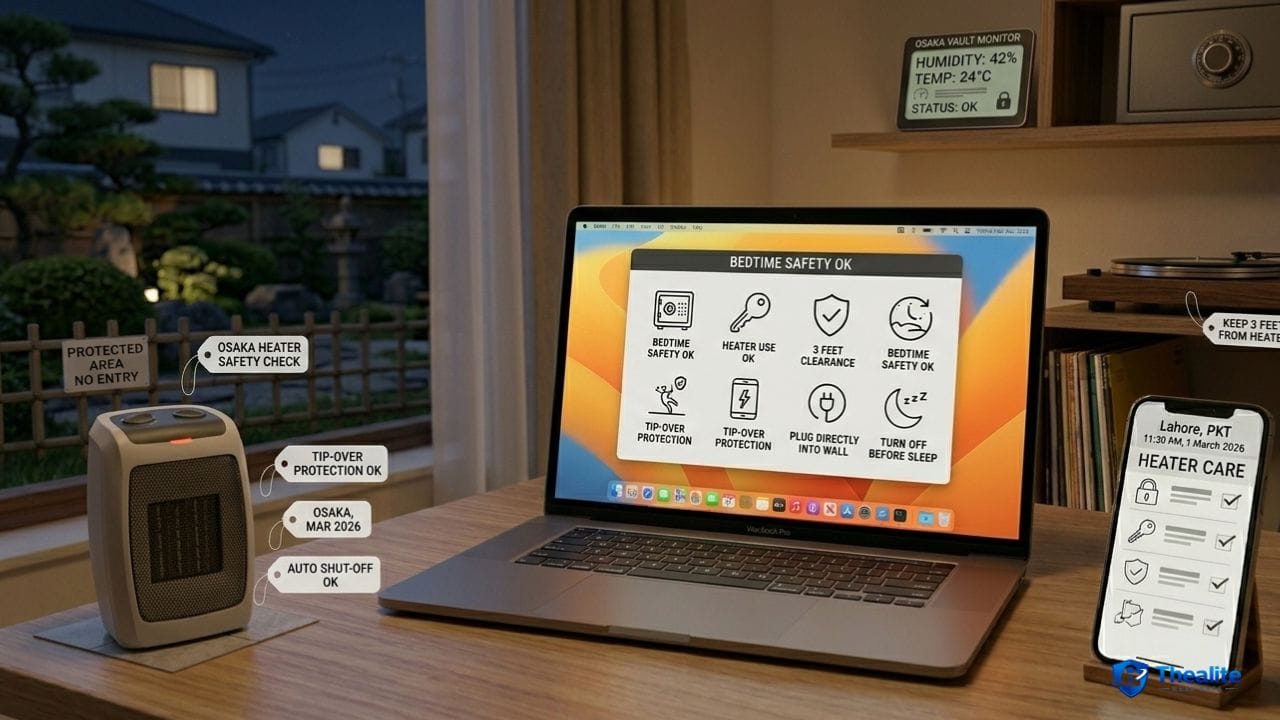
- Tip-over shutoff (turns off if knocked over).
- Overheat protection (shuts off if internal temperature rises too high).
- Thermostat (prevents continuous max heat).
- Timer or sleep mode (limits runtime).
- A stable base and a sturdy power cord.
Night-Time Setup Rules (If You Must Run It While Sleeping)
If you must use a space heater overnight, treat it like a safety system—not a casual appliance.
Placement rules
- Keep at least 3 feet (about 1 meter) of clearance from anything that can burn: bedding, curtains, clothes, paper, furniture.
- Place the heater on a flat, hard, stable surface (not on beds, couches, rugs with deep pile, or blankets).
- Keep the heater out of walkways so it won’t be kicked or tripped over.
- Do not aim heat directly at bedding (blankets can shift toward it overnight).
Electrical rules
- Plug directly into a wall outlet (no extension cords, no power strips).
- Use a dedicated outlet when possible—don’t share with high-wattage devices.
- Stop using the heater if the plug or outlet feels hot or smells like burning.
- Keep cords visible and uncoiled (coiled cords can heat up).
Room rules
- Keep the heater intake/exhaust clear (don’t block airflow).
- Keep pets away (use a barrier or choose a location pets can’t reach).
- Don’t run the heater in a cluttered room with piles of laundry or paper.
Safer Alternatives to Running a Space Heater All Night
If you need warmth overnight, consider solutions that reduce risk and don’t rely on an unattended high-wattage appliance.
Better options
- Use central heating or a fixed wall/baseboard heater if available.
- Warm the room for 30–60 minutes before bed, then turn the heater off.
- Use a programmable thermostat (whole-home system) to keep a safe baseline temperature.
- Add insulation: weather stripping, door draft stopper, thick curtains (kept away from heaters).
- Use warm bedding: layered blankets, flannel sheets, or a safe-rated electric blanket (follow its instructions).
What About Using a Space Heater in a Baby’s Room?
Be extra cautious. Babies can’t regulate temperature the same way adults do, and safe sleep guidelines prioritize avoiding overheating. If you need to heat a nursery, it’s usually safer to heat the room indirectly (whole-home heat) and monitor temperature, rather than relying on a portable heater overnight.
Signs Your Heater Setup Is Unsafe
- You smell burning plastic, dust-burning smells that don’t fade, or see smoke.
- The plug/outlet feels hot to the touch.
- The heater shuts off unexpectedly or makes unusual noises.
- The cord is frayed, cracked, or has loose connections.
- You need an extension cord to make it reach (don’t do it).
What to Do if You’re Worried About Fire Risk
- Turn the heater off and unplug it.
- Inspect the outlet, cord, and heater for damage.
- Reduce clutter and improve clearance around the heater zone.
- Consider switching to a safer heating plan (pre-heat + timer + bedding).
- Make sure smoke alarms are working (test monthly; replace batteries as needed).
Copy/Paste Checklist: Space Heater Overnight Safety
- Best practice: turn space heaters off before sleeping
- If used overnight: modern heater with tip-over + overheat protection + thermostat + timer
- Placed on a flat, hard, stable surface (no bed, couch, or thick rug)
- At least 3 feet clearance from bedding, curtains, clothes, paper, furniture
- Plugged directly into a wall outlet (no extension cords, no power strips)
- Cord uncoiled and visible; not under rugs or furniture
- Room uncluttered; pets/kids can’t knock it over
- Smoke alarms tested and working
FAQs
Is it safe to leave a space heater on overnight in a bedroom?
It’s not recommended. Bedrooms have bedding and fabrics that can shift toward the heater, and overnight use increases the chance a problem goes unnoticed. If unavoidable, use a modern heater with safety shutoffs, thermostat, and timer, and follow strict placement and outlet rules.
Is an oil-filled radiator heater safe to leave on all night?
Oil-filled heaters can feel safer because they don’t glow red and provide steady heat, but they still can cause fires if too close to bedding or if electrical rules are ignored. Use a thermostat/timer and safe clearance.
Can I use an extension cord with a space heater?
It’s strongly discouraged. Space heaters draw high power, and extension cords/power strips can overheat. Plug directly into a wall outlet.
Why does my outlet get warm when I use a space heater?
Warmth can indicate high load or a poor connection. If the outlet or plug gets hot, stop using the heater and consider having the outlet inspected.
What’s the safest way to stay warm at night without a space heater?
Warm the room before bed, improve insulation/drafts, use whole-home heat if available, and use warm bedding. A timer that turns the heater off before you fall asleep is a safer compromise than running it all night.
Conclusion
So, is it safe to keep a space heater on all night? The safest answer for most homes is no—turn it off before you sleep. If you must use one overnight, choose a modern heater with safety shutoffs, thermostat, and timer, plug it directly into a wall outlet, keep at least 3 feet of clearance from anything that can burn, and remove clutter. A simple routine reduces most heater risks.

As a digital marketer, she has received multiple international awards, including Campaign of the Year at the 2023 European Content Awards and Best Use of Content Marketing at the 2022 Global Search Awards. Nicai holds an MSc in Marketing (First Class Honours) from the UCD Smurfit Graduate Business School and she has also completed the Artificial Intelligence Programme at Oxford University’s Saïd Business School. She is also a contributing writer for publications such as Entrepreneur and Esquire.