Your home should be your ultimate sanctuary, a place where you can relax without worrying about outside threats. Unfortunately, property crime is a reality, and leaving your security to chance can turn a peaceful haven into an easy target. Figuring out exactly how to keep your house safe doesn’t require a Hollywood-style laser grid. Instead, it comes down to understanding the burglar mindset, applying practical deterrence strategies, and building daily habits to lock down your property and protect your family.
Why Home Security Matters
The impact of a break-in goes far beyond the financial loss of a stolen television or laptop. Burglary is a deeply invasive crime that can rob a family of their peace of mind for years. Investing time in home security measures acts as a physical barrier against criminals, but it also provides an invaluable psychological benefit. Knowing your home is secure allows you to sleep better at night and travel with confidence.
The Most Common Ways Intruders Target Homes
Most burglars are not criminal masterminds; they are opportunists looking for the path of least resistance. They scan neighborhoods for signs of an empty or vulnerable house. The vast majority of intruders enter through the front door, the back door, or a first-floor window. If an entry point is unlocked, or if a house looks dark and unguarded, a thief will strike quickly—usually spending less than ten minutes inside.
How to Keep Home Safe from Intruders
Deterring a burglar is all about making your home look too difficult, too loud, or too risky to break into. Knowing how to keep home safe from intruders starts with fortifying the exterior and eliminating easy access points.
Securing Doors, Windows, Garage, and Entry Points
Your doors and windows are your first line of defense. Take these steps to reinforce them:
- Upgrade your locks: Ensure all exterior doors have solid, high-quality deadbolts with a strike plate secured by long screws that reach deep into the door frame.
- Secure sliding doors: Place a strong dowel rod or a metal security bar in the track of sliding glass doors to prevent them from being forced open.
- Lock the garage: Treat the door between your garage and your house exactly like a front door. Keep it locked with a deadbolt at all times.
- Check first-floor windows: Install aftermarket window locks or pins to prevent them from being jimmyed open from the outside.
Lighting, Cameras, Alarms, and Visibility
Thieves hate an audience and they hate being seen. A well-lit home is a massive deterrent.
- Install motion-sensor floodlights near the garage, front porch, and backyard.
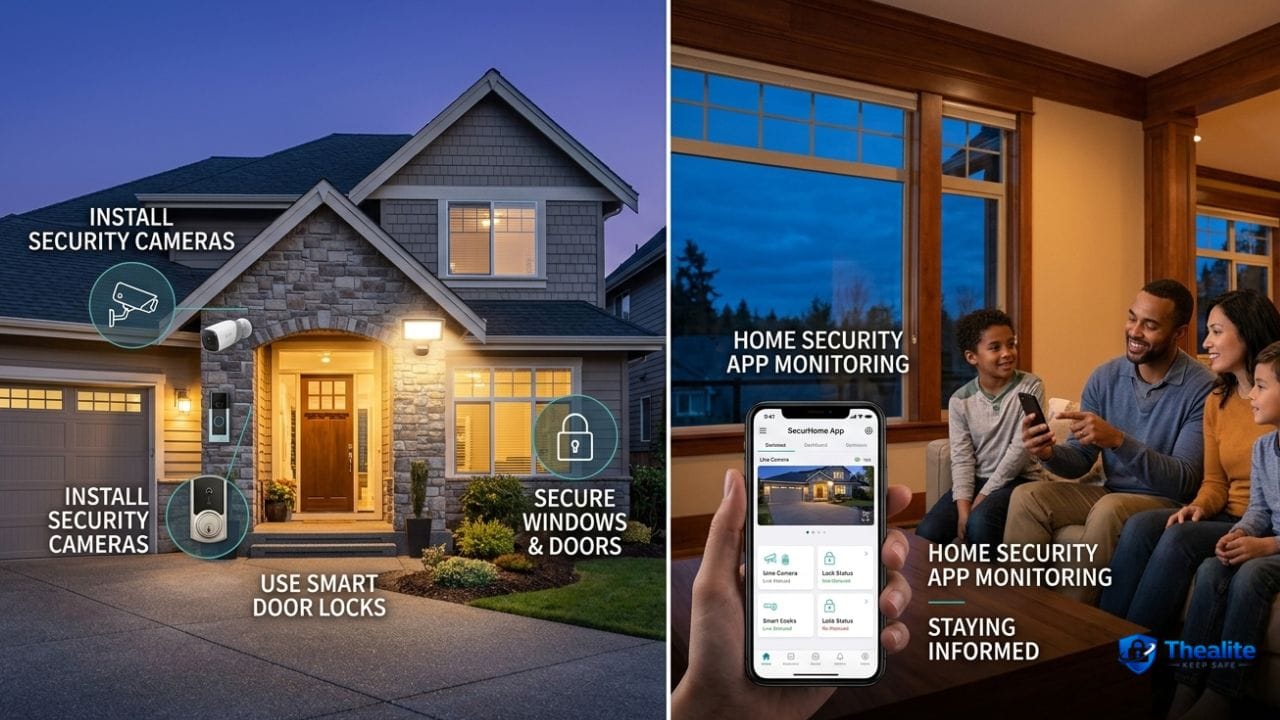
- Use a smart doorbell camera or visible exterior security cameras to show intruders they are being watched.
- Set up an alarm system and prominently display the security company’s yard signs and window decals.
- Trim back overgrown bushes or trees near your windows so burglars have nowhere to hide while trying to pry open a screen.
Daily Habits That Help Keep Your House Safe
The best security hardware in the world won’t help if you forget to use it. Building simple daily habits is an essential part of keeping your property secure. Always lock your doors, even if you are just running out for five minutes or doing yard work out back. Avoid advertising your vacations on social media until after you have returned home. Furthermore, if you use a smartphone app to control your home’s smart locks and security cameras, it is critical to learn how to keep my phone safe from hackers so a cybercriminal cannot simply unlock your front door remotely.
How to Keep Valuables Safe at Home
Even with excellent exterior security, you must prepare for the worst-case scenario. If a thief does manage to get inside, their goal is to grab high-value, easy-to-carry items as fast as possible. Figuring out how to keep valuables safe at home requires a combination of heavy-duty storage, clever placement, and meticulous documentation.
Using a Safe, Storage Plan, and Documentation
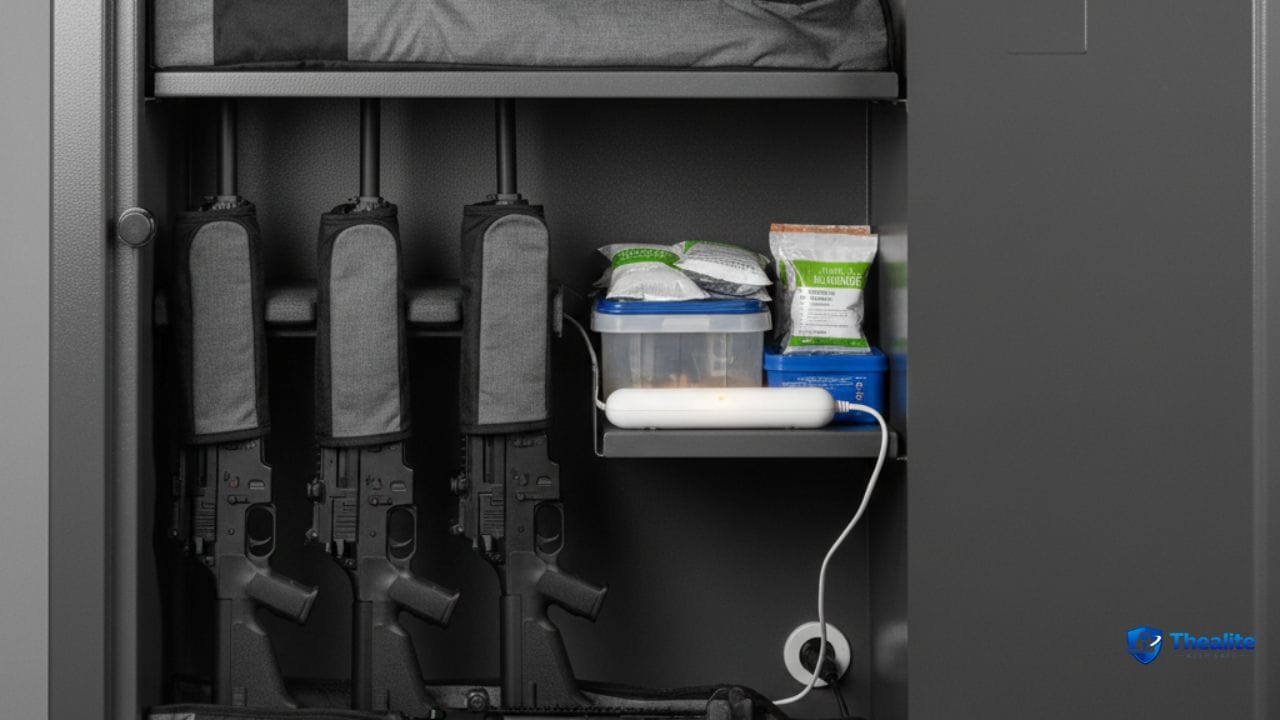
Every home should have a heavy, fireproof, and waterproof safe that is bolted directly to the floor or wall studs so a thief cannot just carry it away. Keep an updated digital inventory—including photos and serial numbers—of everything inside it. Additionally, if you live in a humid environment, you must learn how to keep moisture out of a safe using silica gel packets or dehumidifiers to prevent your valuables from being destroyed by mildew or rust.
Where Not to Hide Valuables
Burglars know all the standard hiding spots. When tossing a house, they will immediately check the master bedroom. Never hide valuables in:
- Dresser drawers or bedside tables
- Underneath the mattress
- Inside bedroom closets
- In standard kitchen cookie jars or fake hollowed-out books on a prominent shelf
Protecting Documents, Cash, Jewelry, and Electronics
Different types of valuables require different storage methods:
- Paperwork: For sensitive items like birth certificates, passports, and property deeds, you should read up on how to keep important documents safe at home using specialized fireproof bags inside your safe.
- Money: If you keep an emergency fund, learning how to keep cash safe at home involves using disguised diversion safes in low-traffic areas like the pantry or a child’s bedroom.
- Heirlooms: Never leave expensive watches or rings sitting on a bathroom counter. To understand how to keep gold jewelry safe at home, place it in a heavy, bolted safe, and consider hiding a small decoy jewelry box with cheap costume pieces in your bedroom to satisfy a rushed thief.
- Electronics: Keep laptops out of sight from street-facing windows when not in use.
Common Home Security Mistakes to Avoid
Avoid leaving a “hidden” spare key under the doormat or inside a fake rock; burglars check these spots first. Never leave ladders, hammers, or heavy tools out in your yard, as intruders will happily use your own equipment to break a window. Finally, after buying an expensive new TV or gaming console, break down the cardboard boxes before putting them on the curb so you don’t advertise your new purchases to the whole neighborhood.
What to Do After a Break-In or Attempted Intrusion
If you come home to a smashed window or a kicked-in door, do not enter the house—the intruder might still be inside. Back away, go to a neighbor’s house or your car, and call 911 immediately. Once the police have cleared the home, do not touch anything until they have taken their report. Afterward, take clear photos of all damage and missing items to provide to your homeowners insurance company.
Frequently Asked Questions
How to keep home safe from intruders?
Keep your home safe from intruders by fortifying entry points with strong deadbolts, installing motion-sensor lighting, using a visible security system or cameras, and ensuring windows are locked and unobstructed by overgrown landscaping.
How to keep your house safe?
Keeping your house safe requires building daily habits like locking doors at all times, keeping garage doors closed, avoiding oversharing vacation plans on social media, and utilizing smart home security features to monitor your property remotely.
How to keep valuables safe at home?
The best way to keep valuables safe at home is to store them in a heavy, fireproof safe that is securely bolted to the floor or wall studs. Avoid obvious hiding spots like the master bedroom dresser or under the mattress.
What is the safest place to keep valuables at home?
The safest place is a high-quality, bolted-down safe hidden in a low-traffic area like a guest bedroom closet or basement. Alternatively, clever diversion safes hidden in the pantry or utility room can easily fool a rushed burglar.
Do burglars avoid houses with cameras?
Yes, visible security cameras and alarm system signs act as strong visual deterrents. Most burglars are looking for an easy, low-risk target and will actively avoid homes where they are likely to be recorded or trigger a loud alarm.
How can I make my front door more secure?
Make your front door more secure by upgrading to a Grade 1 deadbolt, installing a heavy-duty strike plate with 3-inch screws that reach the wall studs, and adding a solid core door if you currently have a hollow or weak wooden door.
Should I keep cash in a safe at home?
If you keep an emergency cash fund at home, it should be stored in a fireproof and waterproof safe that cannot be easily carried away. Never leave cash in obvious places like sock drawers, cookie jars, or bedside tables.
What should I do after someone breaks into my house?
If you suspect a break-in, do not go inside. Go to a safe location and call 911 immediately. Once police clear the home, do not touch anything until a report is filed, then take extensive photos for your homeowners insurance claim.

As a digital marketer, she has received multiple international awards, including Campaign of the Year at the 2023 European Content Awards and Best Use of Content Marketing at the 2022 Global Search Awards. Nicai holds an MSc in Marketing (First Class Honours) from the UCD Smurfit Graduate Business School and she has also completed the Artificial Intelligence Programme at Oxford University’s Saïd Business School. She is also a contributing writer for publications such as Entrepreneur and Esquire.