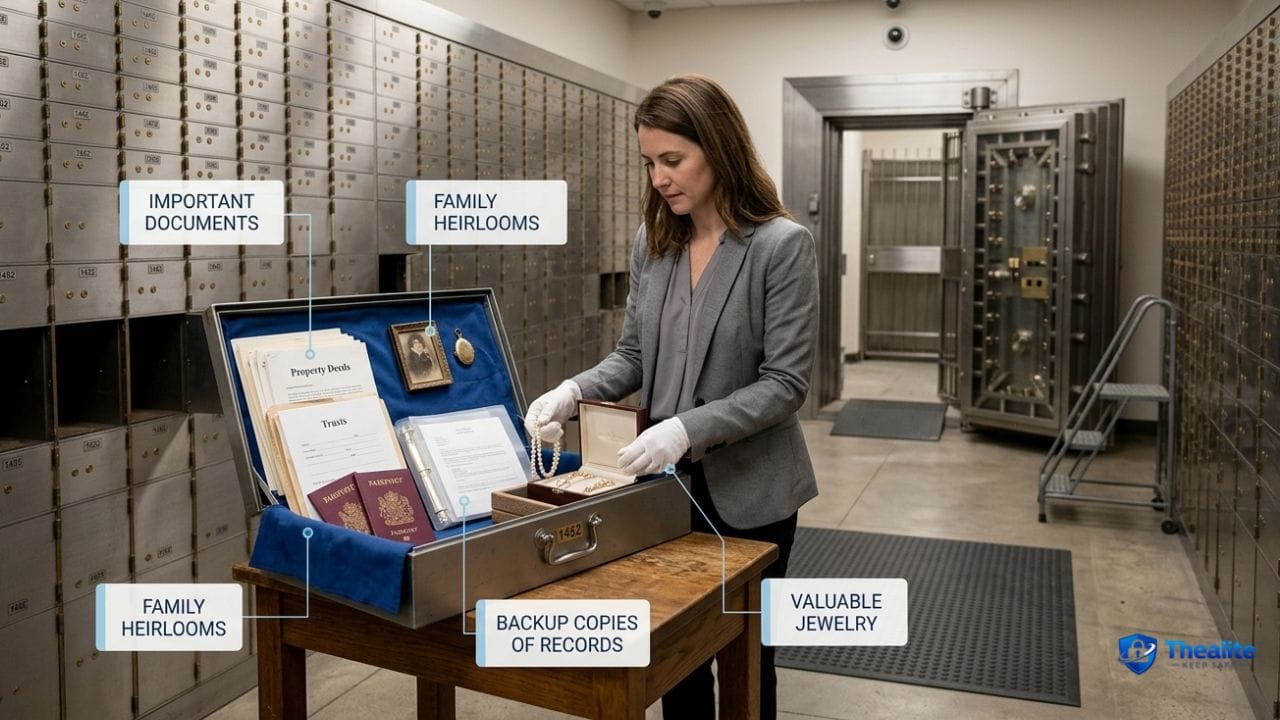
Securing your most important physical assets requires more than just a locked drawer. Whether it is an emergency fund, a collection of family heirlooms, or your home’s deed, choosing between a home safe and a bank-managed vault is a critical decision. Each option serves a specific purpose, and understanding the nuances of environmental protection and accessibility will ensure your valuables remain in pristine condition and ready when you need them most.
Safe vs. Safe Deposit Box: What Belongs Where
The primary difference between a home safe and a safe deposit box is accessibility. A home safe is ideal for items you may need at a moment’s notice, such as a passport or emergency cash. A safe deposit box, located within a bank vault, offers superior protection against fire and theft but is only accessible during bank hours. Knowing which bank is safe to keep money and storage containers is the first step toward a complete security plan.
What to Keep in Safe Deposit Box
When deciding what to keep in safe deposit box, think of items that are difficult or impossible to replace but aren’t needed for daily life. This includes original property deeds, vehicle titles, stock certificates, and permanent family records. It is also an excellent place for high-value jewelry that you only wear on special occasions. However, you should never keep your original Will or Power of Attorney there, as the box may be sealed upon your death, making it difficult for heirs to access those specific documents.
What Should You Keep in a Safe Deposit Box?
Expanding on what should you keep in a safe deposit box, consider digital backups of family photos or hard drives containing sensitive data. These are protected from house fires and local natural disasters. Many people also use these boxes for rare coin collections or precious metals. While the bank doesn’t insure the contents of your box (you should add a rider to your homeowners insurance for that), the physical security of a bank vault is much higher than any standard residential closet.
Can You Keep Money in a Safe Deposit Box?
A common question many people have is: can you keep money in a safe deposit box? Technically, most bank agreements do not explicitly forbid it, but it is generally discouraged. Money kept in a box does not earn interest, and it is not protected by FDIC insurance. If the bank were to suffer a catastrophic event, the cash might be harder to claim than funds in a standard savings account. For more details on the risks, you can read about the pros and cons to keep cash in a safe deposit box before making a final decision.
How Much Cash Should I Keep in My Safe?
For those who prefer keeping currency at home for emergencies, the question is always: how much cash should i keep in my safe? Financial experts often suggest keeping enough to cover small, immediate expenses—usually between $500 and $2,000. This is enough to handle a power outage or a temporary banking glitch without making you a high-value target for a sophisticated robbery. If you are storing a significant amount, make sure you know the best practices for how to keep cash safe at home to minimize risk.
Preventing Moisture Damage Inside Your Safe
One of the most overlooked aspects of home security is the “micro-climate” inside a sealed safe. Because safes are designed to be airtight (especially fireproof models), they can trap moisture, leading to moldy money or rusted jewelry.
How to Keep Money Dry in a Safe
Learning how to keep money dry in a safe is essential if you are storing paper currency for long periods. Use silica gel packets or a small rechargeable dehumidifier to pull moisture from the air. You should also consider double-bagging your currency in high-quality, airtight plastic bags to provide an extra layer of protection against humidity. Regularly checking for moisture out of a safe can save you from a very expensive discovery later on.
How to Keep Documents Dry in a Safe
Similarly, knowing how to keep documents dry in a safe is vital for protecting your birth certificates and social security cards. Paper is highly susceptible to dampness. Using plastic sheet protectors or a dedicated waterproof document pouch inside your safe is a smart move. When learning how to keep important documents safe at home, remember that fireproofing often releases moisture as part of its cooling process, making internal waterproofing even more important.
Why Does My Safe Keep Beeping?
If you find yourself asking why does my safe keep beeping, it is usually a warning sign you shouldn’t ignore. Most modern electronic safes use audio signals to communicate status updates. The most common cause is a low battery; even if the keypad still works, the safe will beep to warn you that the solenoid may soon lack the power to retract the bolts. Other causes include a tamper alert (someone entered the wrong code too many times) or a door that hasn’t been fully latched.
Common Safe and Storage Mistakes to Avoid
- Forgetting the Combination: Always store a backup of your code or your physical override key in a separate, secure location—ideally at a relative’s house or in a safe deposit box.
- Ignoring Humidity: Failing to use a desiccant or check for moisture can lead to permanent damage to “safe” items.
- Wrong Type of Safe: Using a fire-safe (designed to protect paper) for digital media (like USB drives) can be a mistake, as digital media melts at much lower temperatures than paper burns.
Frequently Asked Questions
What to keep in safe deposit box?
You should store original documents that are hard to replace, such as property deeds, vehicle titles, birth certificates, and rare collectibles or jewelry you don’t use often.
What should you keep in a safe deposit box?
Items best suited for a safe deposit box include high-value family heirlooms, stock certificates, and digital backups of sentimental photos that you want to protect from house fires.
Can you keep money in a safe deposit box?
Yes, you can keep money in a safe deposit box, but it is generally not recommended because it is not FDIC-insured and does not earn interest.
How much cash should i keep in my safe?
Most experts recommend keeping a small amount of emergency cash at home, typically ranging from $500 to $2,000, to cover immediate needs during a power outage or bank closure.
How to keep money dry in a safe?
To keep money dry, place the currency in airtight plastic bags and include silica gel desiccant packets inside the safe to absorb any trapped moisture.
How to keep documents dry in a safe?
Use waterproof document pouches or plastic sleeves for your paperwork and use a dehumidifier or desiccant inside the safe to prevent humidity buildup.
Why does my safe keep beeping?
A safe usually beeps because the battery is low, a tamper alert has been triggered, or the door is not securely latched. Check your user manual to identify the specific beep pattern.
Is it better to keep cash in a safe or bank?
For large sums, a bank is safer due to FDIC insurance and interest. For immediate emergencies, a small amount in a home safe is better for quick accessibility.
What should not be kept in a safe deposit box?
Avoid keeping original Wills, Power of Attorney documents, or medical directives in a safe deposit box, as these may be needed when the bank is closed or if the box is sealed after death.
How often should you check a home safe for moisture?
You should open your safe to “air it out” and check your desiccant packets at least once every three to six months, especially in humid climates.

As a digital marketer, she has received multiple international awards, including Campaign of the Year at the 2023 European Content Awards and Best Use of Content Marketing at the 2022 Global Search Awards. Nicai holds an MSc in Marketing (First Class Honours) from the UCD Smurfit Graduate Business School and she has also completed the Artificial Intelligence Programme at Oxford University’s Saïd Business School. She is also a contributing writer for publications such as Entrepreneur and Esquire.