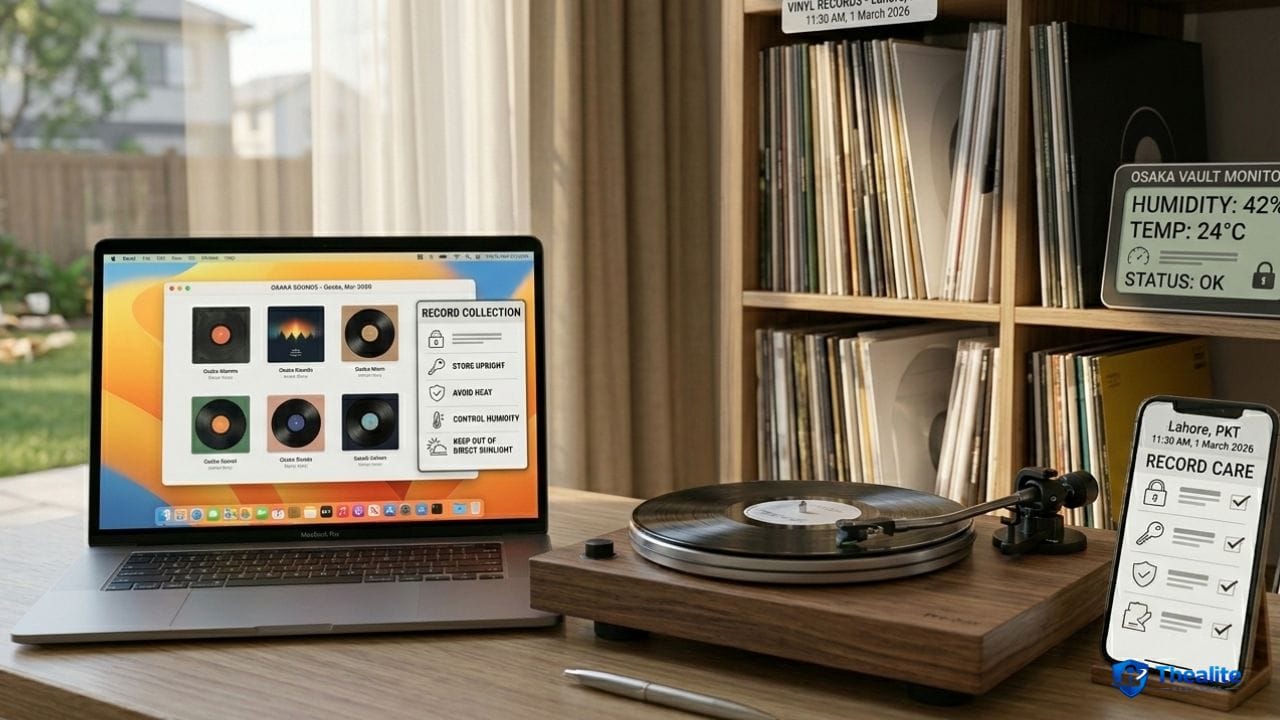
Vinyl records are tough enough to last decades—but they’re also vulnerable to a few predictable enemies: heat, humidity, pressure, dust, and careless handling. The most common disasters (warped records, moldy jackets, seam splits, and scratches) usually come from storage mistakes, not from normal listening.
This U.S.-focused guide gives you a practical system to keep vinyl records safe at home and during moves. You’ll learn the best temperature and humidity habits, how to store records correctly, which sleeves help the most, and a simple copy/paste checklist at the end.
Quick Answer (The Vinyl Safety System)
- Store records upright (vertical), not stacked flat.
- Keep them cool and stable—avoid heat and direct sunlight (warping risk).
- Control humidity to prevent mold and jacket damage (aim for a comfortable indoor range; avoid damp basements).
- Use quality inner sleeves and protective outer sleeves for jackets.
- Use sturdy shelving that supports the full weight of the records.
- Handle records by the edges and label; keep stylus and records clean.
- For moving: pack records tightly upright in small boxes and keep them out of hot cars.
The 5 Biggest Threats to Vinyl Records
If you protect against these five threats, you prevent most long-term damage:
- Heat (warping and sleeve shrink)
- Humidity (mold, mildew, wavy jackets, stuck records)
- Pressure (stacking and leaning that bends records)
- Dust and grime (noise, stylus wear, groove damage)
- Bad handling (finger oils, scratches, seam splits)
1) Temperature: Keep Vinyl Away From Heat
Vinyl can warp when it gets too warm, especially if weight or pressure is involved. In real life, the biggest heat risks are simple: sunny windows, radiators, heaters, attics, garages, and hot cars.
Heat safety rules that work
- Avoid direct sunlight on shelves (even through a window).
- Don’t store records near vents, radiators, fireplaces, or space heaters.
- Avoid attics, garages, sheds, and car trunks for storage.
- If your home gets hot in summer, keep records in an interior room where temperatures are more stable.
2) Humidity: Prevent Mold and Jacket Damage
High humidity can lead to mold on jackets and sleeves, musty smells, and wavy paper. Very low humidity can increase static. The goal is a stable indoor environment—avoid extremes.
Practical humidity habits
- Avoid damp basements unless you actively dehumidify the space.
- Keep records off concrete floors (use shelves or pallets).
- If you live in a humid area, a room dehumidifier can protect your collection.
- Watch for musty smells—this is an early warning sign.
Moisture control principles are similar to safe storage—see How to Keep Moisture Out of a Safe for the same mindset (measure, control, and keep airflow).
3) Correct Storage Position: Vertical, Not Stacked
Records should be stored upright like books. Stacking records flat creates pressure that can warp discs and crease jackets over time.
Vertical storage rules
- Store records perfectly vertical or with only slight support—avoid heavy leaning.
- Use bookends or dividers so rows don’t slump.
- Don’t overstuff shelves so you have to force records in and out.
- Don’t leave records half-out (they can bend).
Shelving matters
- Choose shelves that can handle weight—records are heavy.
- Avoid flimsy particleboard that bows over time.
- Keep shelves level and stable to prevent leaning pressure.
4) Inner Sleeves and Outer Sleeves: Cheap Protection That Pays Off
Sleeves reduce scuffs, dust, and wear. A good sleeve setup protects both the record surface and the jacket art.
Inner sleeves (record protection)
- Replace old paper sleeves that shed dust or scratch records.
- Use anti-static inner sleeves if static is a problem in your climate.
- Keep the opening of the inner sleeve oriented upward or sideways (reduces dust entry).
Outer sleeves (jacket protection)
- Use outer sleeves to protect jackets from shelf wear and spills.
- If you want to prevent seam splits, avoid packing records too tightly and handle gently.
- Keep hype stickers and inserts protected inside the outer sleeve if you collect them.
Pro tip for collectors
Many collectors store the record (in its inner sleeve) behind the jacket inside the outer sleeve. This reduces seam splits from sliding the record in and out of the jacket repeatedly.
5) Handling: Prevent Scratches and Finger Oil
Handling is where a lot of accidental damage happens. Oils from fingers attract dust and can create noise. Scratches usually happen during hurried removal or when a record is set on a dirty surface.
Safe handling rules
- Hold records by the edges and the label—avoid touching grooves.
- Place records on a clean surface only (turntable platter or clean mat).
- Return records to sleeves immediately after play (reduces dust exposure).
- Keep food and drinks away from the play area (accidental spills happen fast).
Cleaning: Keep Records and Stylus Healthy
Dust and grime affect sound quality and can increase stylus wear. You don’t need to obsess—just use consistent, gentle cleaning.
Basic cleaning routine
- Use a carbon fiber brush (or similar) before each play to reduce surface dust.
- Clean the stylus gently with a stylus brush per manufacturer guidance.
- Deep clean occasionally if you hear crackle that isn’t caused by static.
- Avoid harsh household cleaners (they can damage grooves or leave residue).
Storage Location Checklist: Where Records Should NOT Live
If you want to protect vinyl long-term, avoid these common storage locations:
- Hot attics and garages (temperature swings)
- Basements with damp air (mold risk)
- Near windows with sun exposure (warping + fading)
- Near heaters, vents, or fireplaces (heat)
- Directly on concrete floors (moisture transfer)
- In cars for long periods (heat can warp quickly)
How to Keep Vinyl Records Safe During a Move
Moving is one of the highest-risk moments for records. The goal is to prevent bending, impact, and heat exposure.
Moving rules that work
- Pack records upright in small, sturdy boxes (record-sized boxes are ideal).
- Pack tightly so records can’t slide, but not so tight you bend jackets.
- Use cardboard dividers to keep rows stable.
- Label boxes “FRAGILE – VINYL – KEEP UPRIGHT.”
- Don’t leave packed records in a hot car or moving truck overnight.
- Bring valuable records into climate-controlled space as soon as possible.
Fire, Flood, and Disaster Planning (If Your Collection Is Valuable)
If your vinyl collection is valuable (sentimental or financial), treat it like other valuables: reduce risk and document what you own.
- Keep an inventory list (photos + basic notes of rare records).
- Consider storing the most valuable records in the safest room location (interior, elevated, away from water pipes).
- For wildfire/flood zones: keep records off the floor and away from known water-risk areas.
The mindset is similar to document protection—see How to Keep Important Documents Safe at Home.
Copy/Paste Checklist: Keep Vinyl Records Safe
- Store records upright (vertical) with dividers; avoid stacking
- Keep away from heat and sunlight (no windows, heaters, attics, garages)
- Control humidity; avoid damp basements; keep records off concrete floors
- Use quality inner sleeves (anti-static if needed) and outer jacket sleeves
- Use sturdy shelving that won’t bow under weight
- Handle by edges/label; avoid touching grooves
- Brush records before play; clean stylus regularly
- For moving: pack upright in small sturdy boxes; avoid hot cars/trucks
FAQs
Should vinyl records be stored flat or upright?
Upright (vertical) is best for long-term storage. Stacking records flat can warp them and damage jackets over time.
What temperature is best for vinyl records?
The safest approach is a cool, stable indoor room temperature and avoiding heat spikes. The biggest risk is direct heat and sunlight that causes warping.
Can humidity ruin vinyl records?
High humidity can cause mold and damage jackets and sleeves. Keep records in a dry, stable environment and avoid damp basements unless you dehumidify.
Do I need special sleeves?
Quality inner sleeves reduce scuffs and dust; outer sleeves protect jackets. They’re one of the cheapest long-term protection upgrades.
How do I move records without damaging them?
Pack them upright in sturdy record-sized boxes, keep boxes tight so records don’t slide, and keep them out of heat (don’t leave them in a hot vehicle).
Conclusion
To keep vinyl records safe, focus on the basics that prevent most damage: store records upright, avoid heat and sunlight, control humidity, use protective sleeves, and handle records by the edges. Add a smart moving routine and your collection can stay clean, flat, and playable for decades.

As a digital marketer, she has received multiple international awards, including Campaign of the Year at the 2023 European Content Awards and Best Use of Content Marketing at the 2022 Global Search Awards. Nicai holds an MSc in Marketing (First Class Honours) from the UCD Smurfit Graduate Business School and she has also completed the Artificial Intelligence Programme at Oxford University’s Saïd Business School. She is also a contributing writer for publications such as Entrepreneur and Esquire.