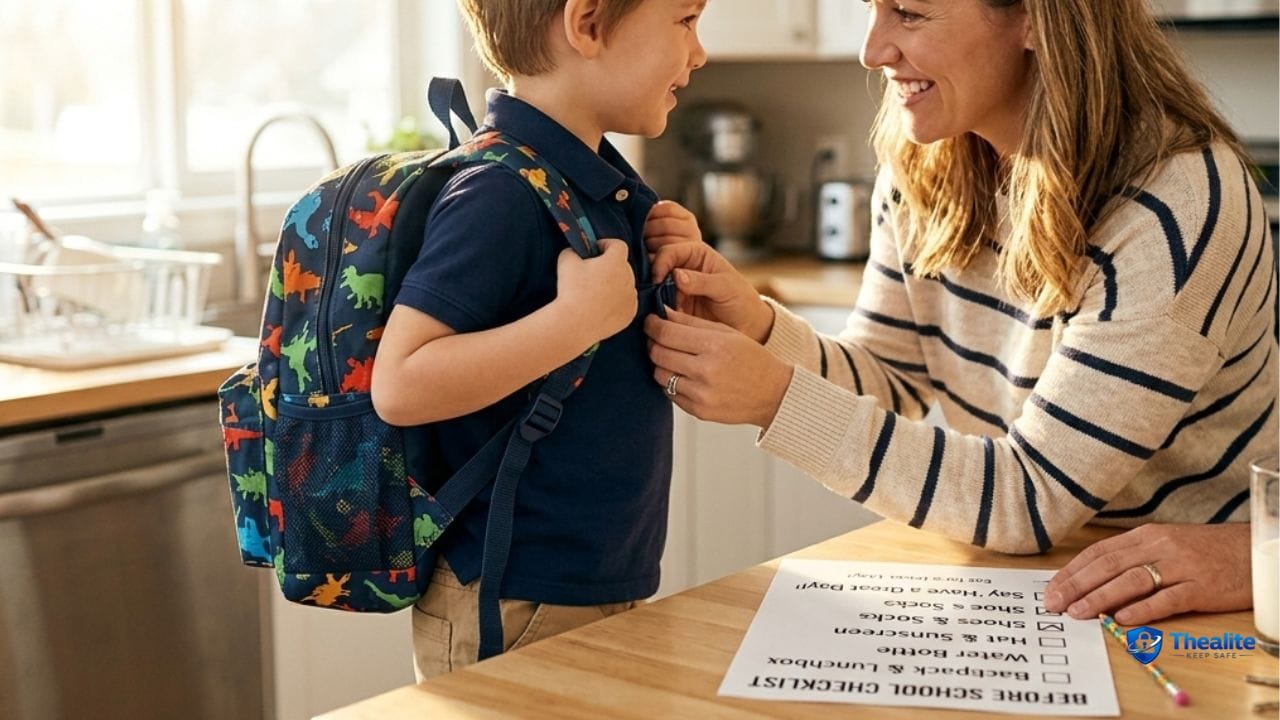
School safety can feel overwhelming because parents can’t control the campus the way they control home. But the truth is: most school safety wins come from simple systems—clear routines, strong communication, and teaching kids a few key habits.
This U.S.-focused guide covers practical steps for everyday safety (drop-off, pickup, bus stops, after-school), social safety (bullying, peer pressure), and modern risks that overlap with school life (phones, apps, social media). You’ll also get checklists you can copy/paste.
Quick Answer (The 10 Most Important Steps)
- Know the school’s safety basics: check-in process, visitor policy, and emergency communication system.
- Create a reliable drop-off and pickup plan (authorized adults list, passwords, and backup plan).
- Teach kids ‘safe adult’ rules and what to do if they feel unsafe.
- Use bus-stop safety rules (visibility, staying with group, no strangers).
- Build a bullying plan: reporting, documentation, and calm escalation.
- Make a communication plan for phones and after-school activities.
- Teach digital safety because school drama often happens online.
- Keep health/safety info updated (allergies, meds, emergency contacts).
- Practice emergency readiness: where to reunite, who to contact, what kids should do.
- Create a “safe to tell” family culture—kids report problems early.
Step 1: Understand What ‘School Safety’ Really Means
School safety isn’t only about big emergencies. For most families, daily risks are more common: traffic at pickup, unauthorized pickup attempts, bullying, fights, unsafe online behavior connected to school, and kids getting lost or separated.
Step 2: Ask the School the Right Questions
A few calm questions give you a clearer picture of school safety systems:
- How does visitor check-in work? Do visitors show ID and wear badges?
- How does the school verify authorized pickup adults?
- How does the school send emergency updates (text/email/app)?
- What is the school’s bullying reporting process and response timeline?
- What’s the plan for medical emergencies (nurse access, meds, allergy plans)?
- How are doors and campus access controlled during the day?
If you want broader school-level safety strategy, read: How to Keep Schools Safe.
Step 3: Drop-Off and Pickup Safety
Drop-off and pickup are high-risk windows: traffic, distractions, and crowds. A good plan reduces confusion and prevents unauthorized pickup.
Parent plan (must-do)
- Keep the authorized pickup list updated at school.
- Set a family password for unexpected pickup changes (child should verify).
- Teach kids to never leave with someone who isn’t on the list—even if the adult ‘knows your name.’
- Create a backup plan for late pickup (who they wait with, where they go).
- Use car line rules: no running between cars; buckle before moving; follow staff directions.
Kid-friendly rule to practice
“If the plan changes, you don’t move until you hear it from the school AND you confirm the family password.”
Step 4: Bus Stop and Walking-to-School Rules
For many kids, the bus stop is less supervised than the school building. Set simple rules and practice them.
Bus stop safety rules
- Stand back from the curb; no pushing or rough play near traffic.
- Stay in a visible spot (not behind trees/buildings).
- Stay with a buddy or group when possible.
- Never accept rides, gifts, or ‘help’ from strangers.
- If someone bothers you, go to a trusted adult immediately (neighbor, bus driver, school staff).
Walking safety basics
- Use crosswalks and follow crossing guard instructions.
- No headphones at high volume while crossing streets.
- If you feel followed or unsafe, go to a safe public place and call a parent.
Step 5: Teach Kids ‘Safe Adult’ and ‘Unsafe Situation’ Signals
Kids don’t need to fear everyone. They need simple decision rules.
Teach kids what a safe adult looks like
- A safe adult is someone with an official role at school (teacher, office staff, coach) or a pre-approved family contact.
- If lost or scared, go to the office, a teacher, or another parent with kids—not a random adult alone.
Teach kids what to do when something feels wrong
- Get loud if needed: “I don’t know you!”
- Move toward groups and adults.
- Call a parent or the school office if they have access.
- Tell the nearest trusted staff member immediately.
Predator prevention deeper guidance: How to Keep Your Child Safe From Predators.
Step 6: Bullying and Social Safety
Bullying is one of the most common safety issues parents deal with. It can be in-person, online, or both.
A practical parent response plan
- Ask specific questions daily: “Who did you sit with?” “Any weird moments today?”
- Document incidents: dates, what happened, names, screenshots for online bullying.
- Report calmly and clearly to the teacher/administrator (focus on safety and patterns).
- Request a plan: supervision changes, seating changes, monitoring, follow-up timeline.
Teach kids simple scripts
- “Stop. I don’t like that.” (clear boundary)
- “I’m going to a teacher now.” (exit)
- “Please don’t include me.” (peer pressure)
Step 7: Phone and Online Safety
Many school problems escalate through phones: group chats, social media posts, rumors, and risky challenges. Online safety is part of school safety now.
High-impact digital rules
- No sharing personal info (school schedule, address, bus route).
- Private accounts by default; limit who can message.
- If someone threatens or pressures you online, tell a parent immediately.
- No sending photos you wouldn’t be comfortable showing a parent/teacher.
- Save evidence (screenshots) and block/report; don’t engage.
Online safety resources: How to Keep Your Kids Safe Online • How to Keep Your Child Safe on Social Media.
Step 8: Health and Medical Safety at School
Many emergencies at school are medical. Make sure the school can act fast.
- Update emergency contacts and authorized pickup list.
- Provide allergy/action plans and required medications (as directed by your provider/school).
- Teach your child how to ask for help: “I need the nurse.”
- Ensure the school knows about asthma, diabetes, seizures, severe allergies, or other key conditions.
Step 9: Emergency Planning
In a serious emergency, chaos comes from confusion. A simple reunification plan reduces panic.
Family emergency plan basics
- Know where the school reunification site is (or where they relocate).
- Have at least two backup pickup adults who can respond.
- Keep phone numbers current so you receive school alerts.
- Teach your child: follow teacher directions; don’t run off; don’t open doors for strangers.
Step 10: Create a ‘Safe to Tell’ Family Culture
Kids hide problems when they fear punishment or losing their phone. A better rule: reporting is always safe.
- Praise honesty first, then solve the problem together.
- Separate reporting from consequences: “You won’t be in trouble for telling.”
- Do weekly check-ins so problems don’t build up.
Copy/Paste Checklist: Keep Your Child Safe at School
- School safety info saved: office number + emergency alert system
- Authorized pickup list updated + family password set
- Drop-off/pickup routine practiced + backup plan
- Bus stop rules: visibility, buddy system, no strangers
- Bullying plan: document → report → follow-up timeline
- Phone rules: private accounts, no oversharing, screenshot/report threats
- Health info updated: allergies/meds/emergency contacts
- Emergency reunification plan: where to go + backup adults
- Safe-to-tell rule reinforced weekly
FAQs
What’s the most important way to keep my child safe at school?
Have clear routines and communication: authorized pickup plan, emergency contacts, and a safe-to-tell culture. Most problems are solved faster when kids report early.
How do I prevent unauthorized pickup?
Keep the pickup list updated, use a family password for unexpected changes, and teach your child to never leave with anyone not approved—no exceptions.
What should I do if my child is being bullied?
Document incidents, report calmly to the school, request a plan (supervision changes, seating changes), and set a follow-up timeline. Save screenshots for online bullying.
Should my child have a phone for school safety?
It depends. Phones can help communication but add online risk. If your child has a phone, set rules, privacy settings, and teach them not to overshare.
What should kids do in an emergency at school?
Follow teacher directions, stay with the class, and don’t open doors for strangers. Parents should learn the school’s reunification plan and wait for official instructions.
Conclusion
Keeping a child safe at school is about systems, not fear. Strong pickup routines, clear bus/walking rules, bullying response plans, updated health contacts, and smart phone/online habits prevent most real-life problems. Combine that with a calm relationship with the school and a safe-to-tell family culture, and your child is better protected every day.

As a digital marketer, she has received multiple international awards, including Campaign of the Year at the 2023 European Content Awards and Best Use of Content Marketing at the 2022 Global Search Awards. Nicai holds an MSc in Marketing (First Class Honours) from the UCD Smurfit Graduate Business School and she has also completed the Artificial Intelligence Programme at Oxford University’s Saïd Business School. She is also a contributing writer for publications such as Entrepreneur and Esquire.