A thermos (or insulated food jar) can be a great way to keep lunch warm—especially soups, pasta, rice dishes, and leftovers. But food safety depends on one key factor: temperature. If your food cools into the bacterial “danger zone” for too long, it can become unsafe even if it still feels warm.
This U.S.-focused guide explains when it’s safe to keep food warm in a thermos, what temperatures to aim for, how to preheat and pack food correctly, and a simple checklist you can use for kids’ lunches, travel, and work meals.
Quick Answer
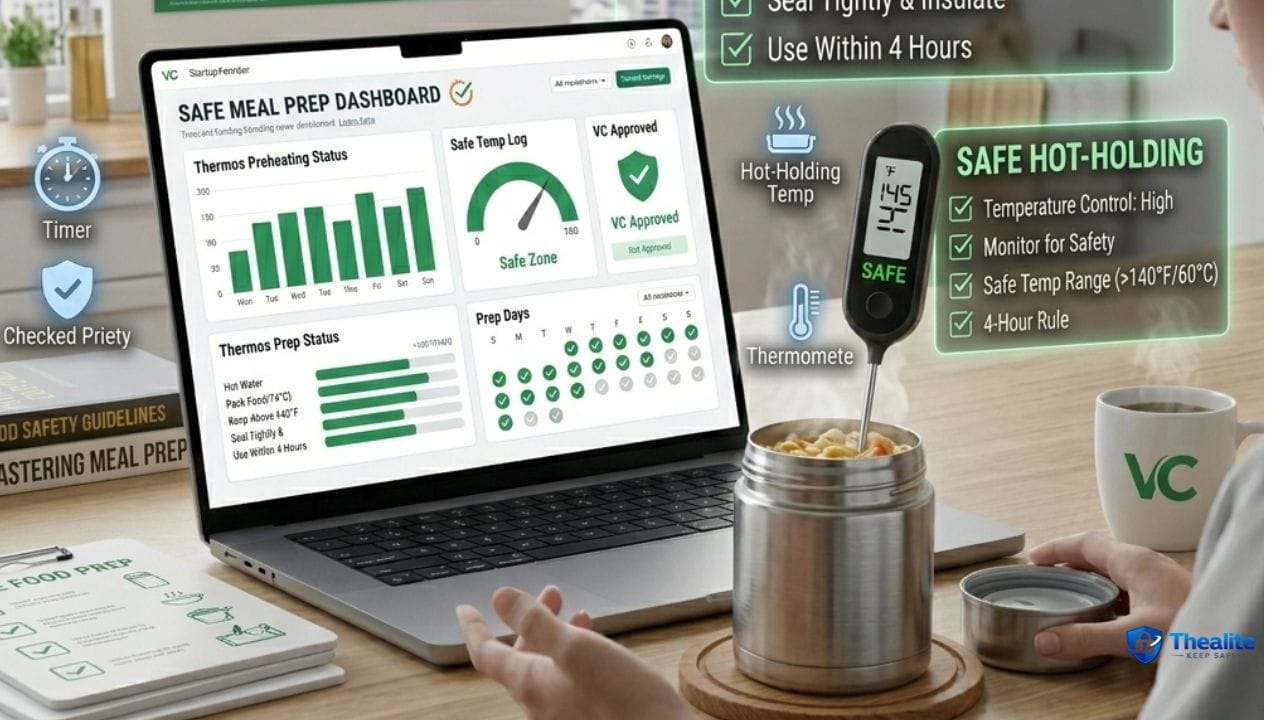
Yes, it can be safe to keep food warm in a thermos if the food stays hot enough. For U.S. food safety, hot foods are generally considered safe when held at 135°F (57°C) or higher. To increase safety: heat food fully before packing, preheat the thermos with boiling water, fill it completely (less air = less cooling), and avoid keeping food “warm” for long periods if you can’t verify temperature.
Why ‘Warm’ Isn’t Always Safe (The Danger Zone)
Bacteria grow fastest when food sits in the middle range between cold and hot. That’s why food safety guidance emphasizes keeping food either cold enough or hot enough. A thermos slows cooling, but it doesn’t stop it forever—especially if the thermos wasn’t preheated or if food was only lukewarm when packed.
Common thermos mistakes that create risk
- Packing food that’s not hot enough to begin with (lukewarm leftovers).
- Skipping the preheat step (thermos starts cold and steals heat).
- Half-filling the thermos (more air space = faster cooling).
- Opening the thermos repeatedly (heat escapes each time).
- Keeping food warm for too many hours without knowing the temperature.
Step 1: Pick the Right Thermos (Food Jar vs Drink Bottle)
Wide-mouth insulated food jars are usually better for meals than narrow drink thermoses because they’re easier to fill, clean, and eat from. A good seal and quality insulation help keep food above safe temperatures longer.
What to look for
- Double-wall vacuum insulation (common in quality brands).
- Leakproof lid and a strong gasket/seal.
- Wide mouth for thick foods and easier cleaning.
- Stainless steel interior (durable and easy to sanitize).
Step 2: The Most Important Step—Preheat the Thermos
Preheating is the easiest way to improve safety and temperature performance. A cold thermos pulls heat from the food immediately.
How to preheat (simple method)
- Fill the thermos with boiling water.
- Close the lid and let it sit 5–10 minutes.
- Dump the water, then immediately add the hot food.
Step 3: Heat Food Thoroughly Before Packing
A thermos is not a cooking device. If you start with lukewarm food, you’ll end with unsafe food.
Pack it piping hot
- Reheat leftovers until steaming hot throughout (stir to eliminate cold spots).
- For soups and sauces, bring to a full simmer before packing.
- Avoid packing partially warmed food “to save time.”
If you’re packing soup, the same temperature-control mindset applies as in food service: Food Workers Required to Keep Soup Safe.
Step 4: Fill It Up (Less Air = Better Heat Retention)
A fuller thermos stays hotter longer because there’s less air space. If you have to pack a smaller amount, use a smaller container.
Packing tips
- Fill close to the top (leave only a little space for the lid).
- Keep the lid closed until it’s time to eat.
- If you need to portion food, use the right thermos size instead of underfilling.
Step 5: How Long Can Food Stay Warm in a Thermos?
There isn’t one universal number because it depends on thermos quality, starting temperature, portion size, and room temperature. Many people use thermoses for 4–6 hours for lunch. The safest approach is to treat “all-day warm holding” as risky unless you can confirm it stayed hot enough.
A practical safety approach
- For kids’ school lunch: pack hot food in the morning and aim to eat within a few hours.
- If you’re going past 4–6 hours, consider using a thermometer to confirm temperature—especially for meat, dairy-based soups, and rice dishes.
- When in doubt, choose cold foods stored in an insulated lunch bag with ice packs instead.
Cold-food safety alternative: Practices That Keep Cold Food Safe.
Step 6: What Foods Work Best (And Which Are Riskier)
Some foods stay hot better and are easier to keep safe.
Great thermos foods
- Soups and stews (if packed very hot)
- Chili
- Pasta with sauce
- Oatmeal
- Rice dishes (if fully reheated and kept hot—see caution below)
Higher-risk foods (require extra care)
- Cooked rice (can be risky if cooled and held warm for long periods; keep it hot and eat sooner).
- Dairy-heavy soups (cream-based) if not kept hot enough.
- Seafood dishes (more sensitive to time/temperature).
- Egg dishes (pack only if very hot and eaten relatively soon).
Step 7: Kids’ Lunch Thermos Safety (Simple Rules for Parents)
Kids often don’t think about food safety—they just eat what’s there. Your job is to set the system up so the food stays safe until lunch.
Parent checklist
- Preheat the thermos every time.
- Heat food thoroughly (steaming hot).
- Pack immediately (don’t let it cool on the counter).
- Use the right size thermos so it’s mostly full.
- Teach kids: keep it closed until lunch.
Step 8: Cleaning the Thermos (Prevents Odors and Germs)
Thermoses can hold bacteria if not cleaned well—especially gaskets and lids.
- Wash after each use with hot soapy water.
- Pay attention to the lid gasket and threads.
- Let it air-dry fully before storing closed.
- If odors persist, deep-clean according to manufacturer guidance.
Thermos vs Buffet Hot Holding (Same Principle, Different Setup)
A buffet line uses hot-holding equipment and frequent temperature checks. A thermos is a personal hot-holding tool, so you replace equipment checks with a stronger packing method: hotter start + preheated container + minimal opening.
Related: How to Keep Soup Safe on a Buffet Line.
Copy/Paste Checklist: Safe Thermos Hot Holding
- Thermos preheated with boiling water (5–10 minutes)
- Food reheated fully until steaming hot (stir to remove cold spots)
- Thermos filled mostly full (less air space) and closed tightly
- Kept closed until mealtime (don’t open repeatedly)
- Aim to eat within a few hours; longer holding is riskier without temperature confirmation
- Thermos cleaned thoroughly (lid + gasket) after each use
FAQs
Is it safe to keep soup warm in a thermos?
Yes, if you pack it piping hot and preheat the thermos first. Soups hold heat well, but you still want it to stay hot enough until mealtime.
How long can food stay warm in a thermos?
It depends on the thermos and starting temperature. Many people use 4–6 hours for lunch, but longer holding becomes riskier if you can’t confirm temperature stayed hot enough.
Do I need to preheat the thermos?
Preheating is one of the most important steps. It prevents the container from pulling heat out of the food right away.
Can I put warm leftovers in a thermos?
It’s safer to reheat leftovers until steaming hot first. Warm/lukewarm leftovers can cool into the danger zone and become unsafe.
What’s safer—hot thermos food or cold lunch with ice packs?
Both can be safe. If you can’t keep food hot enough in a thermos, cold foods kept properly cold with ice packs are often the safer choice.
Conclusion
Keeping food warm in a thermos can be safe when you treat it like a mini hot-holding system: start very hot, preheat the container, fill it up, and keep it closed until you eat. If you can’t be confident the food stayed hot enough for the full time, switch to cold foods with ice packs or shorten the holding time. With a few simple habits, a thermos can be a safe, convenient way to enjoy warm meals on the go.

As a digital marketer, she has received multiple international awards, including Campaign of the Year at the 2023 European Content Awards and Best Use of Content Marketing at the 2022 Global Search Awards. Nicai holds an MSc in Marketing (First Class Honours) from the UCD Smurfit Graduate Business School and she has also completed the Artificial Intelligence Programme at Oxford University’s Saïd Business School. She is also a contributing writer for publications such as Entrepreneur and Esquire.