If your gas fireplace has a standing pilot light (a small flame that stays on), you’ve probably wondered whether it’s safe to leave it burning all the time. In many homes, the answer is **yes—often it can be safe**—but only when the fireplace is properly installed, venting correctly, and maintained. If anything about the fireplace seems “off” (odd smells, soot, weak flame, headaches, or frequent pilot outages), leaving the pilot on is not the right move—you need a safety check.
This guide explains the real safety factors (venting and carbon monoxide), the pros and cons of leaving the pilot on, when it makes sense to shut it off, and a simple checklist for U.S. homeowners.
Related reading on your site: How to Keep Your Home Safe • How Will These Rules Keep You Safe? • How to Keep Information Safe (same idea: simple checklists prevent most problems).
Quick Answer
For many vented gas fireplaces, **leaving the pilot light on is generally safe** if the unit is in good condition, the flame looks normal, and the venting system is working properly. However, leaving it on year-round can waste a small amount of gas and add unwanted heat during summer. If you won’t use the fireplace for months, many homeowners turn the pilot off—**but always follow your owner’s manual or a professional’s guidance**. Most importantly: make sure you have working **carbon monoxide (CO) alarms** and keep the fireplace inspected/serviced regularly.
Step 1: Know What Type of Fireplace You Have
Not every gas fireplace uses a standing pilot. Understanding your system changes the decision.
Common ignition types
- Standing pilot: a small flame stays on continuously and ignites the main burner.
- Intermittent pilot / electronic ignition: pilot lights only when the fireplace is turned on (no constant flame).
If your fireplace has electronic ignition, there may not be a pilot flame to “leave on” in the same way. If you’re not sure, check your owner’s manual or the model label.
Step 2: The Real Safety Issue Isn’t the Pilot—It’s Venting and CO
A pilot light itself is small. The bigger safety concern with any gas-burning appliance is **combustion byproducts** and **venting**. If a gas fireplace is poorly vented or malfunctioning, it can allow harmful gases like carbon monoxide (CO) to build up indoors.
What keeps you safe
- Proper venting (blocked or damaged vents are dangerous).
- Regular inspection/maintenance (dust and buildup can affect combustion).
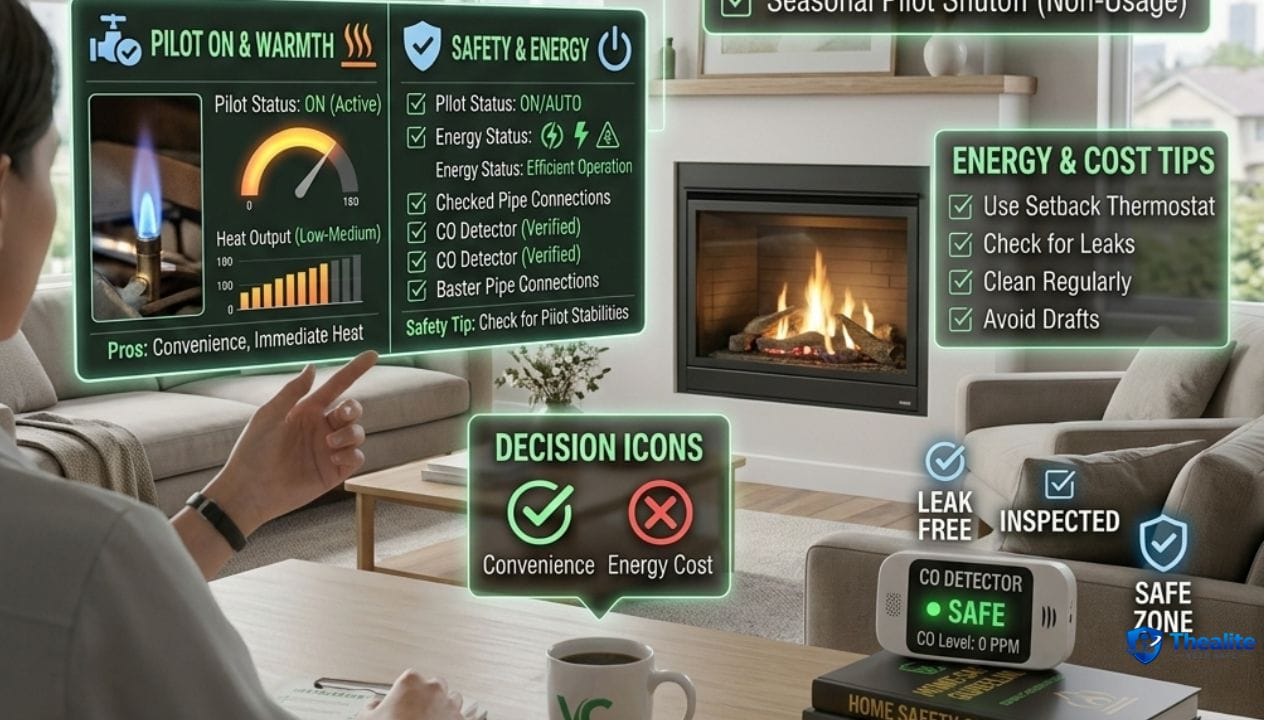
- Working CO alarms on every level of the home, especially near sleeping areas.
Step 3: Pros of Leaving the Pilot Light On
Many homeowners leave the pilot on during the heating season for convenience and performance.
- Faster startup: the fireplace can ignite more quickly when you want heat.
- Moisture control (sometimes): a small continuous warmth can reduce condensation in some venting systems (depends on the unit).
- Less frequent relighting: avoids repeated lighting steps if you use the fireplace often.
- Some people report fewer pilot/burner tube issues in the off-season (varies by environment and unit).
Step 4: Cons of Leaving the Pilot Light On
- Small but real gas use: it consumes fuel continuously.
- Adds a little heat to the home (undesirable in summer).
- If the fireplace has any venting/combustion problem, leaving it on doesn’t fix it—it can hide warning signs.
Step 5: When It’s Smart to Turn the Pilot Light Off
Many homeowners turn the pilot off when the fireplace won’t be used for a long stretch—especially in warm months. It can reduce gas use and keep the home cooler.
Situations where turning it off often makes sense
- You won’t use the fireplace for months (typical summer shutdown).
- You’ll be away from home for an extended trip.
- The pilot keeps going out and you’re planning service anyway (don’t keep relighting endlessly).
- You notice soot, unusual odors, or the flame looks abnormal (get it inspected).
When you should NOT guess—get help
- You smell gas.
- You have headaches/dizziness that improve when you leave the house (possible CO symptom).
- CO alarm ever sounds—treat it as urgent.
- You see black soot, heavy condensation, or unusual flame behavior.
Step 6: What a ‘Healthy’ Pilot Flame Looks Like
A healthy pilot flame is usually steady and mostly blue. Yellow/orange flickering, weak flames, or frequent outage can suggest dirt, airflow issues, or component problems. If you’re uncertain, schedule a service call rather than experimenting.
Step 7: Maintenance and Inspection (Your Best Safety Investment)
Even “clean” gas fireplaces collect dust, pet hair, and debris in burners and vents. Annual inspection is a common recommendation in many service guides and manufacturer guidance. A professional check typically includes cleaning, checking venting, verifying ignition and safety sensors, and confirming safe operation.
Simple homeowner checks (non-technical)
- Keep the area around the fireplace clear of combustibles.
- Make sure vents/termination caps aren’t blocked outside.
- Test smoke and CO alarms regularly; replace batteries as recommended.
- If you haven’t serviced it in over a year, schedule a check before heavy use.
Step 8: Cost and Comfort (How Much Gas Does a Pilot Use?)
Pilot lights typically use a small amount of gas per hour, but it adds up over months. The exact cost depends on your pilot’s BTU rating and local gas prices. If you rarely use the fireplace in summer, turning the pilot off may save a little money and reduce indoor heat.
Step 9: ‘Pilot On’ Safety Checklist
- CO alarms installed and working (test regularly).
- No gas odor, no soot, no unusual smell or residue.
- Pilot flame appears steady and normal (not weak/flickering/yellow).
- Fireplace is vented properly and vents are not blocked.
- Fireplace serviced/inspected within the last year (or scheduled).
- You understand how to shut it off/on using the owner’s manual (or you have a pro do it).
FAQs
Is it dangerous to leave the pilot light on all year?
Often it’s not dangerous when the fireplace is properly vented and maintained, but it can waste gas and add heat during summer. If anything seems wrong (odor, soot, CO alarm), stop using it and get it inspected.
Should I turn off the pilot light in summer?
Many homeowners do if they won’t use the fireplace for months. Always follow your manual and consider a professional service if you’re unsure.
Can a gas fireplace create carbon monoxide?
Any fuel-burning appliance can create CO if combustion is incomplete or venting fails. That’s why CO alarms and proper venting are critical.
What if my pilot light keeps going out?
Repeated outages suggest a maintenance or component issue. It’s safer to schedule service than to repeatedly relight and hope it resolves.
Do vent-free fireplaces change the answer?
Vent-free systems have different ventilation and indoor-air considerations. Follow manufacturer instructions carefully and ensure CO alarms are present.
Conclusion
So, is it safe to keep the pilot light on in a gas fireplace? In many homes, yes—**when the unit is in good shape, venting correctly, and maintained**. If you use the fireplace frequently in winter, leaving the pilot on can be convenient. If you won’t use it for months, turning it off can save a bit of gas and reduce summer heat. The safest approach is simple: follow your manual, keep CO alarms working, and schedule regular inspection—then use a checklist, not guesswork.

As a digital marketer, she has received multiple international awards, including Campaign of the Year at the 2023 European Content Awards and Best Use of Content Marketing at the 2022 Global Search Awards. Nicai holds an MSc in Marketing (First Class Honours) from the UCD Smurfit Graduate Business School and she has also completed the Artificial Intelligence Programme at Oxford University’s Saïd Business School. She is also a contributing writer for publications such as Entrepreneur and Esquire.