Soup is one of the most popular buffet items—and one of the easiest to mishandle. That’s because soups are often held for long periods, served by many guests, and can develop “cold spots” if they aren’t stirred and held at the right temperature. When soup drops into the food safety “danger zone,” bacteria can grow fast.
This U.S.-focused guide explains practical hot-holding rules for buffets, catered events, and cafeteria lines: the temperatures to aim for, how to use equipment correctly, how to reheat safely, and simple staff routines that prevent foodborne illness.
Quick Answer (The Buffet Soup Safety System)
- Keep soup hot-held at 135°F (57°C) or higher (U.S. standard hot-holding target).
- Use hot-holding equipment properly (steam table/warmer is for holding, not cooking).
- Stir regularly to prevent cold spots and keep temperature even.
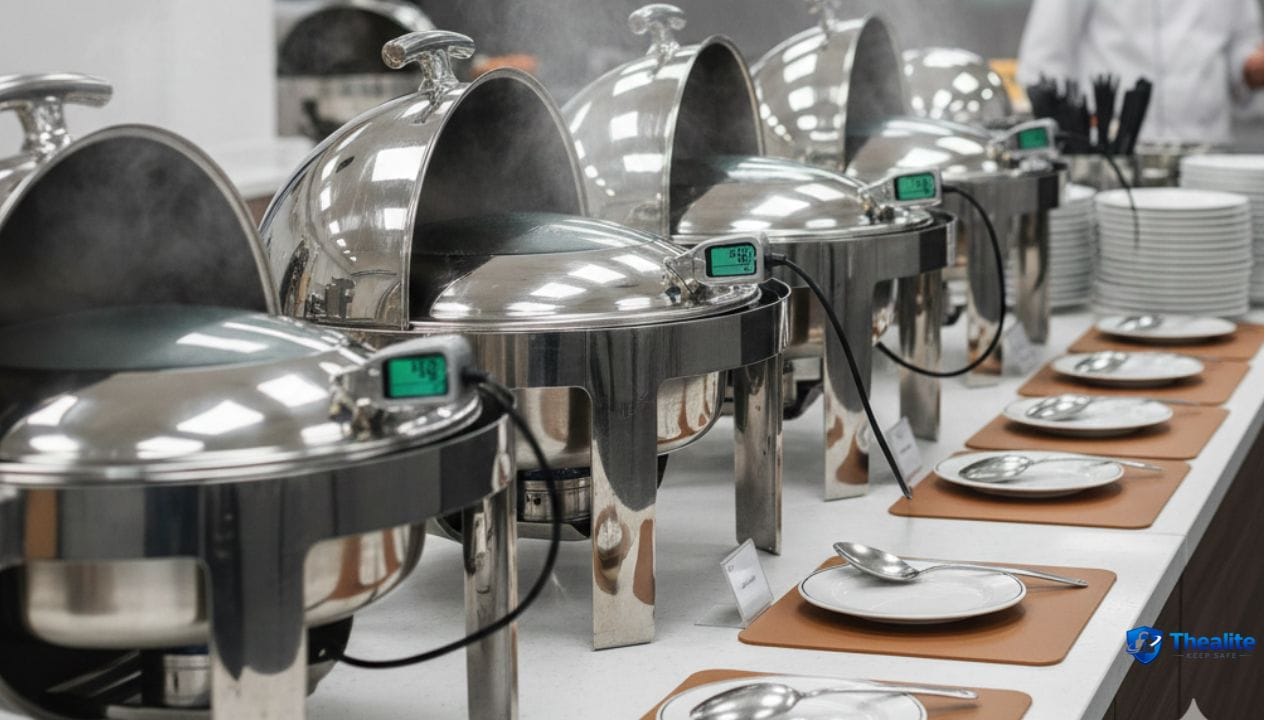
- Check temps with a thermometer on a schedule and record them.
- Replace pans in small batches instead of topping off old soup.
- Reheat rapidly to a safe temperature before returning soup to the line.
- Use clean ladles and prevent guest contamination (sneeze guards, utensil control).
- Follow time control rules if you’re using time instead of temperature.
Why Buffet Soup Gets Risky
Soup is a high-risk buffet item mainly because it’s warm, wet, and often served for hours. Even if the surface looks steaming, the center or edges of the pot can cool down—especially when the lid is off and guests keep opening it.
Common buffet soup problems
- Soup held too cool (drops into the danger zone).
- Steam table not preheated or water pan empty/low.
- No stirring, so the center stays cooler than the surface.
- Topping off (adding fresh hot soup to old soup).
- Ladles fall into soup or are shared between foods (cross-contamination).
- No temperature log—staff assumes it’s “fine.”
The Core Rule: Hot Hold at Safe Temperature
For U.S. food service, hot foods are typically kept at **135°F (57°C) or hotter** to stay out of the bacterial danger zone. That means the **entire** soup needs to hold at or above that target—not just the top layer.
Where to measure temperature
- Measure in the center and near the edges (edges cool faster).
- Stir first, then measure (stirring eliminates hot/cold pockets).
- Check after rush periods when the lid has been off repeatedly.
Equipment: Steam Tables, Warmers, and Crocks
Hot-holding equipment is designed to maintain temperature—not to bring cold soup up to safe temperature. If soup goes out of temp, you must reheat it correctly.
Steam table basics (what staff should know)
- Preheat the unit before putting soup on the line.
- Keep water levels correct (low water = poor heat transfer).
- Use lids when possible to retain heat.
- Avoid overfilling deep containers—big volume heats unevenly.
Small-batch strategy (more control, less waste)
Instead of placing a huge pot on the line for hours, use smaller inserts and swap them out. This keeps soup hotter and reduces time on the buffet.
Stirring: The Most Underrated Safety Step
Soup can have a hot surface and cooler interior. Regular stirring helps maintain an even temperature and prevents cold spots.
Practical stirring routine
- Stir at set intervals (e.g., every 15–30 minutes during service).
- Stir before every temperature check.
- Use a clean ladle/spoon; replace utensils if they fall in or get contaminated.
Reheating Soup Safely (When Temps Drop)
If soup falls below safe hot-holding temperature, don’t ‘hope it warms back up’ on the line. Remove it and reheat properly, then return it to hot holding.
Safe reheating principles
- Reheat quickly using a stove, kettle, or approved reheating equipment (not the steam table).
- Bring soup up to a safe reheating temperature before returning it to the line.
- Stir while reheating to prevent scorching and ensure even heat.
Don’t top off old soup
Topping off combines old product (possibly time/temperature abused) with new product. Instead, replace the pan/insert with a fresh batch and cool/handle leftovers according to your policy.
Time Control Option (If You’re Using Time Instead of Temp)
Some operations use time as a public health control (TPC) instead of temperature, meaning food can be out of temperature for a limited time and then must be discarded. If you use this method, staff must follow written procedures and strict labeling.
If using time control, be strict
- Label the start time clearly when soup goes on the line.
- Discard at the time limit—no exceptions.
- Do not ‘reset’ the clock by reheating on the line.
Prevent Guest Contamination (Buffet Reality)
Buffets add a unique challenge: guests touch utensils, cough/sneeze, and sometimes use the wrong ladle. Your job is to reduce contamination opportunities.
Practical buffet controls
- Use sneeze guards where required/available.
- Provide a dedicated ladle for each soup; avoid shared utensils.
- Use ladle rests and replace ladles that fall into soup.
- Keep the soup pot covered when possible (lids reduce exposure and heat loss).
- Train staff to monitor the line and replace any contaminated utensils immediately.
Gloves help only when used correctly—see Wearing Gloves Can Keep Food Safe By.
Cooling and Storing Leftover Soup Safely
After service, leftovers can be safe—but only if cooled quickly and stored properly. Big pots cool slowly and can stay in the danger zone too long.
Better cooling method
- Transfer leftovers into shallow containers (faster cooling).
- Use an ice bath or blast chiller if available.
- Vent containers while cooling if your policy allows, then cover and refrigerate.
- Date-label and follow your operation’s discard policy.
General food safety framework: How to Keep Food Safe and Keep Temperature Control for Safety Food Safe.
Staff Temperature Log: What to Record
Logs create accountability and help you catch issues early.
- Time of check
- Soup name / station
- Measured temperature (after stirring)
- Corrective action if out of range (reheat, replace, discard)
- Initials of staff member
Common Mistakes That Make Buffet Soup Unsafe
- Putting lukewarm soup on the line and expecting the warmer to heat it.
- Skipping stirring (creates cold spots).
- Not checking temperature at set intervals.
- Topping off old soup instead of replacing the pan.
- Letting the water pan run dry on a steam table.
- Reusing a contaminated ladle or letting guests use the wrong utensil.
Copy/Paste Checklist: Keep Soup Safe on a Buffet Line
- Soup held at 135°F (57°C) or higher (stir before checking)
- Steam table/warmer preheated; water pan at correct level
- Lids used when possible to reduce heat loss and contamination
- Stir soup every 15–30 minutes (and before temp checks)
- Temp checks logged on schedule; corrective actions documented
- No topping off—swap pans in small batches
- Reheat off the line if soup drops out of temp, then return to hot hold
- Clean ladles/rests; replace contaminated utensils immediately
- Leftovers cooled in shallow containers and stored properly
FAQs
What temperature should soup be on a buffet line?
In U.S. food service, hot-held foods are typically kept at 135°F (57°C) or higher to stay out of the danger zone. Check your local code and operation policy.
Can I heat soup on a steam table?
Steam tables are for holding hot food, not for reheating cold food to safe temperatures. Reheat soup using approved reheating equipment, then place it on the steam table for holding.
How often should staff check buffet soup temperature?
Many operations use scheduled checks (often around every 2 hours or more frequently during busy periods). The most important point is to have a consistent schedule, stir before measuring, and log results per policy.
Why shouldn’t we top off the soup pan?
Topping off mixes old soup with new soup. If the old soup has been in the danger zone, you can contaminate the whole batch. Replace pans instead.
What if a ladle falls into the soup?
Remove and replace it with a clean ladle. If you suspect contamination, follow your operation’s policy (which may include replacing the batch).
Conclusion
Keeping soup safe on a buffet line comes down to temperature control and routine discipline: hot hold at 135°F or higher, stir to prevent cold spots, check and log temperatures on schedule, reheat properly when needed, and prevent contamination with clean utensils and lids. With small-batch service and consistent checks, buffet soup can be both popular and safe.

As a digital marketer, she has received multiple international awards, including Campaign of the Year at the 2023 European Content Awards and Best Use of Content Marketing at the 2022 Global Search Awards. Nicai holds an MSc in Marketing (First Class Honours) from the UCD Smurfit Graduate Business School and she has also completed the Artificial Intelligence Programme at Oxford University’s Saïd Business School. She is also a contributing writer for publications such as Entrepreneur and Esquire.