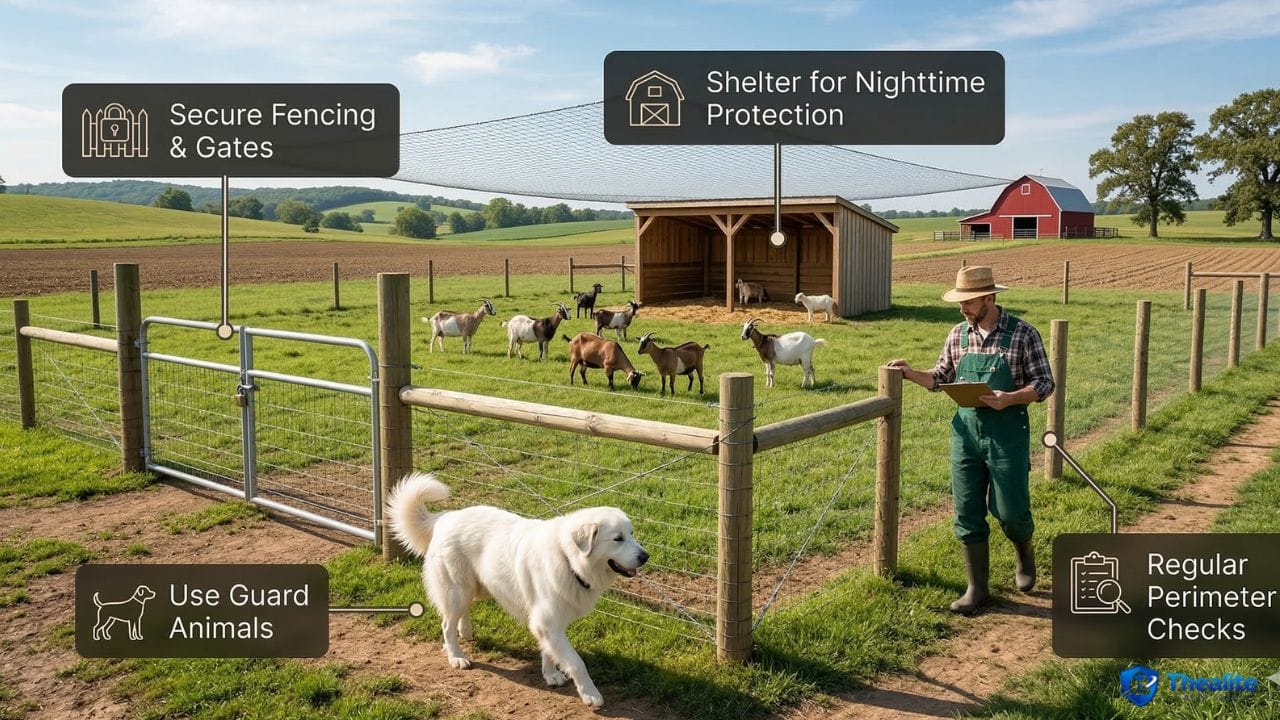
Raising goats can be an incredibly rewarding experience, whether you are managing a small backyard herd for dairy, keeping a few as pets, or running a large commercial farm. However, adding livestock to your property naturally attracts local wildlife. Because goats are prey animals, they rely completely on you to create a secure environment. Protecting your herd requires proactive planning, sturdy infrastructure, and a consistent daily routine to deter predators before they ever have the chance to approach your pasture.
Why Goats Are Vulnerable to Predators
Despite their horns and sometimes stubborn personalities, goats are highly vulnerable. They do not possess the speed to outrun a fast predator, nor do they have the fighting instincts of larger livestock like cattle. Across the USA, goats are frequently targeted by coyotes, mountain lions, bears, bobcats, foxes, and even loose neighborhood dogs. Domestic dogs, in fact, are often the leading cause of livestock loss, as they frequently chase and attack out of instinct rather than hunger.
How to Keep Goats Safe from Predators with Better Fencing
The foundation of livestock security is a strong perimeter. If you want to know how to keep goats safe from predators, it starts with field fencing that is at least four to five feet tall. Standard woven wire fencing (often called “no-climb” fence) with small openings prevents predators from squeezing through and stops goats from getting their heads stuck. Many successful farms reinforce woven wire fencing by running a strand of hot electric wire along the top to deter climbing, and another strand near the bottom to stop predators from digging underneath.
Shelter, Night Pens, and Secure Sleeping Areas
Predators are significantly more active between dusk and dawn. Similar to the routines many rural property owners use to figure out how to keep outdoor cats safe at night by bringing them inside, goats should be enclosed before the sun goes down. A sturdy barn with lockable doors or a reinforced, heavy-duty night pen is essential. Ensure that latches are complex enough that clever predators—like raccoons or bears—cannot easily open them.
Feeding Routines That Reduce Predator Attention
Predators are often drawn to a property by the smell of easy food. Leaving grain or sweet feed out overnight attracts rodents, which quickly draw snakes, foxes, and coyotes to the area. If you already practice how to keep barn cats safe from coyotes, you know that managing outdoor feeding stations is vital. Feed your goats during the daylight hours, and store all excess feed in tightly sealed, chew-proof metal bins inside the barn.
Guardian Animals and Supervised Turnout
Introducing a livestock guardian animal is one of the most effective, humane ways to protect a herd. Livestock Guardian Dogs (LGDs), such as Great Pyrenees or Anatolian Shepherds, are bred specifically to live full-time with the herd and actively patrol the pasture. Donkeys and llamas can also serve as excellent guardians, as they are naturally aggressive toward canines like coyotes and stray dogs.
Protecting Kids and Smaller Goats
Baby goats (kids) and miniature breeds face unique threats, including aerial predators like large hawks and eagles. Kids should never be left unsupervised in a massive, open pasture. Keep them in a smaller, covered pen or inside a secure stall with their mother until they are large enough to safely join the rest of the herd outdoors.
Signs Predators Are Visiting Your Property
Vigilance is key to farm safety. Regularly inspect the perimeter of your pasture for signs of wildlife. Look for tracks in the mud, patches of dug-out dirt under the fence line, or unusual animal droppings. You should also pay attention to your herd’s behavior. If your goats are suddenly pacing, vocalizing excessively, or refusing to go into a specific part of the pasture, they might be sensing a predator nearby.
What to Do After a Predator Sighting or Attack
If you spot a predator stalking the fence line, immediately herd your goats into their locked barn and reinforce any weak spots in your fencing. In the unfortunate event of an attack, secure your remaining animals and contact your local wildlife authorities or animal control to report the incident.
Running a safe farm requires emergency preparedness. Just as you keep emergency vet numbers handy, you must know how to keep important documents safe at home so you can quickly access property insurance, livestock registration, and veterinary records when needed.
Common Farm Safety Mistakes to Avoid
A major mistake is relying solely on barbed wire fencing, which rarely stops determined predators from slipping through the strands. Another common error is assuming that a well-lit yard is enough of a deterrent; a hungry predator will eventually ignore standard floodlights unless they are paired with a physical barrier.
Finally, while focusing heavily on the barn, do not neglect your own homestead’s security. A comprehensive approach to rural property safety includes knowing how to keep cash safe at home and keeping valuables safe at home inside high-quality, fireproof safes, ensuring that your entire lifestyle is protected from both wildlife and human intruders.
A Simple Daily Goat Safety Checklist
- Walk the perimeter fence line to check for new holes, digging, or damaged wire.
- Ensure all grain and sweet feed is locked in heavy-duty metal bins.
- Count the herd every morning and evening during feeding time.
- Lock the barn doors or secure the night pen at dusk.
- Check the voltage on your electric fence weekly to ensure it is carrying a proper charge.
Frequently Asked Questions (FAQ)
How to keep goats safe from predators?
You can keep goats safe from predators by installing sturdy, 5-foot woven wire fencing, locking the herd in a secure barn at night, utilizing livestock guardian animals like dogs or donkeys, and eliminating outdoor feed that attracts local wildlife.
What predators attack goats most often?
In the United States, the most common predators that attack goats are coyotes and loose domestic neighborhood dogs. Depending on the region, mountain lions, bears, bobcats, and foxes can also pose significant threats, particularly to smaller goats and kids.
Should goats be locked up at night?
Yes, goats should be locked in a secure barn or a heavy-duty, predator-proof night pen every evening. Predators are most active from dusk until dawn, making nighttime the most dangerous period for grazing livestock.
Is electric fencing good for protecting goats?
Yes, electric fencing is highly effective when used as a secondary deterrent. Running a strand of hot wire along the top of a woven wire fence stops climbing predators, and running a strand near the bottom stops them from digging underneath.
Do guardian dogs help protect goats?
Yes, Livestock Guardian Dogs (LGDs) like Great Pyrenees are specifically bred to live with and protect herds. They deter predators through scent marking, loud barking, and physical confrontation if necessary, making them an excellent farm security asset.
How high should fencing be for goat safety?
For goat safety, perimeter fencing should be at least four to five feet tall. This height deters most coyotes and stray dogs from jumping over, while also preventing the goats themselves from escaping the pasture.
What should you do after a predator attack?
After a predator attack, immediately move the remaining goats into a locked barn to secure them. Provide veterinary care to any injured animals, inspect your fence line to fix the breach, and contact local wildlife authorities to report the incident.
How do you protect baby goats from predators?
Baby goats (kids) should be kept in enclosed, covered pens to protect them from aerial predators like eagles and hawks, as well as climbing predators. Do not allow them in the open pasture until they have grown large enough to safely run with the adult herd.

As a digital marketer, she has received multiple international awards, including Campaign of the Year at the 2023 European Content Awards and Best Use of Content Marketing at the 2022 Global Search Awards. Nicai holds an MSc in Marketing (First Class Honours) from the UCD Smurfit Graduate Business School and she has also completed the Artificial Intelligence Programme at Oxford University’s Saïd Business School. She is also a contributing writer for publications such as Entrepreneur and Esquire.