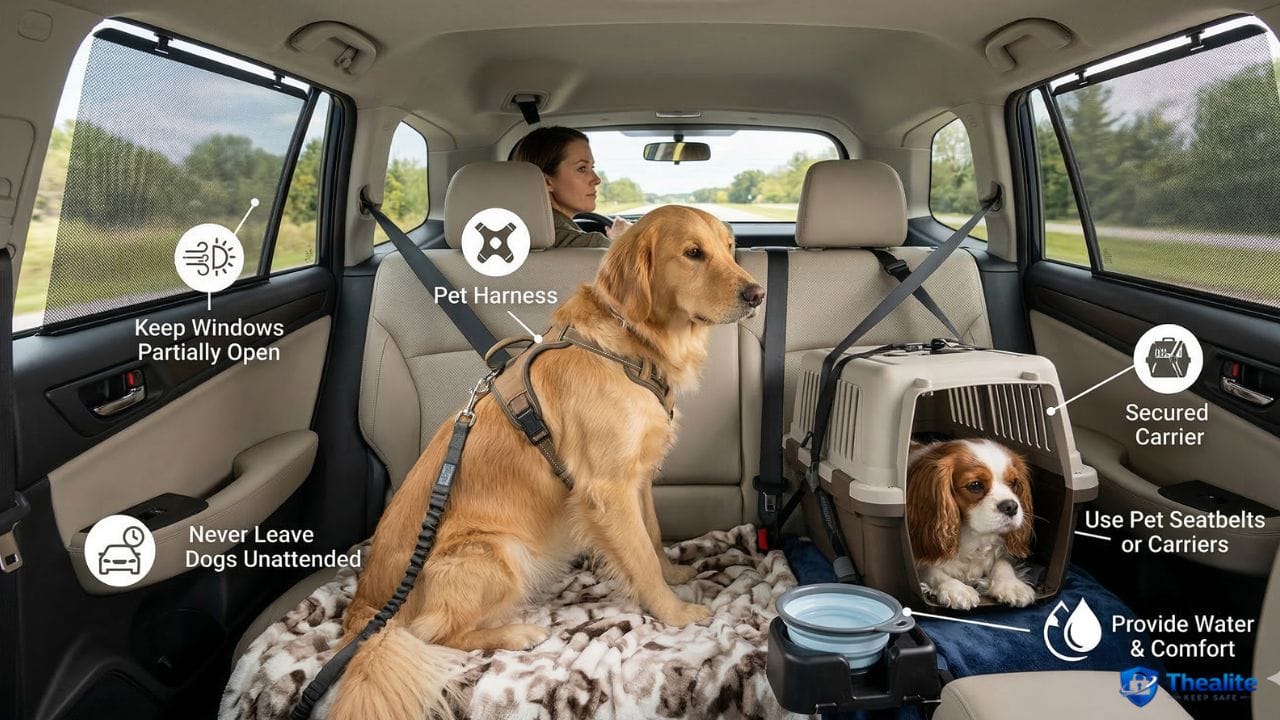
Taking your furry best friend on a road trip, or even just a quick ride to the local park, is one of the greatest joys of pet ownership. However, treating your dog like a human passenger by letting them ride loose in the vehicle presents massive risks. Every time you turn the key, you are responsible for the well-being of everyone inside the cabin. Just as you strategize how to keep your money safe while traveling, you must also create a rock-solid plan for your pet’s physical security. Establishing secure travel habits ensures that you and your dog arrive at your destination safely, comfortably, and without unnecessary stress.
Why Unrestrained Dogs Are Risky in Cars
An unrestrained dog is a major distraction to the driver. A dog pacing the back seat, climbing into the front, or suddenly barking out the window takes your eyes off the road when you need them most. Furthermore, physics dictates that in the event of a sudden stop, a loose dog becomes a heavy, high-speed projectile. This not only puts the dog at risk of severe injury but also creates a lethal hazard for the human occupants inside the vehicle.
How to Keep a Dog Safe in the Car with a Harness, Crate, or Barrier
If you want to know how to keep a dog safe in the car, you need to rely on crash-tested restraint systems. Your main options are a seat belt harness, a travel crate, or a heavy-duty cargo barrier.
- Crash-Tested Harnesses: These fit over the dog’s chest and plug directly into the vehicle’s seat belt receptacle. They keep the dog securely in the back seat and prevent them from wandering.
- Travel Crates: A sturdy, hard-sided crate is excellent for anxious dogs, providing them with a secure “den” while traveling.
- Cargo Barriers: For large breeds riding in SUVs, a metal barrier separating the cargo area from the passenger seats prevents the dog from flying forward during a hard brake.
How to Keep Dog Safe in Car Crash Situations with Better Restraint and Placement
The unthinkable can happen in a split second. Learning exactly how to keep dog safe in car crash scenarios comes down to vehicle placement and preventing momentum. In a collision, the safest dog is one that is firmly anchored to the vehicle’s frame. If you use a crate, do not just set it on the seat; you must strap it down using heavy-duty tie-downs or the vehicle’s cargo anchors. If you use a harness, ensure the tether is as short as possible so the dog isn’t launched off the seat before the belt catches.
Safest Seat Positions for Dogs
The safest place for any dog is the back seat or the dedicated rear cargo area of an SUV. The center of the back seat is statistically the safest spot in the event of a side-impact collision. Never allow your dog to ride on your lap, and keep them clear of areas where airbags deploy.
Why Dogs Should Not Ride in the Front Seat or Loose in a Truck Bed
Riding in the front passenger seat is incredibly dangerous for dogs because of the passenger-side airbag. Deployed airbags strike with explosive force, which can easily crush a dog’s skull or chest. Similarly, allowing a dog to ride loose in the bed of a pickup truck is one of the most dangerous transport methods imaginable. A single swerve or bump can throw the dog from the truck onto the highway.
Crate Sizing, Ventilation, and Securing the Crate
If you use a crate, sizing is vital. The crate should be just large enough for the dog to stand up, turn around, and lie down comfortably. If the crate is too big, the dog will be violently tossed around inside during an accident. Ensure the crate has plenty of ventilation holes, and place it in a spot where the car’s air conditioning can properly reach it.
Heat Safety and Never Leaving a Dog in a Parked Car
Vehicles act like greenhouses. Even on a mild 70-degree day, the temperature inside a parked car can soar past 100 degrees in just 20 minutes. Cracking the windows does almost nothing to prevent this rapid heat spike. Heatstroke in dogs is swift and frequently fatal. When you step inside a gas station, you might be thinking about how to keep your car safe from theft, but never prioritize locking your doors over your pet’s life. If you cannot bring your dog inside a building with you, one person must stay behind in the vehicle with the air conditioning running.
Travel Breaks, Water, Motion Sickness, and Comfort Planning
Long trips require frequent stops. Plan to pull over every two to three hours to let your dog stretch their legs, relieve themselves, and drink fresh water. During these bathroom breaks near wooded highway edges, keep your dog on a short leash. Just as rural homeowners must figure out how to keep barn cats safe from coyotes, you must protect your dog from sudden wildlife encounters at unfamiliar rest stops.
What to Pack for Dog Car Travel
Always travel with a dedicated doggy go-bag. You should pack:
- Bottled water and a collapsible silicone bowl.
- Extra leashes, a sturdy collar with updated ID tags, and waste bags.
- Their regular food to prevent an upset stomach, along with a few high-value treats.
- Any required medications. Make sure to identify five safe places to keep medicines in your vehicle where they will stay cool and out of the dog’s reach.
- A copy of their recent veterinary records and proof of rabies vaccination. Just as you stash extra cash to keep money safe when traveling, keeping physical copies of their vet records in the glovebox is a smart backup plan.
Common Mistakes Pet Owners Make During Car Trips
A frequent mistake is allowing a dog to stick their head out the window. While dogs love the breeze, high-speed wind can force debris, dirt, and insects into their eyes and ears, causing severe injuries. Another common error is feeding a dog a large meal right before hitting the road, which drastically increases the chances of car sickness. Instead, feed them a small meal a few hours before departure, and offer the rest once you reach your destination.
Frequently Asked Questions (FAQ)
How to keep a dog safe in the car?
To keep a dog safe in the car, always use a crash-tested restraint system such as a seat belt harness, a securely anchored hard-sided travel crate, or a sturdy metal cargo barrier. Never let your dog roam freely around the cabin.
How to keep dog safe in car crash?
You can keep a dog safe in a car crash by keeping them in the back seat and securing them firmly to the vehicle. Use a harness with a very short tether to minimize their forward momentum, or use heavy-duty cargo straps to anchor a travel crate so it does not become a projectile.
Should a dog ride in the front or back seat?
A dog should always ride in the back seat or the cargo area of an SUV. The front seat is highly dangerous because passenger-side airbags deploy with enough force to cause fatal injuries to dogs.
Is a dog seat belt safer than a crate?
Both are excellent options if you use high-quality, crash-tested products. A hard-sided crate offers great impact protection, but it must be strapped down. A seat belt harness is highly effective if it is crash-certified and keeps the dog snug against the back seat.
How do you secure a dog crate in a car?
Secure a dog crate by placing it flush against the back of the rear seats (in an SUV cargo area) and using heavy-duty ratchet straps or bungee cords to tie it down to the vehicle’s metal floor cargo anchors.
Can a dog ride loose in the car?
No, a dog should never ride loose in the car. An unrestrained dog is a major distraction to the driver and will become a dangerous, high-speed projectile in the event of sudden braking or a crash.
How often should you stop on a long trip with a dog?
You should stop every two to three hours on a long road trip. Use this time to let your dog stretch their legs, drink fresh water, and relieve themselves to prevent travel anxiety and discomfort.
Is it safe to leave a dog in a parked car for a few minutes?
No, it is never safe to leave a dog alone in a parked car, especially in warm weather. Temperatures inside a vehicle can rise to deadly levels within minutes, even with the windows cracked open.

As a digital marketer, she has received multiple international awards, including Campaign of the Year at the 2023 European Content Awards and Best Use of Content Marketing at the 2022 Global Search Awards. Nicai holds an MSc in Marketing (First Class Honours) from the UCD Smurfit Graduate Business School and she has also completed the Artificial Intelligence Programme at Oxford University’s Saïd Business School. She is also a contributing writer for publications such as Entrepreneur and Esquire.