Important documents are valuable for one reason: they prove who you are and what you own. That also makes them a target for damage and theft. In the U.S., the most common ways people lose vital documents are predictable—house fires, water leaks or flooding, burglary, and simple misplacement.
The best way to keep important documents safe is a **layered system**: store originals in a secure place, protect them from fire and water, create secure digital backups, and use travel routines so documents don’t get lost on the road.
Quick Answer (The 7-Step System)
- Identify which documents are truly critical (vital records, identity, property, legal).
- Store originals in one secure place (home safe or safe deposit box depending on access needs).
- Protect against fire and water (fire-resistant + water-resistant storage; store elevated).
- Avoid common high-risk spots (basements, garages, under sinks, desk drawers).
- Create secure digital backups (scan → encrypt/secure cloud → offline backup).
- Use travel routines: carry only what you need daily; keep copies separate.
- If something is lost or stolen: report, protect identity, replace, and update your system.
Step 1: Make a ‘Vital Documents’ List (So You Protect the Right Things)
Before you buy a safe or scan anything, list the documents that would be hardest to replace or most damaging if stolen. Most households can use these tiers.
Tier 1: Identity and legal documents (highest priority)
- Birth certificate, Social Security card (or equivalent)
- Passport and immigration paperwork
- Marriage/divorce records, adoption documents
- Wills, trusts, power of attorney, advanced directives
Tier 2: Ownership and financial records
- Home deed/lease, vehicle titles
- Insurance policies (home/renters/auto/life)
- Tax returns and key receipts
- Loan paperwork and major contracts
Tier 3: Medical and family records
- Vaccination and medical records you may need quickly
- School documents and custody paperwork (when relevant)
Tip: Don’t over-carry. Most Tier 1 originals should not live in your everyday bag.
Step 2: Choose Where Originals Live (Home Safe vs Safe Deposit Box)
There isn’t one perfect answer. The best location depends on how quickly you need access. Many people use a hybrid approach: some documents at home for quick access, and rarely-needed originals stored off-site.
Option A: Home storage (best for quick access)
- Best for: documents you may need fast (insurance cards, some IDs, emergency info).
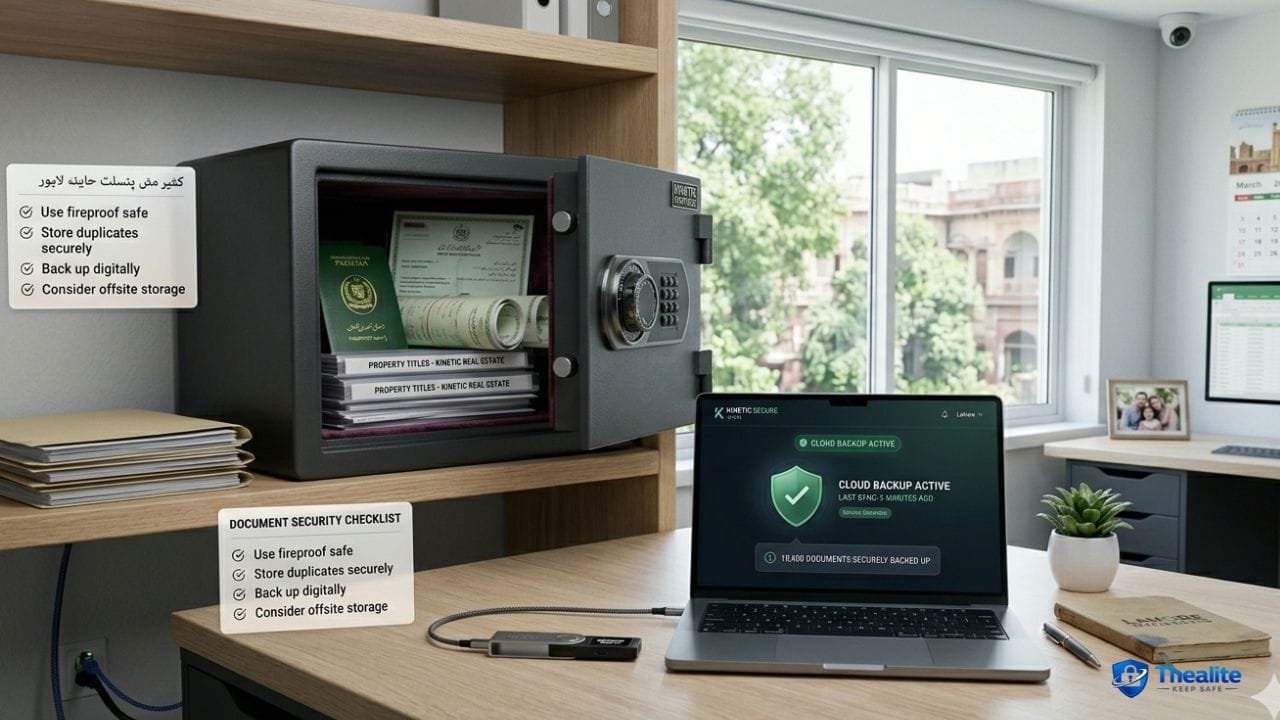
- Best practice: use a fire-resistant/water-resistant container or a quality safe.
- Improve security: bolt down safes and keep storage locations private.
Option B: Bank safe deposit box (best for rarely-needed originals)
- Best for: originals you rarely need but can’t risk losing (certain vital records, deeds, legacy documents).
- Tradeoff: access is limited to bank hours (and bank closures/holidays can affect access).
- Best practice: keep copies and an inventory elsewhere so you can act quickly if needed.
More detail: What to Keep in a Safe Deposit Box • What to Keep in a Safe.
Step 3: Fire Protection (The Most Common Total-Loss Scenario)
House fires can destroy paper quickly, and smoke or sprinkler water can ruin documents even if they don’t burn. Fire protection is about buying time.
Fire safety habits for documents
- Store Tier 1 documents in fire-resistant storage.
- Keep documents away from common ignition zones (kitchen, heater closets).
- Test smoke alarms regularly and keep fire extinguishers accessible.
- If you live in wildfire areas, prioritize off-site storage for irreplaceable originals.
Step 4: Water and Moisture Protection (Leaks, Floods, Humidity)
Water damage is more common than people think: pipe leaks, roof leaks, floods, and even high humidity can ruin paper over time.
- Store documents elevated (off the floor) and away from plumbing.
- Use sealed pouches or water-resistant sleeves inside your box/safe.
- Avoid damp basements unless you actively dehumidify the space.
- If you store documents in a safe, consider moisture control to reduce mildew risk.
Moisture help: How to Keep Moisture Out of a Safe • What to Put in a Safe to Keep Moisture Out.
Step 5: Theft and Privacy Protection (Don’t Make It Easy)
Documents can be valuable to thieves because they enable identity theft. Basic privacy rules reduce the chance your documents become a target.
- Don’t store vital documents in obvious drawers or filing cabinets.
- Limit who knows where originals are stored.
- Shred sensitive paperwork you don’t need.
- Be careful with contractors/guests—secure documents during visits.
Identity protection: How to Keep Your Identity Safe Online.
Step 6: Digital Backups (Scan + Store Securely)
Digital copies won’t replace every original, but they make replacement and recovery dramatically easier. The key is secure storage—scans contain sensitive data.
What to scan first
- IDs (front/back), passport ID page, insurance cards, medical documents
- Vehicle titles/registration (as needed), deeds/leases, key legal docs
- Emergency contact list (insurance agents, banks, doctors, family contacts)
How to store backups safely
- Use a secure cloud account protected by a strong password + MFA.
- Keep an encrypted offline backup (USB or external drive) stored separately.
- Avoid emailing scans to yourself as the main storage method.
- Protect your email because it’s the reset key for everything.
More: Keep Important Documents Safe Online • How to Keep Your Passwords Safe • How to Keep Your Computer Safe.
Step 7: Travel Routines (Where Documents Get Lost)
Travel is the highest-loss moment for passports and IDs. The winning strategy: carry only what you need daily and keep backups separate.
- Keep passport/ID on your body in a secure pocket or travel pouch.
- Don’t store passport + wallet + phone in one place (one theft = total loss).
- Keep a photocopy or digital copy stored separately from the original.
- In hotels, secure backups and don’t leave documents out on counters.
Travel reads: How to Keep Documents Safe While Traveling • How to Keep Your Passport Safe While Traveling • How to Keep a Hotel Room Safe.
What to Do If Important Documents Are Lost or Stolen
If documents go missing, act quickly. Your priorities are: stop identity fraud, report the loss, and replace documents in the right order.
Fast action plan
- If theft occurred, file a police report (helps with replacement and some claims).
- Secure accounts if your wallet/phone was stolen (bank cards, email, device tracking).
- Replace the most urgent document first (passport for travel, driver’s license for ID).
- Monitor for identity fraud and consider protective steps if key identity docs were stolen.
- Update your document inventory and storage system after replacement.
Copy/Paste Checklist: Keep Important Documents Safe
- List Tier 1 vital documents (ID/legal), Tier 2 (property/finance), Tier 3 (medical/family)
- Store Tier 1 originals securely (home safe or safe deposit box based on access needs)
- Use fire-resistant + water-resistant protection; store elevated and away from plumbing
- Avoid basements/garages/desk drawers for critical documents
- Scan key documents and store securely (cloud + MFA + encrypted offline backup)
- Travel: carry only what you need; keep backups separate; use secure pouch/pocket
- If lost/stolen: report → secure accounts → protect identity → replace → update system
FAQs
What is the safest way to store important documents at home?
A fire-resistant, water-resistant document container or a quality, secured home safe (ideally bolted down) in a climate-stable area works well for many households—especially when combined with digital backups.
Should I keep my Social Security card in my wallet?
Most people should avoid carrying it daily. Store the original securely and carry it only when needed for a specific purpose.
Is a safe deposit box better than a home safe?
A safe deposit box can reduce home burglary and disaster risk for documents you rarely need, but access is limited to bank hours. Many people use a hybrid approach.
How can I protect documents from water damage?
Store documents elevated and sealed, away from plumbing, and avoid damp spaces. Use water-resistant sleeves inside your storage container.
Are digital copies of documents safe?
They can be, if stored securely: strong passwords, MFA, and an encrypted backup. Avoid storing sensitive scans in unsecured email or unprotected cloud notes.
Conclusion
To keep important documents safe, use layers: secure storage for originals, protection from fire and water, strong privacy habits, and secure digital backups. When traveling, carry only what you need and keep copies separate. With a simple system and an annual review, your documents stay protected—and you’ll be ready if something ever goes wrong.

As a digital marketer, she has received multiple international awards, including Campaign of the Year at the 2023 European Content Awards and Best Use of Content Marketing at the 2022 Global Search Awards. Nicai holds an MSc in Marketing (First Class Honours) from the UCD Smurfit Graduate Business School and she has also completed the Artificial Intelligence Programme at Oxford University’s Saïd Business School. She is also a contributing writer for publications such as Entrepreneur and Esquire.