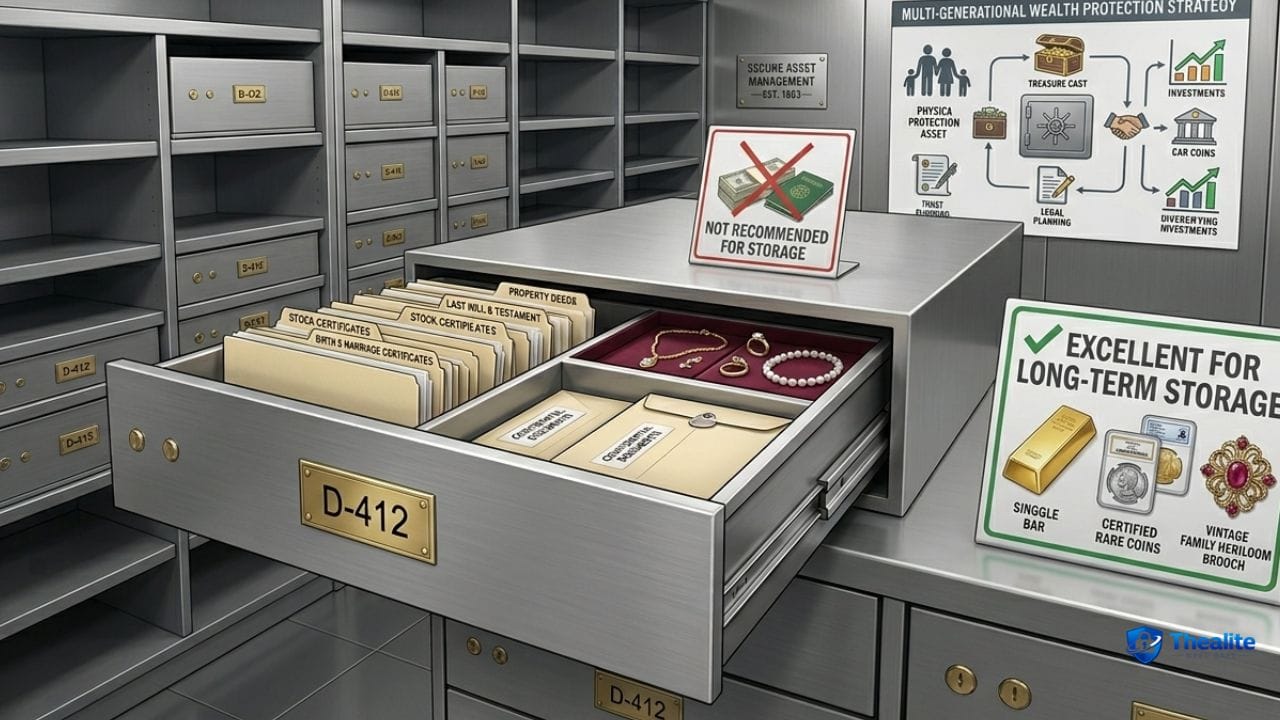
A safe deposit box is designed for one job secure, off-site storage for valuables and important papers you don’t need every day. For many U.S. households, it’s a smart way to protect items from burglary, house fires, and some types of water damage—because the box isn’t sitting in your home.
But safe deposit boxes also have limits: you can’t access them instantly, and you can’t use them as a daily storage drawer. The best approach is to store items that are high-value and hard to replace—*and* that you won’t urgently need at 2 a.m.
Quick Answer
The best things to keep in a safe deposit box are high-value, hard-to-replace items you don’t need frequently—like original vital records, estate planning documents, property or title papers, small heirlooms, jewelry you rarely wear, and encrypted backup drives. Avoid storing anything you might need urgently (like passports right before travel), items that must be accessed on weekends/holidays, or anything that could create problems if it’s locked away (like your only emergency cash).
Step 1: Understand What a Safe Deposit Box Is Best At (And Not Best At)
Safe deposit boxes are great for:
- Off-site storage (protects items if your home is burglarized or has a fire)
- Long-term storage for originals
- Keeping valuables out of sight and out of daily risk
Safe deposit boxes are NOT great for:
- Immediate emergency access (limited to bank hours and policies)
- Daily-use items (you’ll hate the inconvenience)
- Storing things you may need suddenly (passport the morning of travel, medical records during an emergency)
Step 2: What to Keep in a Safe Deposit Box (Best Categories)
Use these categories as a practical checklist.
1) Original vital records and identity documents
- Birth certificates, adoption papers
- Marriage certificates and divorce decrees (as applicable)
- Naturalization / immigration papers
- Social Security card (many people store it rather than carry it)
Tip: If you need these often (for school registration, jobs, travel paperwork), keep certified copies at home and store the originals off-site.
2) Estate planning and legal documents
- Wills and trusts
- Power of attorney documents
- Healthcare directives / living will documents
- Guardianship documents (as applicable)
- Business ownership documents (if relevant)
Important: Keep a note at home about where these documents are stored and how to access the box. If no one can access the box when you’re unavailable, the documents won’t help when they’re needed.
3) Property and ownership records
- Deed or key property paperwork summaries
- Vehicle titles (if you don’t need them frequently)
- Mortgage paperwork summaries and payoff documents
- Insurance policy originals (or key originals)
4) Jewelry, heirlooms, and small high-value items
A safe deposit box can be a strong option for valuables you rarely wear—especially if you don’t have a high-quality anchored home safe.
- Family heirlooms (small items)
- Jewelry you don’t wear regularly
- High-value watches or small collectibles
Related: How to Keep Jewelry Safe at Home • How to Keep Engagement Ring Safe • How to Keep Gold Jewelry Safe at Home.
5) Precious metals (gold/silver) and important valuables
If you store precious metals, a bank safe deposit box is a common choice because it keeps them off-site.
Related: How to Keep Gold Safe in Bank.
6) Secure digital backups (encrypted)
A safe deposit box can be a great off-site location for an encrypted USB drive or SSD that contains scans of critical documents and family archives.
- Encrypted USB/SSD with document scans (IDs, policies, tax docs)
- Encrypted backup of family photos
- Printed recovery codes stored securely (be careful—see what NOT to store below)
More: Keep Important Documents Safe Online.
Step 3: What NOT to Keep in a Safe Deposit Box
These items often create more problems than protection:
- Anything you might need urgently (passports right before travel, medical directives needed immediately, insurance cards you use often).
- Your only set of account recovery information (if you can’t access the box when locked out, you’ll be stuck).
- Perishables or anything temperature-sensitive.
- Illegal items or anything you’re unsure about legally (consult local laws and bank policies).
- Original “active” documents you frequently use (you’ll forget them there).
Cash question is common—see Can You Keep Cash in a Safe Deposit Box? and Illegal to Keep Cash in Safe Deposit Box.
Step 4: Safe Deposit Box vs Home Safe (Which to Use?)
Many households use both. Think of it like this: home safe = quick access, deposit box = off-site protection.
Use a home safe for:
- Emergency cash you might need quickly
- Documents you may need on short notice (IDs, copies, insurance contacts)
- Everyday valuables you want accessible but protected
Related: What to Keep in a Safe.
Use a safe deposit box for:
- Original documents and hard-to-replace papers
- High-value jewelry/heirlooms you rarely wear
- Off-site encrypted backups
Step 5: Inventory and Organization (So You Don’t Forget What’s Inside)
People lose value not because the box was unsafe—but because they forget what they stored. A simple system prevents that.
Best practices
- Create an inventory list (general descriptions, not sensitive details) kept at home.
- Photograph items before storing (especially jewelry/collectibles) and store photos securely.
- Use labeled envelopes/folders for documents (estate, property, IDs, backups).
- Schedule a yearly check-in to update documents and confirm contents.
Step 6: Plan Access for Emergencies (The Most Overlooked Part)
A safe deposit box can become a problem if nobody can legally access it when you’re sick, traveling, or deceased. Plan access intentionally.
Practical access planning
- Know who is authorized to access the box (co-owners/authorized signers).
- Store bank contact information and box location details in a secure place at home.
- If you have estate documents in the box, keep copies (or the attorney’s location) available outside the box too.
- Avoid storing the ONLY key or access method in a place that could be lost (have a safe system).
Step 7: Practical ‘What to Put in the Box’ Checklist
- Original birth certificates, marriage/divorce records, adoption papers
- Naturalization/immigration documents (as applicable)
- Will, trust, power of attorney, healthcare directives
- Property deed or key ownership documents; vehicle title if rarely needed
- High-value jewelry/heirlooms you don’t wear often
- Small precious metals/collectibles (if you store them)
- Encrypted USB/SSD backups of critical scans/photos
- Insurance policy originals or key originals (if needed)
FAQs
Should I keep my passport in a safe deposit box?
Only if you don’t need it often. Many people prefer keeping passports in a secure home safe for quick travel access, and storing certified copies or backups in the deposit box.
Is jewelry safer in a safe deposit box than at home?
For items you rarely wear, yes—off-site storage reduces burglary risk at home. If you wear the item regularly, a home safe is usually more practical.
Can I keep cash in a safe deposit box?
Some people do, but it can create access and policy issues and may not be insured the way bank deposits are. It’s better to keep only modest emergency cash at home and use banking options for larger amounts.
Should I store my only will in the box?
Be careful. If nobody can access the box when needed, the document can be hard to retrieve quickly. Many people store originals with an attorney or ensure authorized access exists.
How often should I check my safe deposit box?
At least once a year, and anytime you have a life change (marriage, move, new child, updated will, new insurance).
Conclusion
A safe deposit box is best for valuables and documents you want protected off-site—especially originals you can’t easily replace. Use it for vital records, estate paperwork, rare-use jewelry and heirlooms, and encrypted backups. Avoid putting anything you might need urgently or anything that would cause problems if locked behind bank hours. With a simple inventory and access plan, your safe deposit box becomes a reliable long-term safety tool.

As a digital marketer, she has received multiple international awards, including Campaign of the Year at the 2023 European Content Awards and Best Use of Content Marketing at the 2022 Global Search Awards. Nicai holds an MSc in Marketing (First Class Honours) from the UCD Smurfit Graduate Business School and she has also completed the Artificial Intelligence Programme at Oxford University’s Saïd Business School. She is also a contributing writer for publications such as Entrepreneur and Esquire.