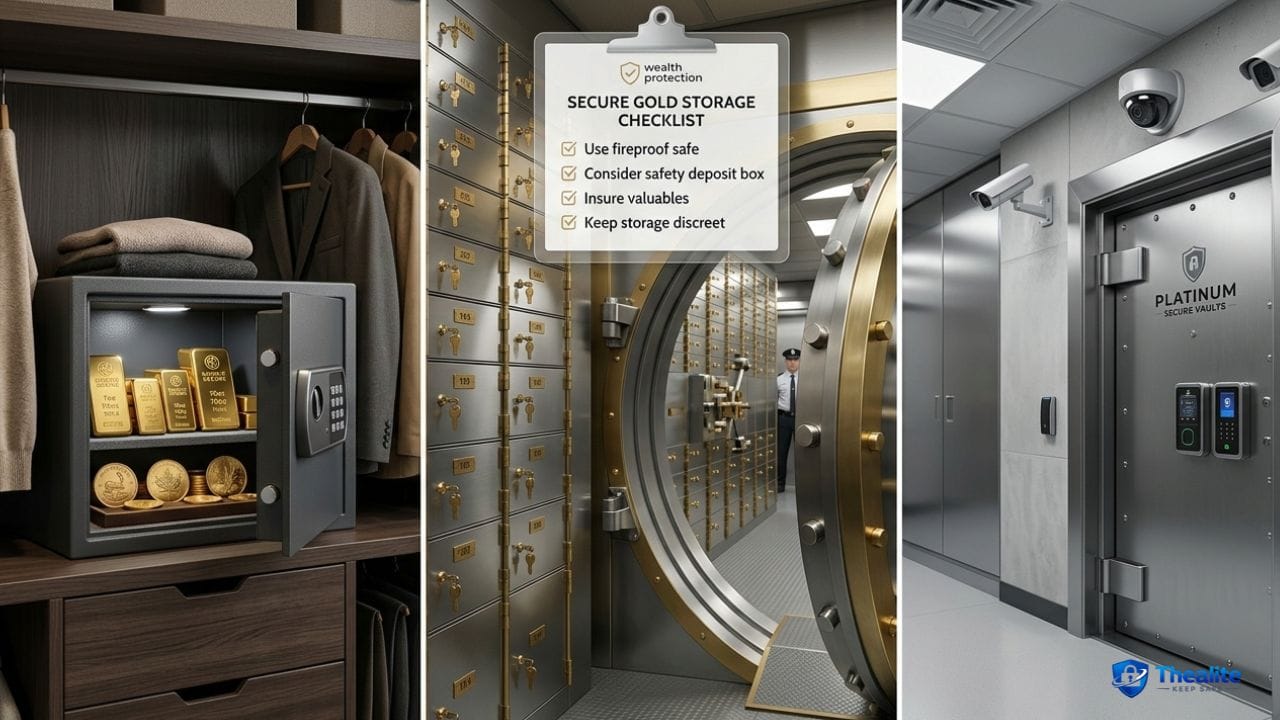
Gold is valuable, portable, and easy to sell—which is exactly why it’s also a theft target. Whether you own gold jewelry, coins, or bars, the safest storage option depends on three things: (1) how often you need access, (2) how much gold you have, and (3) what risks are most likely in your situation (theft, fire, flood, or loss).
This U.S.-focused guide breaks down the three most common places to store gold safely—at home, in a bank safe deposit box, and in private insured vault storage—with clear pros/cons and practical setup tips. You’ll also get a checklist at the end.
Quick Answer
For many people, the safest place to keep gold depends on access needs: If you need frequent access (daily-wear jewelry), store it at home in a high-quality, bolted safe and keep your home security strong. If you don’t need regular access (coins, bars, heirloom jewelry), a bank safe deposit box can reduce theft and home-fire risk—but access is limited to bank hours. For larger holdings, private insured vault storage can add higher security and insurance options. The best overall approach is often a hybrid: small daily-use items at home, bulk value off-site.
Step 1: Identify What Kind of Gold You’re Storing
Gold storage strategy changes based on the item type:
Gold jewelry
- Higher theft risk because it’s wearable and often left in obvious places.
- Can scratch (needs gentle storage).
- May need frequent access for daily wear or events.
Gold coins and bars
- Often stored long-term; less daily handling.
- Protection is mostly about theft, fire, flood, and loss.
- Documentation (receipts, photos, serial numbers for bars) matters more.
Gold with paperwork
If you keep receipts, appraisals, or certificates with your gold, you also need fire and moisture protection for paper.
Step 2: Understand the Real Risks
When people lose gold, it’s usually due to one of these:
- Burglary or opportunistic theft (guests, contractors, break-ins).
- Fire/smoke damage or water damage from firefighting.
- Flooding or leaks (especially basements).
- Simple misplacement (small jewelry items are easy to lose).
Your storage choice should reduce the risks that are most likely for you—not just the risks that sound scary online.
Option A: Keeping Gold Safe at Home
Home storage gives you immediate access—but it shifts most risk onto your home security and safe quality. For daily-wear jewelry, home storage is often necessary. For larger holdings, home storage can be safe if done correctly.
Home storage best practices
- Use a quality safe (preferably fire-rated) and bolt it down (prevents quick grab-and-go theft).
- Avoid obvious hiding spots (dresser drawers, closets, under mattress, freezer).
- Place the safe in a less-obvious location (not the master bedroom closet—the first place burglars check).
- Keep an inventory with photos and any appraisal paperwork stored securely.
More home guidance: How to Keep Gold Jewelry Safe at Home • How to Keep Jewelry Safe at Home.
Home safe tips for jewelry
- Use soft pouches/compartments to prevent scratching.
- Keep small items (earrings, rings) in labeled containers.
- Don’t leave jewelry on counters or nightstands—build a return-to-safe habit.
Common home storage mistakes
- Using a small portable safe that can be carried away.
- Telling too many people you own gold or where you store it.
- Keeping everything in one place (no backup plan).
- Storing in damp basements/garages (bad for paperwork and some settings).
Option B: Bank Safe Deposit Box
A safe deposit box can reduce home theft risk and protect against many home disasters, but it comes with tradeoffs: you can only access it during bank hours, and you should understand what is (and isn’t) covered by insurance.
When a safe deposit box makes sense
- Gold you don’t need often (coins, bars, heirlooms).
- Backup valuables and important documents.
- People who travel often and don’t want high-value items sitting at home.
Safe deposit box best practices
- Keep an inventory list and photos stored separately (not inside the same box).
- Use protective packaging (small pouches or hard cases).
- Plan for access limits—if you need gold quickly, a bank box may not fit.
Related: How to Keep Gold Safe in Bank • What to Keep in a Safe Deposit Box.
Option C: Private Insured Vault Storage
For larger amounts of gold, some people use private vault storage (often with insurance options). This can offer higher security than typical home storage, and sometimes clearer insurance arrangements. The key is choosing reputable providers and understanding fees, access rules, and ownership documentation.
When private vault storage may fit
- You have significant gold value and want higher security than home storage.
- You want storage designed specifically for bullion.
- You want clearer insurance options than a typical home policy provides.
What to verify first
- How insurance works and what events are covered.
- How you access/withdraw your gold (timing, process, fees).
- Whether your gold is allocated/segregated (stored specifically for you) or pooled.
- Documentation proving what you own and where it’s stored.
Home vs Bank vs Vault: A Simple Decision Guide
Use these shortcuts to decide quickly:
If you need fast access
- Home safe is usually best (with bolting + strong security).
- Keep only what you need at home; store the rest off-site.
If burglary is your main concern
- Bank box or private vault reduces on-site theft risk.
- Avoid keeping your entire collection at home.
If fire/flood worries you most
- Off-site storage reduces home-disaster exposure.
- If at home: fire-rated safe + elevated placement helps.
If you have both jewelry and bullion
- Hybrid approach: daily jewelry at home; bulk bullion off-site.
Step 3: Make a Simple Gold Inventory
If gold is stolen or damaged, documentation helps with police reports, insurance claims, and recovery.
- Take clear photos of each item (front/back, close-ups of markings).
- Save receipts, appraisals, and certificates (digitally and securely).
- For bars, record serial numbers if present.
- Store the inventory separately from the gold (encrypted cloud + offline copy).
Step 4: Reduce Theft Risk With Privacy Rules
- Don’t discuss gold holdings casually (word spreads).
- Avoid posting high-value jewelry photos with location tags in real time.
- If contractors or guests are in your home, secure valuables and keep storage locations private.
- Use basic home security habits: locks, lighting, and consistent routines.
Home security mindset: How to Keep Your Home Safe.
Step 5: Travel Tips for Gold Jewelry
Travel is a high-loss moment for jewelry. The safest travel plan is minimalism.
- Bring fewer pieces; avoid high-value sets if you don’t need them.
- Use a travel organizer and keep it in your carry-on, not checked luggage.
- When not wearing it, secure it (hotel safe can help for backups).
Related travel safety: How to Keep a Hotel Room Safe • How to Keep Valuables Safe at the Beach.
Copy/Paste Checklist: Where to Keep Gold Safe
- Choose storage based on access: daily jewelry at home; bulk value off-site
- Home storage: quality fire-rated safe + bolt it down + non-obvious location
- Avoid common hiding spots (drawer, closet, mattress, freezer)
- Use pouches/compartments; build a return-to-safe habit
- Bank box: best for items you don’t need often; plan for bank-hours access
- Private vault: consider for larger holdings; verify insurance + access + documentation
- Create an inventory: photos, receipts/appraisals, serial numbers
- Use privacy rules: don’t advertise holdings; keep home security routines strong
FAQs
Is it safer to keep gold at home or in a bank?
A bank safe deposit box reduces home theft risk but limits access to bank hours. A bolted-down home safe gives access but requires strong security habits. Many people use a hybrid approach.
Should I store gold jewelry in a safe?
Yes—especially pieces you don’t wear daily. Use soft pouches or compartments to prevent scratches and store small pieces in labeled containers.
Can I store gold coins and bars in a safe deposit box?
Many people do, especially for long-term storage. Keep an inventory with photos stored separately for documentation.
How do I protect gold from fire or water?
Off-site storage reduces home-disaster risk. At home, use a fire-rated safe and keep items elevated; protect paperwork from moisture.
What’s the best way to document gold for insurance?
Photos, receipts/appraisals, and serial numbers (for bars). Store copies securely (encrypted cloud + offline backup).
Conclusion
The safest place to keep gold is the one that matches your access needs and reduces your biggest risks. For many people, the best solution is a hybrid: keep only daily-use jewelry at home in a bolted safe, and store bulk value (coins, bars, heirlooms) in a bank safe deposit box or reputable insured vault. Add an inventory and good privacy habits, and you’ll dramatically reduce loss risk.

As a digital marketer, she has received multiple international awards, including Campaign of the Year at the 2023 European Content Awards and Best Use of Content Marketing at the 2022 Global Search Awards. Nicai holds an MSc in Marketing (First Class Honours) from the UCD Smurfit Graduate Business School and she has also completed the Artificial Intelligence Programme at Oxford University’s Saïd Business School. She is also a contributing writer for publications such as Entrepreneur and Esquire.