Many cat owners love the idea of outdoor time: fresh air, sunshine, exercise, and enrichment. But outdoor life also comes with real risks—cars, predators (like coyotes), parasites and disease, toxins, fights, and extreme weather. The safest approach isn’t “indoors only” vs “outside all day.” It’s building a **safer outdoor system** that reduces risk as much as possible.
This guide is written for U.S. cat owners and includes practical steps for neighborhood outdoor cats, indoor–outdoor cats, and even barn cats. You’ll learn how to create a safer yard, when to keep cats inside, and what to do if your cat goes missing.
Related reading on your site: How to Keep Outdoor Cats Safe • How to Keep Outdoor Cats Safe at Night • How to Keep Barn Cats Safe From Coyotes • How to Keep Pets Safe in Hot Weather • How to Keep Pets Safe During a Tornado
Quick Answer (The Safest Outdoor Cat Plan)
- Use a catio or supervised outdoor time when possible (lowest risk outdoor option).
- If your cat roams, keep them indoors at night (nighttime is highest risk).
- Get microchip + breakaway collar with ID tag.
- Keep vaccines and parasite prevention up to date (vet guidance).
- Create a safe yard: remove toxins, secure trash, block hiding spots near roads.
- Feed on a schedule and bring cats in before dusk to reduce predator encounters.
- Have a missing-cat plan ready (photos, chip number, local shelters).
What Outdoor Cats Are Most at Risk From
Outdoor risks usually fall into a few categories:
- Cars and traffic (especially at dawn/dusk)
- Predators (coyotes, dogs, foxes, raptors in some areas)
- Fights with other cats (wounds, infections)
- Parasites and disease (fleas, ticks, worms, viruses)
- Poisons/toxins (rodenticides, antifreeze, toxic plants, pesticides)
- Weather (heatstroke, hypothermia, storms)
- Getting trapped (garages, sheds, crawlspaces)
Step 1: Choose the Right Outdoor Setup (Catio vs Roaming)
If you want the benefits of outdoors with the least risk, **controlled outdoor access** is the best choice.
Option A: Catio (the safest outdoor option)
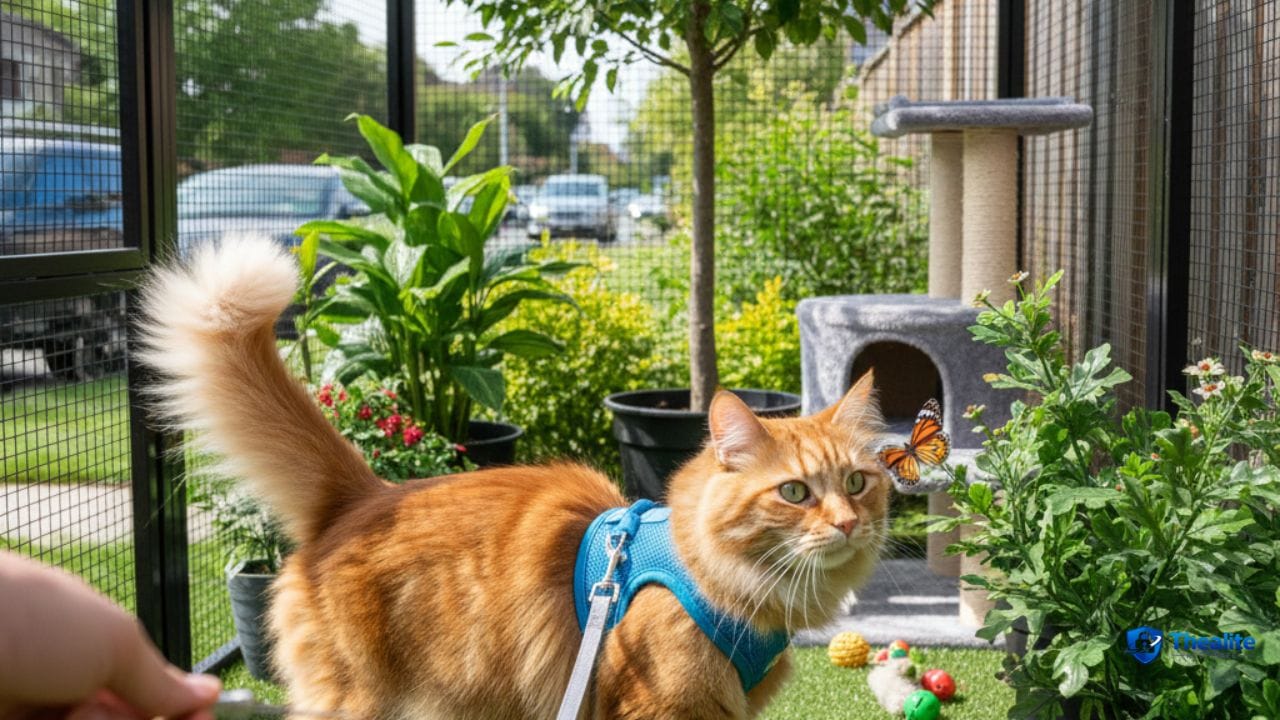
A catio is an enclosed outdoor space (attached to a window, patio, or yard). It provides enrichment while preventing traffic and predator exposure.
Catio safety tips
- Use strong mesh that predators can’t tear through.
- Ensure shade, water, and ventilation.
- Add shelves/perches and hiding spots so cats feel secure.
- Check for sharp edges and escape gaps (especially near doors/latches).
Option B: Supervised outdoor time (harness/leash or fenced yard)
- Use a properly fitted harness (not just a collar).
- Start with short sessions and calm environments.
- Never leave a leashed cat unattended (entanglement risk).
Option C: Free-roaming outdoor cat (highest risk)
Some cats roam no matter what. If yours does, you can still reduce risk through routines, identification, and limiting high-risk hours (especially night).
Step 2: Keep Cats Indoors at Night (Biggest Safety Upgrade)
Nighttime is when many predators are active and visibility is low for drivers. If you do only one thing for outdoor cat safety, do this: **bring your cat inside before dusk**.
Related: How to Keep Outdoor Cats Safe at Night.
Step 3: ID, Microchips, and Breakaway Collars
Outdoor cats should be easy to identify quickly. A microchip plus a breakaway collar is a powerful combo.
Best ID practices
- Microchip your cat and keep contact info updated.
- Use a breakaway collar (reduces strangulation risk).
- Add an ID tag with your phone number.
- Use recent photos of your cat (markings, scars, unique features).
Step 4: Vet Basics—Vaccines and Parasite Prevention
Outdoor cats have higher exposure to fleas, ticks, worms, and other animals. Your vet can advise the right prevention plan for your region.
Common vet-guided protections
- Core vaccines appropriate for your cat’s lifestyle.
- Flea and tick prevention (especially in warm months).
- Deworming as recommended.
- Spay/neuter (reduces roaming and fighting behavior).
Step 5: Make Your Yard Safer (Predators, Poisons, and Traps)
You can’t control the whole neighborhood, but you can control your yard. A safer yard reduces surprise hazards and predator attraction.
Predator-reduction habits
- Bring cats in before dusk and feed on a schedule (don’t leave food out overnight).
- Secure trash and compost so it doesn’t attract wildlife.
- Trim dense brush near the house where predators can hide.
- Use motion lights in key areas if helpful.
Toxin-reduction habits
- Store pesticides, antifreeze, and chemicals securely.
- Avoid rodenticides if possible (secondary poisoning risk).
- Check your yard for toxic plants (ask your vet or a reliable poison-control resource).
- Keep garages/sheds closed so cats don’t get trapped.
Step 6: Reduce Traffic Risk
Cars are one of the biggest dangers for outdoor cats. You can’t eliminate risk, but you can reduce it.
Traffic-safety tactics
- Keep cats indoors during peak traffic times (early morning and evening commute).
- Create enrichment indoors so cats don’t feel the need to roam as far.
- If you live near busy roads, prioritize catios or supervised time.
Step 7: Special Case—Barn Cats and Working Cats
Barn cats often live outdoors by design. Safety focuses on shelter, feeding routine, medical basics, and predator prevention.
Barn cat safety essentials
- Provide a dry, insulated shelter (especially for winter).
- Feed on a schedule and remove leftovers (reduces wildlife attraction).
- Use working-cat programs or slow acclimation to prevent roaming away.
- Keep cats indoors at night when possible, or provide secure enclosures.
Related: How to Keep Barn Cats Safe From Coyotes.
Weather Safety: Heat, Cold, and Storms
Outdoor cats can suffer in extreme temperatures and storms. If conditions are dangerous for you to stay outside comfortably, they may be dangerous for your cat too.
Hot weather safety
- Provide shade and clean water.
- Avoid mid-day outdoor time during heat waves.
- Watch for heat stress: panting, drooling, lethargy, vomiting.
More: How to Keep Pets Safe in Hot Weather.
Storm safety
- Bring cats inside ahead of severe weather when possible.
- Keep carriers accessible for fast evacuation.
- Use a routine so cats come when called (treat training helps).
Related: How to Keep Pets Safe During a Tornado.
What to Do If Your Cat Goes Missing
Even with great prevention, cats sometimes slip out. Acting quickly improves the odds of a safe return.
First 24 hours: practical steps
- Search close first: cats often hide nearby (under decks, bushes, garages).
- Walk the neighborhood at dawn/dusk when it’s quiet and call calmly.
- Bring familiar smells outside (blanket, litter box in a safe spot).
- Notify neighbors and ask them to check sheds/garages.
- Contact local shelters/rescues and provide a photo.
- If microchipped, alert the chip company and confirm contact info.
Outdoor Cat Safety Checklist (Copy/Paste)
- Prefer catio/supervised time over roaming when possible
- Bring cats indoors at night (biggest safety upgrade)
- Microchip + breakaway collar + ID tag
- Vet-guided vaccines and parasite prevention
- Safe yard: remove toxins, secure trash, trim hiding spots
- Traffic reduction: avoid dawn/dusk roaming, limit access near busy roads
- Weather plan: shade/water in heat, shelter in storms, bring inside for extremes
- Missing-cat plan: recent photos, chip info, local shelter contacts
FAQs
Is it safe to let my cat outside?
Outdoor time can be enriching, but roaming increases risks like cars, predators, disease, and toxins. Catios or supervised outdoor time reduce risk significantly.
What’s the safest way for cats to be outdoors?
A secure catio or supervised time on a harness/leash are among the lowest-risk options.
Should outdoor cats wear collars?
A breakaway collar with an ID tag can help if your cat is found. Breakaway designs reduce strangulation risk.
How do I protect my cat from coyotes?
Bring cats indoors at night, don’t leave food outside overnight, use secure enclosures, and reduce wildlife attractants. Barn cats benefit from shelters and routines.
What should I do if my cat is missing?
Search nearby immediately, talk to neighbors, contact shelters, and use your cat’s microchip registry. Many cats are found close to home if you act quickly.
Conclusion
Keeping cats safe outside is about lowering predictable risks. The biggest upgrades are controlled outdoor access (catio/supervised time) and bringing cats inside at night. Add strong identification, vet-guided prevention, and a safer yard setup, and you dramatically improve your cat’s odds of a long, healthy life—while still giving them outdoor enrichment.

As a digital marketer, she has received multiple international awards, including Campaign of the Year at the 2023 European Content Awards and Best Use of Content Marketing at the 2022 Global Search Awards. Nicai holds an MSc in Marketing (First Class Honours) from the UCD Smurfit Graduate Business School and she has also completed the Artificial Intelligence Programme at Oxford University’s Saïd Business School. She is also a contributing writer for publications such as Entrepreneur and Esquire.