A lot of people bring a car battery inside during winter, while working on a vehicle, or to keep it from freezing in an unheated garage. So the question is fair is it safe to keep a car battery in the house?
In many cases, storing a car battery indoors can be done safely—especially if the battery is in good condition, upright, and not being charged. But there are real hazards you need to respect: lead-acid batteries contain corrosive acid, can produce flammable hydrogen gas (especially during charging), and can cause burns or damage if they leak or tip.
This guide explains the difference between *storage* and *charging*, which battery types are safer indoors, the best places to keep a battery inside a home, and simple steps to reduce risk for U.S. households.
Quick Answer
It can be safe to keep a car battery in the house for storage if you store it upright in a cool, dry, well-ventilated area, away from flames, heat sources, and children/pets, and you place it in a spill-resistant tray. However, charging a lead-acid car battery indoors is riskier because charging can release flammable hydrogen gas. If you must charge indoors, do it only in a well-ventilated space, away from sparks/flames, and follow the charger and battery instructions. If the battery is cracked, leaking, swollen, or smells strongly, do not bring it inside—replace or handle it as hazardous waste.
Step 1: Know Your Battery Type (Flooded vs AGM/Gel)
Not all car batteries are the same. Battery type changes indoor safety.
Flooded (vented) lead-acid batteries
Traditional car batteries are often “flooded” lead-acid batteries. They contain liquid sulfuric acid and have vents. These are more likely to leak if tipped or damaged, and they can vent gases—especially during charging.
AGM/Gel (sealed/VRLA-style) batteries
AGM and gel batteries are often called “sealed” or “VRLA” designs. They reduce spill risk because the electrolyte is immobilized, and they typically vent much less during normal use—though they can still vent if overcharged or overheated. If your goal is indoor storage, a sealed design is usually lower risk than a flooded battery—but it still needs safe handling.
Bottom line
- Flooded (vented) batteries = higher spill and gassing risk (especially if charged indoors).
- AGM/gel (sealed) batteries = lower spill risk, but still electrical and heat hazards.
Step 2: Storage vs Charging (This Is the Big Safety Difference)
Many people confuse “keeping a battery inside” with “charging a battery inside.” These are not equal risks.
Storing a battery indoors
- Lower risk when the battery is intact, upright, and not actively charging.
- Primary hazards: acid leakage from damage/tipping, and accidental short-circuiting.
Charging a battery indoors
- Higher risk because charging can produce hydrogen gas (flammable), and chargers can create sparks.
- Risk increases in small, closed spaces (closets, bathrooms, utility rooms with poor airflow).
- Overcharging or using the wrong charger can increase heat and gas release.
If you’re unsure, treat charging as a ‘garage/outdoors’ task whenever possible.
Step 3: The Real Hazards (What Can Go Wrong)
Understanding the hazard helps you choose the right prevention.
1) Acid spills and corrosion
- Lead-acid batteries contain corrosive acid that can burn skin/eyes and damage flooring.
- A crack, impact, or tipping can cause leakage—especially in flooded batteries.
2) Hydrogen gas (flammable) during charging
- Hydrogen is colorless and odorless, and it can ignite if it accumulates and meets a spark.
- Charging and overcharging increase the chance of gassing.
- Ventilation reduces risk by preventing gas buildup.
3) Electrical short-circuit and heat
- Car batteries can deliver very high current. A metal object across the terminals can cause sparks, heat, and burns.
- Loose tools, jewelry, or coins near terminals are a common cause of accidental shorts.
4) Children, pets, and accidental handling
- A battery is heavy and can fall, tip, or get pulled over.
- Kids and pets shouldn’t have access to it; keep it in a controlled area.
Step 4: Where to Store a Car Battery Indoors (Best Places)
If you must store a battery inside, your goal is a location that is cool, dry, stable, and ventilated, and far from ignition sources.
Better indoor storage locations
- A well-ventilated utility room or mudroom (not cramped, not near open flames).
- A ventilated basement area *only if* it’s dry and not near furnaces/water heaters.
- A storage area with airflow where the battery can sit upright and protected.
Avoid these locations
- Bedrooms, living rooms, or anywhere people spend a lot of time (unnecessary exposure).
- Near fireplaces, gas water heaters, furnaces, or anything with a pilot flame.
- Near flammable materials (paint thinner, gasoline, propane cylinders).
- Unventilated closets or tight spaces (especially if charging).
- Kitchen areas (food safety + accidental contact risks).
Step 5: How to Store It Safely (Simple Setup That Works)
Use a battery tray (spill containment)
- Place the battery in a plastic tray or shallow bin that can catch small leaks.
- This protects floors and makes cleanup safer if something goes wrong.
Keep it upright and stable
- Keep the battery upright (especially flooded batteries).
- Place it on a stable surface where it can’t be knocked over.
Protect the terminals
- Keep metal objects away from the terminals (tools, coins, keys).
- Use terminal covers if available, or ensure the battery sits where accidental contact is unlikely.
Keep it cool and dry
- Avoid direct sunlight and heat sources.
- Moisture can increase corrosion on terminals and reduce battery health.
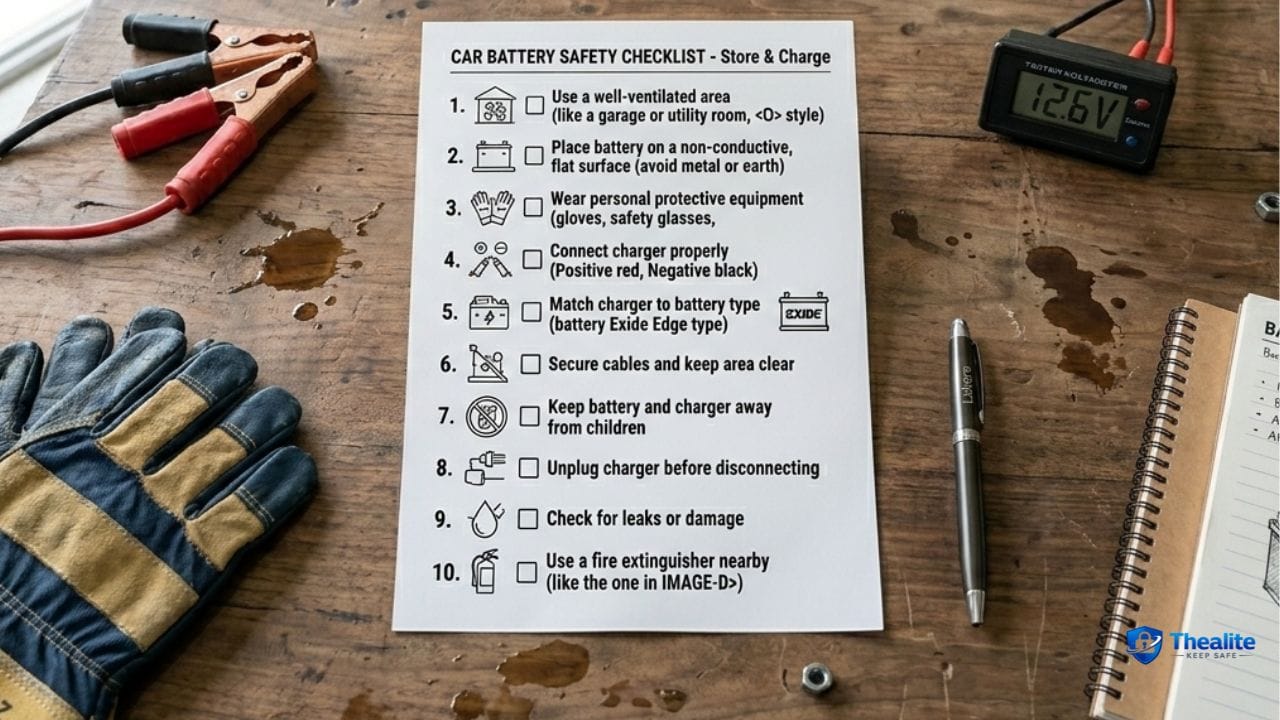
Step 6: If You Must Charge a Car Battery Indoors (Safety Rules)
Outdoor/garage charging is usually safer. But if you must charge indoors (for example, in very cold conditions), treat it like a safety task.
Indoor charging checklist
- Charge only in a well-ventilated area (open door/window; avoid small closed rooms).
- Keep away from sparks, flames, and pilot lights.
- Use the correct charger for the battery type and follow manufacturer instructions.
- Turn the charger off/unplug before connecting or disconnecting clamps (reduces spark risk).
- Keep children/pets away during charging.
- Stop immediately if the battery gets very hot, smells strongly, hisses excessively, or shows swelling/leaking.
If you can’t provide ventilation and separation from ignition sources, don’t charge indoors.
Step 7: Signs a Battery Should NOT Be Stored Indoors
- Cracks, bulging/swelling, or visible leakage.
- Strong rotten-egg odor or chemical smell (especially during charging).
- Corroded terminals with heavy white/blue buildup and signs of damage.
- Battery was recently dropped hard or involved in a vehicle collision.
If any of these are present, handle it with caution and consider disposal/replacement through an auto parts store or local hazardous waste program.
Step 8: Best Practices for Long-Term Storage (Winter / Spare Battery)
If you’re storing a battery for weeks or months, safety and battery health go together.
- Store it charged (a deeply discharged battery can freeze more easily in extreme cold).
- Check charge periodically and top up using a maintainer as recommended for your battery type.
- Keep the storage spot clean and dry to reduce corrosion.
- Label it with the date you stored it (helps you track age and maintenance).
Copy/Paste Checklist: Safe Indoor Car Battery Storage
- Battery is intact (no cracks, leaks, swelling, strong odor)
- Stored upright in a cool, dry, ventilated area
- Placed in a plastic tray/bin for spill containment
- Away from flames/pilot lights, heat sources, and flammables
- Terminals protected; no metal objects nearby
- Kids/pets cannot access it
- If charging indoors: strong ventilation + no sparks + correct charger + unplug before connecting/disconnecting
FAQs
Is it safe to store a car battery in a bedroom?
It’s not recommended. Bedrooms have poor risk/benefit: people spend long hours there, ventilation may be limited, and you don’t need the battery nearby. Choose a ventilated utility area instead.
Can a car battery give off fumes in the house?
Lead-acid batteries can vent gases, especially during charging or if damaged/overheated. Good ventilation and safe placement reduce risk.
Is an AGM car battery safer indoors than a flooded battery?
Generally yes for spill risk because the electrolyte is immobilized, but AGM batteries can still vent if overcharged or overheated. Safe storage rules still apply.
Is it safe to charge a car battery indoors?
It can be riskier due to hydrogen gas and sparks. If you must charge indoors, do it only with strong ventilation and away from flames/pilot lights. Outdoor or garage charging is usually safer.
What should I do if the battery leaks acid?
Avoid contact, keep kids/pets away, ventilate the area, and follow safe cleanup/disposal guidance. Consider professional advice or local hazardous waste instructions.
Conclusion
So, is it safe to keep a car battery in the house? For storage, it can be—if you do it correctly. Keep it upright in a ventilated, low-traffic area, use a spill tray, protect the terminals, and keep it away from flames and heat. Charging indoors is the bigger risk because charging can release flammable gas and involves sparks—so only do it with strong ventilation and careful handling. When in doubt, choose the safer option: store/charge in a garage or other well-ventilated space.

As a digital marketer, she has received multiple international awards, including Campaign of the Year at the 2023 European Content Awards and Best Use of Content Marketing at the 2022 Global Search Awards. Nicai holds an MSc in Marketing (First Class Honours) from the UCD Smurfit Graduate Business School and she has also completed the Artificial Intelligence Programme at Oxford University’s Saïd Business School. She is also a contributing writer for publications such as Entrepreneur and Esquire.