Car rides are part of life for most dog owners—vet visits, daycare, hikes, road trips, and errands. But cars can be dangerous for dogs in two big ways: crashes and heat. A loose dog can become a projectile in a collision, or can distract the driver and increase accident risk. And even mild weather can turn a parked car into an unsafe heat trap.
This U.S.-focused guide explains the safest way for dogs to ride in the car, how to prevent overheating, and what to pack for a safer trip. It ends with a copy/paste checklist you can use every time you travel.
Quick Answer (The 8 Car Safety Rules for Dogs)
- Never let a dog ride loose in the car—use a crash-tested harness or secured crate.
- Back seat is usually safer than the front seat (airbags can injure pets).
- Keep heads inside the window (debris and sudden stops can cause injury).
- Never leave a dog in a parked car in warm weather—even with windows cracked.
- Use frequent breaks on long trips (water + potty + movement).
- Keep ID updated: tag + microchip + recent photo before travel.
- Pack a simple dog travel kit (water, bowl, leash, poop bags, meds).
- Plan for emergencies: vet locations, first aid basics, and secure containment.
Why Loose Dogs Are Dangerous in Cars
A loose dog can be injured in a crash, can injure passengers, and can cause accidents by climbing into the driver’s space. Even a minor fender-bender can send an unrestrained dog forward. Safety isn’t only about protecting the dog—it’s also about protecting the driver and everyone in the vehicle.
Step 1: Choose the Safest Ride Method (Harness vs Crate)
The safest option depends on your dog’s size, temperament, and the type of vehicle you have. The goal is the same: keep the dog secured and prevent forward motion in a sudden stop.
Option A: Crash-tested seat belt harness
- Harness attaches to a seat belt or seat belt latch system.
- Better than clipping a leash to a collar (collars can injure necks).
- Fit matters: too loose = dangerous; too tight = uncomfortable.
- Use only harnesses designed for car travel (not a regular walking harness).
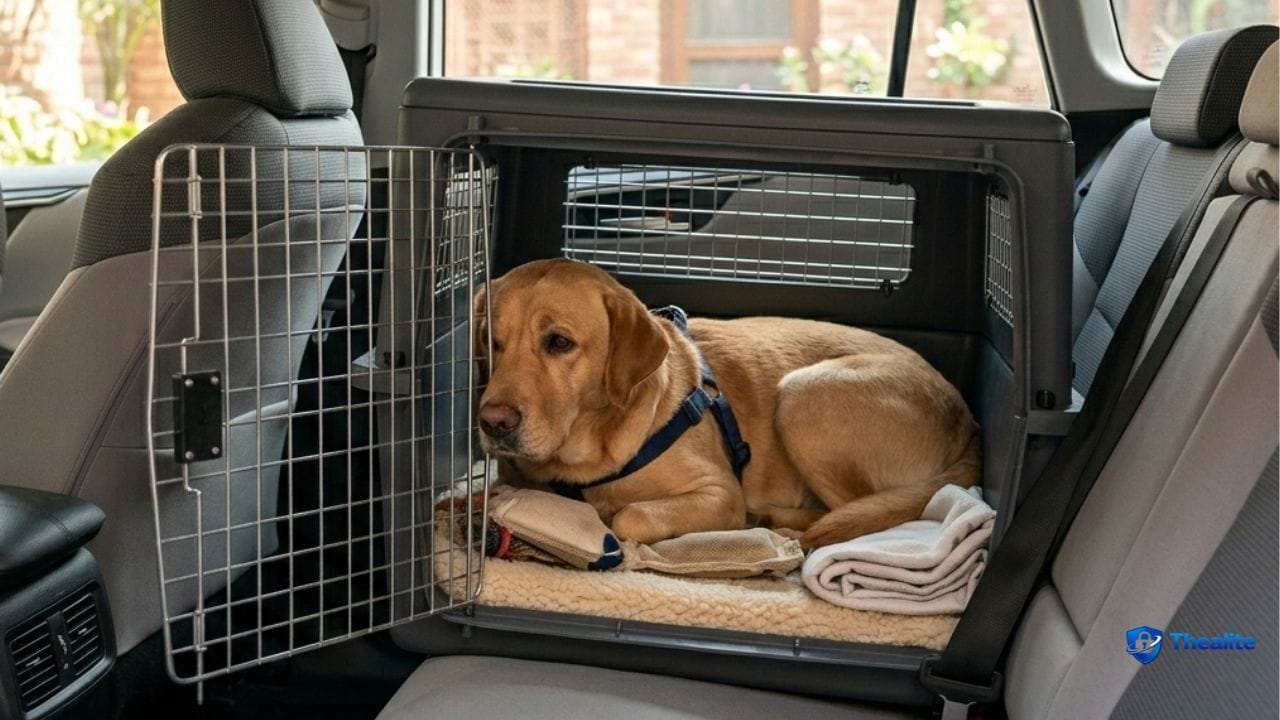
Option B: Secured travel crate
- Crates provide containment and reduce distraction.
- Crate should be secured so it doesn’t slide or tip in a sudden stop.
- Best for dogs who are anxious, chew, or move around excessively.
- Sizing matters: enough room to stand/turn, not so big that the dog is thrown around.
Option C: Travel carrier (small dogs)
- Small dogs can ride in a secured carrier.
- Carrier should be restrained (seat belt routed correctly) so it doesn’t become a projectile.
Step 2: Where Should a Dog Ride? (Back Seat vs Front)
For most dogs, the back seat is safer than the front seat. Front airbags can injure pets, especially small dogs, in a crash. If your dog must ride in front (rare cases), follow your vehicle guidance and keep the dog well back from airbags.
Safer placement tips
- Back seat with a harness + seat belt attachment is a common safer setup.
- If using a crate, place it where it can be secured and has stable airflow (often cargo area in SUVs).
- Avoid letting dogs ride on the driver’s lap—high crash risk and major distraction.
Step 3: Window Safety (Heads Out the Window = Injury Risk)
Dogs love sticking their head out the window, but it can lead to eye injuries from debris, ear irritation, and risk of jumping out. A sudden swerve or brake can change everything quickly.
- Keep windows up enough that the dog can’t jump out.
- If you crack windows, do it slightly and keep the dog secured.
- Consider dog goggles for some dogs if they’re exposed to wind/debris (optional).
Step 4: Heat Safety (The Most Dangerous ‘Quick Errand’ Mistake)
Cars heat up fast. Even mild outdoor temperatures can become dangerous inside a parked car. Cracking windows helps very little. If it’s warm enough that you’d feel uncomfortable, it’s too risky for a dog.
Heat safety rules
- Don’t leave dogs in a parked car in warm weather—even “just for 5 minutes.”
- Bring water on trips and offer it regularly.
- Use sunshades and AC during travel when needed.
- Know heat stress signs: heavy panting, drooling, weakness, vomiting, collapse.
More heat safety: How to Keep Pets Safe in Hot Weather.
Cold Weather Safety (Less common, still real)
- In very cold conditions, cars can also become unsafe if the engine is off and the dog is wet or small.
- Bring blankets for long winter trips and avoid long waits in cold vehicles.
More cold safety: How to Keep Pets Safe in Cold Weather.
Step 5: Motion Sickness and Anxiety (Make Travel Easier)
Some dogs drool, vomit, or panic in cars. Safety includes reducing stress so the dog doesn’t thrash, chew restraints, or distract the driver.
Practical solutions
- Start with short positive rides and gradually increase distance.
- Feed a smaller meal before travel; avoid heavy meals right before a trip.
- Use a secure crate for anxious dogs (it can feel like a den).
- Keep the car cool and well-ventilated.
- Talk to a vet if motion sickness is severe (safe options exist).
Step 6: Road Trip Routines (Breaks + Hydration + Safety)
Longer travel requires structure.
- Take regular breaks for water and potty (many people aim for every 2–3 hours).
- Always leash before opening a car door—dogs can bolt in unfamiliar places.
- Keep a spare leash and a backup clip/carabiner.
- Don’t let dogs drink from unknown standing water (can carry parasites).
Step 7: ID and Escape Prevention
Dogs get lost during travel because routines change and doors open in new places.
- Make sure collar tags have current phone number.
- Microchip the dog and keep the microchip registration updated.
- Keep a recent photo on your phone before a trip (helps if lost).
- Teach a recall cue and practice it, even indoors.
Emergency Kit for Dog Car Travel
You don’t need a huge kit—just the essentials.
- Water + portable bowl
- Leash + backup leash
- Poop bags + paper towels
- Treats (for recall and calm behavior)
- Basic first-aid items (gauze, antiseptic wipes)
- Any medications + vet contact info
What to Do After an Accident (If You’re Able)
After a crash, even a friendly dog may bite from fear or pain. Move carefully.
- Check yourself and passengers first; call emergency services if needed.
- Keep the dog contained (harness/leash/crate) before opening doors.
- If the dog is injured, move gently and seek veterinary care ASAP.
- Use a towel/blanket as a stretcher for small dogs if needed.
Copy/Paste Checklist: Keep Dogs Safe in the Car
- Dog secured every ride (crash-tested harness or secured crate)
- Back seat preferred; avoid front airbags for pets
- Windows controlled; no unsafe head-out exposure
- Never leave dog in a warm parked car—even briefly
- Water and breaks planned for longer trips
- Leash on before opening doors in new places
- ID updated: tags + microchip + recent photo
- Travel kit packed (water, bowl, leash, bags, meds)
FAQs
Is it safe for dogs to ride in the front seat?
Usually the back seat is safer because front airbags can injure pets. If a dog must ride in front, keep them secured and follow vehicle guidance.
What’s better: a dog seat belt harness or a crate?
Both can be safe when used correctly. Harnesses reduce movement in the seat; crates provide containment and reduce distraction. Choose what fits your dog and vehicle.
Can I leave my dog in the car with the windows cracked?
It’s still risky in warm weather. Cars can heat quickly, and cracked windows don’t prevent dangerous temperatures.
Is it okay for dogs to stick their head out the window?
It can lead to eye injuries and increases the risk of jumping out. It’s safer to keep the dog secured and windows controlled.
How often should I stop on a road trip with my dog?
Many owners plan breaks every few hours for water and potty. Adjust based on your dog’s age, health, and comfort.
Conclusion
To keep dogs safe in the car, focus on the two big risks: crashes and heat. Secure your dog every ride with a proper harness or crate, keep them away from airbags, avoid unsafe window habits, and never leave them in a warm parked car. Add basic travel routines—water, breaks, and ID updates—and your dog travel becomes safer and calmer for everyone.

As a digital marketer, she has received multiple international awards, including Campaign of the Year at the 2023 European Content Awards and Best Use of Content Marketing at the 2022 Global Search Awards. Nicai holds an MSc in Marketing (First Class Honours) from the UCD Smurfit Graduate Business School and she has also completed the Artificial Intelligence Programme at Oxford University’s Saïd Business School. She is also a contributing writer for publications such as Entrepreneur and Esquire.