Keeping your car safe is really two goals: (1) prevent theft or break-ins, and (2) reduce everyday safety risks when you drive and park. Most car problems are preventable with simple habits—consistent locking, smarter parking, keeping valuables out of sight, and being ready for emergencies.
This U.S.-focused guide gives you a practical system you can use every day, plus a quick checklist you can copy/paste. You don’t need expensive upgrades to reduce risk—start with the basics and layer on improvements.
Quick Answer (Car Safety in 12 Rules)
- Lock every time—even in your driveway—and double-check doors.
- Keep valuables out of sight (and ideally out of the car entirely).
- Park in well-lit, high-traffic areas; avoid isolated corners.
- Use a key fob routine: keep keys away from doors/windows at home; consider a signal-blocking pouch if needed.
- Don’t leave your car running unattended (even “for a minute”).
- Keep windows up and doors locked while driving in busy areas.
- Use steering wheel locks or other visible deterrents if theft is common in your area.
- Set up basic maintenance checks (tires, lights, wipers) to prevent breakdown risk.
- Keep a simple emergency kit and phone charger in the car.
- Use seat belts every ride, every seat.
- If you think you’re being followed or feel unsafe in a parking lot, leave and go to a brighter public area.
- If your car is stolen or broken into: document, report, and secure accounts/cards fast.
Part 1: Prevent Break-Ins (Smash-and-Grab Prevention)
Most break-ins are quick and opportunistic. Thieves often look for easy targets: a visible bag, loose cash, a phone cable, or a laptop case.
High-impact break-in prevention habits
- Keep the interior clean—no bags, boxes, or ‘mystery items’ visible.
- Put items in the trunk before you arrive (don’t do it in the parking lot where people watch).
- Remove phone mounts, charging cables, and gym bags when possible (they suggest valuables).
- If you must leave something, hide it completely (but best practice is: don’t leave it).
- Lock the car every time and close sunroof/windows fully.
Common mistakes that invite break-ins
- Leaving a backpack on the seat (even if it’s ‘empty’).
- Leaving spare change or cash visible.
- Leaving the garage remote in the car (break-in can become a home break-in).
- Storing important documents in the glovebox long-term (identity theft risk).
Phone protection matters too: How to Keep Your Phone Safe.
Part 2: Prevent Vehicle Theft
Vehicle theft risk varies by area, but the best approach is layered deterrence: make your car harder to steal and easier to recover.
Everyday theft-prevention steps
- Never leave the car running unattended (common theft scenario).
- Always lock doors and take the keys—even at gas stations or quick stops.
- Use a visible deterrent (steering wheel lock) if theft is common near you.
- Enable factory anti-theft features and make sure you know how they work.
Key fob / smart key safety (relay-style theft risk)
Many newer cars use keyless entry. In some theft patterns, criminals try to extend (relay) the key fob signal. You can reduce risk with simple habits.
- At home, keep keys away from exterior doors and windows (not on a table by the front door).
- If you’re concerned, use a signal-blocking pouch/box for key fobs.
- Turn off keyless entry features if your vehicle allows it (check your manual).
- In hotels or rentals, don’t leave keys near the room door (same concept).
Part 3: Parking Smarter (Night, Lots, and Garages)
Where you park is a huge part of car safety. Thieves and vandals prefer low visibility and low foot traffic.
Safer parking rules
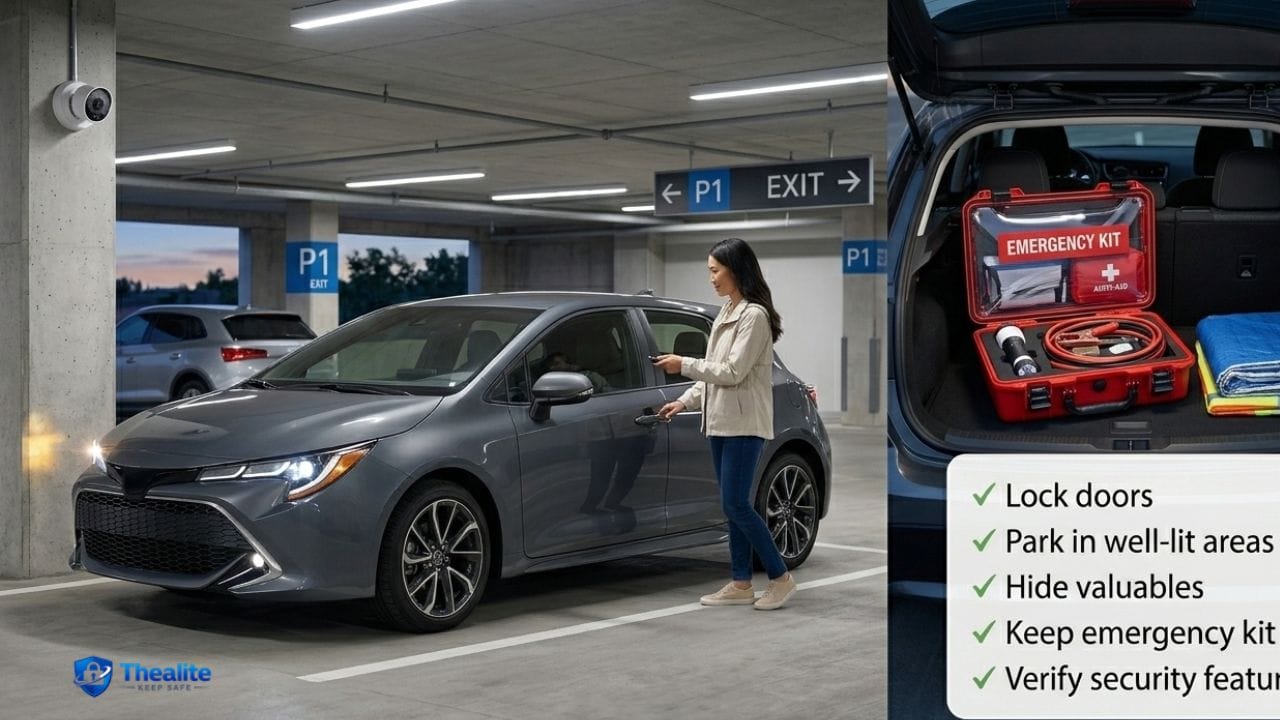
- Choose well-lit spots near entrances or cameras when possible.
- Avoid isolated corners of lots and long rows far from buildings.
- At night, park where you can see people and where people can see you.
- In garages, don’t linger—have keys ready and get in the car quickly.
- If you feel uncomfortable, move to a better spot or ask for an escort/security.
Driveway and home parking habits
- Lock your car at home (many people forget).
- Don’t leave spare keys inside the vehicle.
- Keep garage doors closed; don’t leave them open while ‘quickly’ unloading.
Home safety routines connect here: How to Keep Your Home Safe.
Part 4: Keep Yourself Safe Around the Car (Parking Lot Safety)
A ‘car safety’ plan should also include personal safety, especially in parking lots where visibility and distraction create risk.
- Have your keys ready before you exit the store (avoid standing at the car searching).
- Scan your surroundings before unlocking.
- Get in, lock doors, and start driving rather than sitting and scrolling.
- If something feels off, go back inside the store or move to a busier area.
More personal safety: How to Keep Yourself Safe.
Part 5: Driving Safety Basics (Prevent the ‘Everyday’ Risks)
The most common car-related harm isn’t theft—it’s crashes and breakdowns. Basic habits reduce these risks a lot.
Seat belt and restraint basics
- Seat belt every ride, every seat—even short trips.
- Adjust head restraints properly (reduces whiplash risk).
Related: How Do Seatbelts Keep You Safe.
Maintenance checks that prevent roadside problems
- Tires: check pressure monthly; keep tread in safe condition.
- Lights: verify headlights, brake lights, and turn signals work.
- Wipers: replace if streaking; keep washer fluid topped up.
- Battery: watch for slow starts; replace proactively when needed.
- Keep an emergency contact plan (who to call, roadside assistance info).
Part 6: Emergency Preparedness (What to Keep in Your Car)
A small emergency kit reduces stress and helps you stay safe during breakdowns or bad weather.
Simple car emergency kit
- Phone charging cable + car charger
- Flashlight (or headlamp)
- Basic first-aid kit
- Water and a small snack
- Reflective triangles or a roadside reflector
- Warm layer/blanket (seasonal)
- Tire inflator or sealant (if you’re comfortable using it)
- Jump starter or jumper cables (and know how to use them safely)
Related: Is It Safe to Keep Jump Starter in Car.
Part 7: What to Do If Your Car Is Broken Into or Stolen
If something happens, your goal is to document, report, and protect your accounts fast.
If your car is broken into
- Don’t touch disturbed areas if you suspect fingerprints may matter; take photos first.
- Document what’s missing and any damage.
- Report to local police and your insurance as needed.
- If documents, cards, or devices were stolen, secure accounts immediately (banks, email, device tracking).
If your car is stolen
- Call police immediately and provide license plate/VIN if available.
- Contact your insurance company.
- If you have tracking (built-in or aftermarket), report info to police (don’t confront anyone yourself).
- Change garage codes/keys if your home access devices were in the car.
Copy/Paste Checklist: How to Keep Your Car Safe
- Lock every time and check windows/sunroof
- Keep valuables out of sight (ideally out of the car)
- Park smart: well-lit, high-traffic, near entrances/cameras
- Key fob safety: keys away from doors; consider signal-blocking pouch
- Never leave car running unattended
- Use visible deterrents if needed (steering wheel lock)
- Car safety basics: seat belt every ride; headrest adjusted
- Maintenance: tires, lights, wipers, battery checks
- Emergency kit: charger, flashlight, first aid, water, reflector, blanket
- If break-in/theft: document → report → secure accounts/cards/devices
FAQs
What is the best way to prevent car break-ins?
Keep the interior empty and lock the car every time. Visible bags and electronics are the biggest break-in triggers.
Where should I park to keep my car safer at night?
Choose well-lit, high-traffic areas near entrances or cameras. Avoid isolated corners and dark rows.
How can I protect my key fob from being exploited?
Keep keys away from doors/windows at home and consider a signal-blocking pouch/box if you’re concerned. Some vehicles also allow keyless features to be disabled.
Should I keep valuables in my glove box?
Not long-term. Glove boxes are easy to access during break-ins. Keep sensitive documents and high-value items out of the car when possible.
What should I do right after a car break-in?
Take photos, document missing items, report if needed, and secure accounts if any cards, documents, or devices were stolen.
Conclusion
To keep your car safe, focus on the basics that prevent most problems: lock consistently, keep valuables out of sight, park smarter, and secure your keys. Add a simple emergency kit and basic maintenance routines, and you’ll reduce both theft risk and everyday breakdown risk. Small habits make a big difference over time.

As a digital marketer, she has received multiple international awards, including Campaign of the Year at the 2023 European Content Awards and Best Use of Content Marketing at the 2022 Global Search Awards. Nicai holds an MSc in Marketing (First Class Honours) from the UCD Smurfit Graduate Business School and she has also completed the Artificial Intelligence Programme at Oxford University’s Saïd Business School. She is also a contributing writer for publications such as Entrepreneur and Esquire.