Staying safe isn’t about living in fear—it’s about building simple habits that reduce risk in the situations you face most: at home, in your neighborhood, on the road, at work, and online. Most safety problems happen when we’re distracted, rushed, or assuming everything is fine.
This U.S.-focused guide gives you practical, non-violent personal safety steps that work for everyday life. Use it like a menu: start with the highest-impact basics and add more layers when needed.
Quick Answer (Personal Safety in 12 Habits)
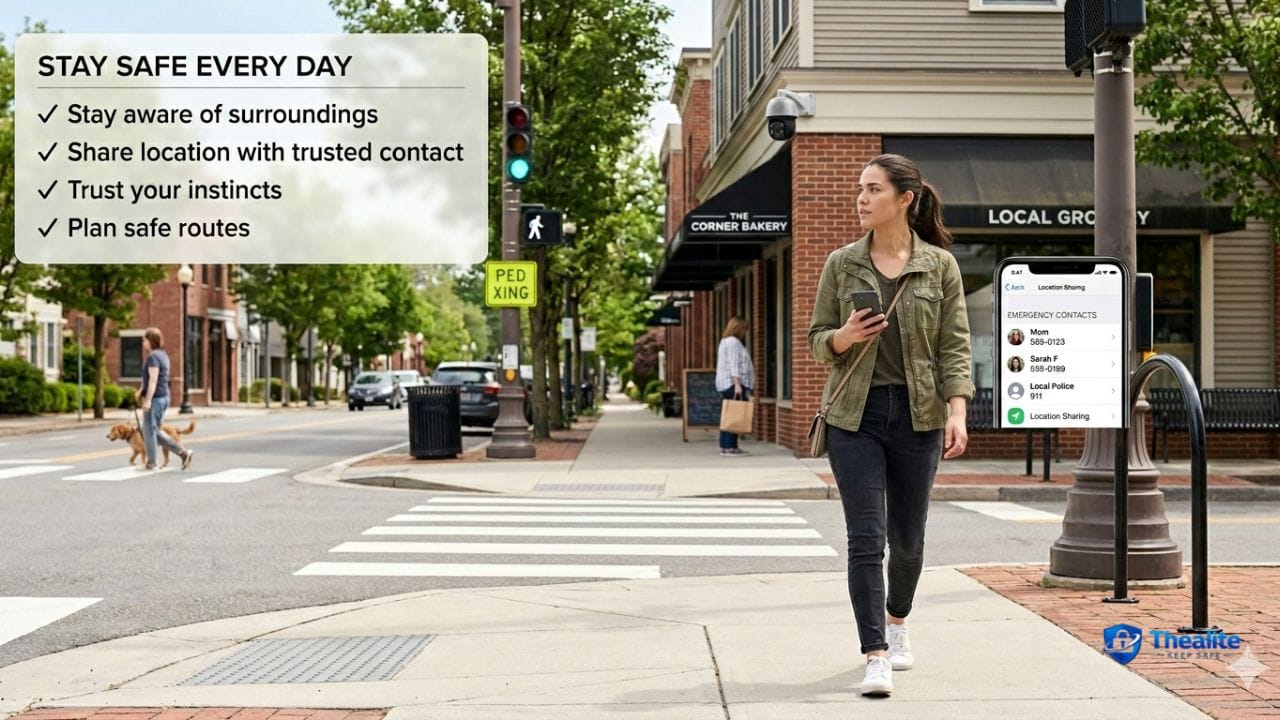
- Stay aware: look up, limit distractions, and trust your gut.
- Plan your routes and keep your phone charged before you go out.
- Use safe public habits: keep distance, stay in well-lit areas, avoid isolated shortcuts.
- Protect your phone and wallet (front pockets, zip bags, don’t leave items unattended).
- At home: lock doors/windows, use lighting, and keep a simple routine.
- In your car: seat belt every ride, doors locked, and avoid lingering in dark parking lots.
- Online: strong passwords + MFA and avoid phishing links.
- Share plans with a trusted person when traveling or meeting strangers.
- Know your emergency contacts and practice what you’ll do in a crisis.
- If something feels unsafe, leave early—don’t wait for proof.
- Keep personal info private (online and in public).
- In emergencies, call 911 in the U.S. and move to a safer location.
Step 1: Situational Awareness (The Highest-Impact Skill)
Situational awareness means noticing what’s happening around you and making small adjustments before a situation becomes risky. It’s not about being paranoid—it’s about being present.
Simple awareness habits
- Keep your head up in parking lots, transit stops, and crowded areas.
- Avoid being fully absorbed in your phone while walking.
- Scan your surroundings when entering or leaving buildings.
- Notice exits in public places (stores, events, restaurants).
- If you feel uneasy, change direction or move toward other people—trust that feeling.
Step 2: Safer Public Routines (Walking, Transit, Nighttime)
Most public safety is about choosing small advantages: light, visibility, and proximity to other people.
- Choose well-lit routes and avoid isolated shortcuts at night.
- If you can, travel with a friend in higher-risk situations.
- Keep one ear free if you use headphones in public.
- Stand in areas where you can be seen (not hidden behind walls or in dark corners).
- If someone is making you uncomfortable, head into a business or toward a group.
Step 3: Protect Your Phone and Wallet in Public
Pickpockets and opportunistic thieves look for easy grabs—phones on café tables, wallets in back pockets, open bags.
- Use a front pocket, zippered bag, or crossbody worn in front.
- Avoid back pockets in crowds.
- Don’t leave your phone on tables near the edge.
- Keep your phone locked with a strong passcode and tracking enabled.
More: How to Keep Your Phone Safe • How to Keep Your Phone Safe From Pickpockets.
Step 4: Parking Lot and Car Safety
Parking lots are a common place for safety issues because people are distracted and visibility can be poor.
- Have keys ready before you reach your car (don’t stand searching).
- Check the back seat before getting in if you’re concerned.
- Lock your doors promptly once inside.
- Avoid sitting in your car scrolling your phone in dark lots.
- Seat belt every ride—no exceptions.
Related driving safety: How Do Seatbelts Keep You Safe.
Step 5: Home Safety Basics
Home should feel safe, but basic routines matter more than expensive gadgets.
- Lock doors and windows consistently—especially at night.
- Use outdoor lighting and keep entry areas visible.
- Don’t open the door to unexpected visitors; verify first.
- Keep spare keys hidden safely (not under the mat).
- Have smoke/CO alarms working and know escape routes.
More: How to Keep Your Home Safe.
Step 6: Travel Safety (Hotels, Airports, New Places)
Travel adds risk because you’re unfamiliar with the environment and distracted.
- Keep valuables separated: don’t store phone + wallet + passport together.
- Use hotel door locks and consider a door wedge at night.
- Use the hotel safe as one layer; keep backups separate.
- Share itinerary with a trusted person when traveling alone.
Travel guides: How to Keep a Hotel Room Safe • How to Keep Money Safe While Traveling.
Step 7: Online Safety Is Personal Safety Now
A huge portion of modern ‘safety’ is online—account takeovers, scams, and identity theft.
- Use strong unique passwords and a password manager.
- Turn on MFA for email, banking, and social accounts.
- Avoid clicking unknown links; verify by going to official apps/sites.
- Be cautious with what you post publicly (location and routines).
More: How to Keep Safe Online • How to Keep Your Identity Safe Online.
Step 8: Emergency Planning (So You Don’t Freeze)
People freeze in emergencies when they don’t know what to do. A small plan makes a big difference.
- Know your emergency contacts and keep them easy to access.
- Have a simple meeting plan with family/friends.
- Keep a small emergency kit in your car (basic first-aid, flashlight, charger).
- Practice what you’d say to 911: location + what happened.
Step 9: Meeting Strangers (Marketplace Sales, Dates, App Meetups)
When meeting someone new, your goal is to keep the environment controlled and public.
- Meet in a public place during daylight if possible.
- Tell a friend where you are and when you expect to be done.
- Drive yourself (don’t rely on a stranger for transportation).
- Trust your gut—leave if something feels off.
Step 10: What to Do When You Feel Unsafe (Simple Escalation)
You don’t need to ‘win’ an argument or prove a threat. Your goal is to get to safety.
- Create distance and move toward a safer, more public area.
- Call someone or pretend to be on a call to reduce vulnerability.
- Enter a business or approach staff/security for help.
- If you believe you’re in danger, call 911 in the U.S.
Copy/Paste Checklist: How to Keep Yourself Safe
- Awareness: head up, limit phone distraction, trust your gut
- Public routines: well-lit routes, avoid isolated shortcuts, stay near people
- Phone/wallet: front pockets/zip bags; phone locked + tracking enabled
- Car: keys ready, doors locked, seat belt every ride
- Home: lock routine, lighting, verify visitors, working smoke/CO alarms
- Travel: separate valuables, hotel door safety, share itinerary if solo
- Online: password manager + MFA; avoid phishing links
- Emergency plan: contacts, meeting plan, basic kit, 911 script
FAQs
What is the most important personal safety habit?
Situational awareness—being present and noticing your environment—often prevents problems before they start.
How can I stay safe when walking alone at night?
Choose well-lit routes, avoid isolated shortcuts, keep your phone accessible but don’t stay distracted, and move toward public businesses or groups if you feel uncomfortable.
What should I do if I feel like someone is following me?
Don’t go home. Change direction, enter a public business, and call someone or 911 if you feel in danger.
How do I protect myself from online scams?
Use strong passwords and MFA, avoid clicking unknown links, and verify messages by going directly to official apps or websites.
Is carrying pepper spray the best way to stay safe?
Tools can help in some situations, but daily safety is mostly about awareness, smart routines, and avoiding risky situations early. (Check local rules for any self-defense tools.)
Conclusion
Keeping yourself safe is mostly about habits: awareness, smart public routines, secure phone and accounts, consistent home and car practices, and a simple emergency plan. Start with the basics and layer in more steps where your lifestyle needs them. Small changes add up to a much safer daily life.

As a digital marketer, she has received multiple international awards, including Campaign of the Year at the 2023 European Content Awards and Best Use of Content Marketing at the 2022 Global Search Awards. Nicai holds an MSc in Marketing (First Class Honours) from the UCD Smurfit Graduate Business School and she has also completed the Artificial Intelligence Programme at Oxford University’s Saïd Business School. She is also a contributing writer for publications such as Entrepreneur and Esquire.