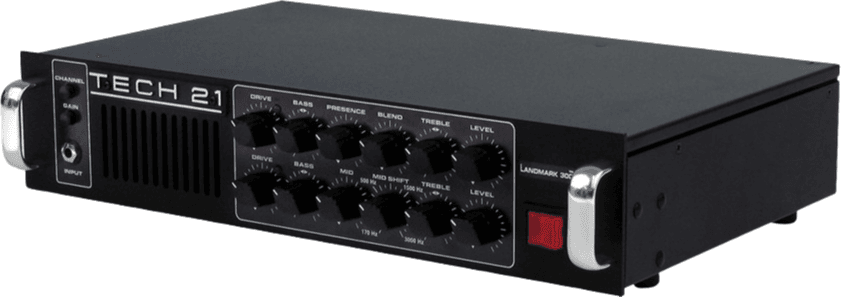
The Tech 21 Trademark 300 is a powerful analog guitar amplifier head that gained attention for combining high output, flexible tone shaping, and tube-style character without relying on traditional vacuum tubes. Built by Tech 21, a company well known for its SansAmp technology, the Trademark 300 was designed for guitarists who wanted the feel and response of classic amplifier tones in a more practical and maintenance-friendly format. For players who needed stage-ready power, multiple voicing options, and direct recording capability, the amp offered a distinctive solution that stood apart from many conventional heads on the market.
What made the Tech 21 Trademark 300 especially interesting was its attempt to bridge two worlds. On one side, guitarists still loved the warmth, breakup, and dynamic response of classic tube amplifiers. On the other side, many players wanted more reliability, less maintenance, and the convenience of a solid-state platform. The Trademark 300 addressed that gap by using all-analog circuitry and SansAmp-based tone shaping to emulate the characteristics of famous amplifier styles while delivering strong performance in live and studio settings.
What Is the Tech 21 Trademark 300?
The Tech 21 Trademark 300 is a 300-watt guitar amplifier head designed to deliver multiple amp-style tones through analog circuitry. Unlike digital modelers that rely on software-based simulations, this amplifier uses Tech 21’s analog SansAmp technology to shape the sound. The goal was to provide guitarists with classic-style clean, crunch, and high-gain tones in a single head that could handle rehearsal, recording, and stage performance.
The amp was created for players who wanted versatility without the drawbacks often associated with tube amplifiers, such as tube replacement, fragility, and ongoing maintenance. Because of that, the Trademark 300 appealed to musicians who needed reliable performance, consistent sound, and multiple tones from one unit. Its design positioned it as both a practical working amp and a serious tone tool for players who wanted flexibility.
The Role of SansAmp Technology
One of the most important aspects of the Tech 21 Trademark 300 is its use of SansAmp technology. Tech 21 built its reputation around analog amp emulation, and the Trademark series reflects that philosophy. Rather than simply amplifying a clean signal in a neutral way, SansAmp circuitry actively shapes the signal so it responds more like a classic amplifier circuit.
This matters because guitar players are often not just listening for loudness. They are listening for touch sensitivity, harmonic content, breakup behavior, and the way the amp responds to picking dynamics and guitar volume adjustments. SansAmp technology was developed to recreate some of those desirable qualities using analog electronics. In the Trademark 300, that approach helped create a range of usable tones that felt more musical and amp-like than many standard solid-state designs.
Power and Stage Performance
The 300-watt output of the Tech 21 Trademark 300 gave it plenty of headroom for live use. This level of power made it suitable for larger venues, louder rehearsal environments, and players who needed firm low-end response and strong projection through external speaker cabinets. For guitarists performing in bands with powerful drummers and dense mixes, clean power and dependable projection were important advantages.
High wattage also gave the amp a different kind of flexibility. Players who wanted clean sounds at high volume could benefit from the available headroom, while those using overdriven tones could push preamp-style gain structures without depending entirely on power section saturation. This made the amp attractive to working musicians who needed consistency across different performance conditions.
Three-Channel Flexibility
A major strength of the Tech 21 Trademark 300 is its multi-channel design. The amp was built to give players access to different tonal personalities without forcing them to use multiple separate amplifiers. This channel-based flexibility made it easier to move between clean passages, crunchy rhythm parts, and more saturated lead tones during performance.
For many guitarists, this was one of the most practical features of the amp. Instead of using pedals to force a single amp into every sonic role, the player could treat the amplifier itself as a broader tonal platform. This kind of versatility is especially useful for cover bands, session players, theater musicians, and guitarists who perform music that shifts between multiple gain levels and styles in a single set.
Classic Amp Style Voicings
The Tech 21 Trademark 300 became known for offering different amp-style voicings that referenced classic tonal families. These voices were designed to capture the general spirit of famous amplifier traditions rather than cloning one exact piece of gear. This gave the amp broad appeal because players could shape tones inspired by American-style cleans, British-style crunch, and more aggressive high-gain textures.
These voicing options helped the amp function as a versatile platform rather than a one-dimensional design. A player might dial in a cleaner, more open sound for rhythm guitar, switch to a thicker British-style grind for rock material, and then move to a more modern saturated tone for leads. This tonal range was one of the reasons the Trademark 300 stood out among analog heads.
Clean Tones and Headroom
The clean sounds of the Tech 21 Trademark 300 are one of its more practical strengths. Because the amp offers substantial power and analog tone shaping, it can produce clear, articulate clean tones with enough volume for demanding live situations. Players who rely on pedals often appreciate an amplifier that provides a stable and musical clean base, and the Trademark 300 could serve that role effectively.
Clean tone is important not only for jazz, country, or pop players, but also for rock guitarists who use delay, modulation, compression, and overdrive pedals. A solid clean platform allows those effects to remain clear and controlled. In that sense, the amp’s clean channel was not just about pristine sound. It was about giving the guitarist a dependable starting point for building a complete rig.
Crunch and Overdrive Sounds
Beyond clean tones, the Tech 21 Trademark 300 was built to handle a wide range of driven sounds. The amp’s analog circuitry made it possible to create crunchy rhythm tones that felt responsive and punchy. For players interested in rock, blues-rock, hard rock, and similar styles, this part of the amp’s voice was especially useful.
Overdrive character matters because guitarists often want more than simple distortion. They want the note attack to stay clear, chords to remain defined, and lead lines to sustain without becoming harsh. The Trademark 300 was designed to deliver these qualities through its tone-shaping architecture. While every player responds differently to overdrive texture, one of the amp’s main appeals was that it tried to offer a more amp-like and organic overdriven response than many solid-state alternatives of its era.
High-Gain Capability
The Tech 21 Trademark 300 also appealed to players looking for heavier tones. Its design allowed for stronger saturation and a thicker gain structure suitable for modern rock and more aggressive lead sounds. This made it a flexible choice for players who needed an amp that could cover multiple genres without sacrificing power or reliability.
For heavier players, the value of high-gain design is not only about distortion quantity. It is also about how tight the low end remains, how articulate the amp sounds under palm-muted playing, and whether lead tones maintain focus in a loud mix. The Trademark 300’s channel structure and analog voicing options gave players room to explore these sounds without depending entirely on external gain pedals.
EQ and Tone Shaping
One reason the Tech 21 Trademark 300 remains interesting to guitar enthusiasts is the amount of tone control it offered. Effective equalization is essential in a versatile amplifier because the same core amp voice needs to adapt to different guitars, pickups, cabinets, and venues. The amp’s tone controls allowed players to shape frequencies in ways that made it more suitable for a variety of setups.
Good tone shaping is not just about making the amp brighter or darker. It is about helping the guitar sit properly in a band mix, controlling harshness, preserving note clarity, and reinforcing the low-mid body that gives electric guitar its presence. For players using different cabinets or multiple guitars, the ability to fine-tune the amp was a meaningful advantage.
Analog Versus Digital Appeal
The Tech 21 Trademark 300 occupies an interesting place in amplifier design because it sits between traditional tube amplification and modern digital modeling. It is not a tube head, and it is not a fully digital modeling processor. Instead, it uses analog technology to create amp-style tones. That gave it a unique appeal for players who wanted versatility but were not interested in menu-heavy digital systems.
This analog approach remains significant because many guitarists prefer direct control and immediate response. Turning physical knobs and hearing predictable tonal changes can feel more natural than navigating digital presets. For that reason, the Trademark 300 appealed to players who wanted multiple tones without sacrificing the tactile simplicity of a conventional amplifier.
Recording and Direct Output Features
Another strong feature of the Tech 21 Trademark 300 is its usefulness in recording environments. Tech 21 has long been associated with direct recording solutions, and the Trademark 300 extended that thinking into a live-capable amplifier format. The inclusion of direct output options made it easier for players to send their signal to a mixer, recording interface, or front-of-house system.
This direct capability could be valuable in several situations. A guitarist recording in a home studio might want to capture a usable amp-style tone without placing microphones in front of a cabinet. A live player might want a more controlled signal sent directly to the sound engineer. In both cases, the amp’s design reflected Tech 21’s broader philosophy of creating practical tone solutions for real-world use.
Effects Loop and Rig Integration
The Tech 21 Trademark 300 was also designed to work well with broader guitar rigs. Effects loops are important to many players because they allow time-based effects such as delay and reverb to sit after the main preamp tone rather than in front of it. This can result in clearer and more professional-sounding effect placement, especially for driven sounds.
For guitarists using rack units, pedals, switching systems, or more elaborate live rigs, the ability to integrate effects properly is a serious consideration. The Trademark 300’s rig-friendly design made it more appealing to players who wanted an amp that could serve as the center of a flexible professional setup rather than as an isolated standalone unit.
Practical Benefits of a Tube-Free Design
One of the biggest practical advantages of the Tech 21 Trademark 300 is that it does not depend on vacuum tubes. Tube amplifiers are loved for their sound and feel, but they also come with certain realities. Tubes wear out, can fail unexpectedly, are vulnerable during transport, and may require biasing or maintenance. For players who tour, rehearse often, or simply want predictable performance, that can be a concern.
A tube-free amplifier like the Trademark 300 offers a different value proposition. It aims to deliver musical tone while reducing maintenance needs and improving reliability. This does not mean every player will prefer it over a traditional tube amp, but it does explain why many working musicians found the concept attractive. Convenience, consistency, and durability can matter just as much as tradition.
Who the Tech 21 Trademark 300 Was For
The Tech 21 Trademark 300 was well suited to players who needed versatility and power in a dependable format. Cover band guitarists, session players, club performers, and musicians moving between styles could all benefit from an amp that handled multiple tonal roles without requiring a complex collection of separate heads.
It also appealed to players who appreciated analog gear but did not want the cost or maintenance of tube equipment. For some guitarists, it was a solution that delivered enough tonal character and responsiveness while simplifying the realities of gigging and recording. In that sense, the Trademark 300 was aimed at musicians who cared deeply about sound but also cared about practicality.
Cabinet Pairing and Speaker Choice
As with most amplifier heads, the full sound of the Tech 21 Trademark 300 depends heavily on the cabinet and speakers used with it. Speaker choice can dramatically influence how an amplifier feels, whether the sound is tighter or looser, brighter or darker, more vintage or more aggressive. This means the Trademark 300 could produce noticeably different results depending on what it was connected to.
For players using larger cabinets, the amp’s power could translate into strong low-end authority and broad stage coverage. For those using more compact cabinets, the result might feel more focused and easier to control in smaller venues. This interaction between amp and cabinet is part of what makes guitar amplification so personal. The Trademark 300 offered a versatile platform, but the final outcome always depended on the broader rig.
Live Use and Reliability
Reliability is one of the most important qualities in a professional guitar amp, and this is one area where the Tech 21 Trademark 300 had clear appeal. Working musicians often need gear that turns on, sounds consistent, and survives repeated transportation. A powerful analog head with no tubes to replace had obvious practical value in this context.
Live performance also demands fast operation. An amp with clear controls, usable channel switching, and dependable output can reduce stress during shows. The Trademark 300’s design supported this kind of functional workflow. Instead of requiring constant adjustment or maintenance, it was intended to be a stable tool that could do its job night after night.
How It Fits Into Tech 21’s History
The Tech 21 Trademark 300 is also important as part of the broader story of Tech 21 as a company. Tech 21 built its identity by creating analog gear that challenged the assumption that great tone required tubes or digital complexity. Products built around SansAmp technology helped establish the company as a serious alternative in both recording and live performance environments.
The Trademark series extended that philosophy into full amplifier products. Rather than being just a preamp or direct box solution, the Trademark 300 showed how Tech 21’s analog approach could be scaled into a powerful amp head suitable for demanding performance situations. That gives it a meaningful place in the company’s product history and in the wider evolution of non-tube guitar amplification.
Why Guitarists Still Talk About It
Even though amplifier trends continue to evolve, the Tech 21 Trademark 300 remains interesting because it represents a specific and thoughtful approach to guitar tone. It was not simply trying to be a cheaper substitute for tube gear, and it was not trying to become a fully digital all-in-one modeling workstation. It aimed to create a middle path: analog, versatile, powerful, and practical.
That identity is part of why players still discuss it. Guitar gear enthusiasts often remember products that attempted something different and did it with clear intent. The Trademark 300 belongs in that category. It addressed real musician needs with a design philosophy that still feels relevant, especially for players who appreciate straightforward control and reliable stage performance.
Used Market Interest and Legacy
On the used market, the Tech 21 Trademark 300 continues to attract attention from players who value unique amplifier designs and practical stage gear. Its legacy is tied to its tonal flexibility, analog identity, and reputation as a serious working amplifier. For musicians exploring alternatives to both tube heads and modern digital modelers, it remains a compelling piece of equipment.
Legacy in guitar gear often depends on more than sales numbers. It depends on whether a product solved real problems, inspired loyalty, and delivered a memorable experience. The Trademark 300 did that for many players by offering strong power, versatile voicing, and a distinctive analog approach to amp emulation. That is why it still holds interest among guitarists, collectors, and fans of Tech 21 equipment.
Conclusion
The Tech 21 Trademark 300 is a notable guitar amplifier head that combined 300 watts of solid-state power with analog SansAmp-based tone shaping to deliver a wide range of classic-style sounds. It was designed for guitarists who wanted the feel of amp-inspired tones, practical recording options, multi-channel flexibility, and dependable performance without the maintenance demands of traditional tube equipment. In a market often divided between tube purists and digital adopters, the Trademark 300 offered a distinctive middle ground.
Its continued reputation comes from that balance of power, flexibility, and practicality. Whether used for live performance, studio work, or as part of a larger professional rig, the Tech 21 Trademark 300 stands as an important example of how analog design can provide musical tone and modern convenience at the same time. For players interested in versatile guitar amplification with a unique identity, it remains an amp worth understanding and remembering.

As a digital marketer, she has received multiple international awards, including Campaign of the Year at the 2023 European Content Awards and Best Use of Content Marketing at the 2022 Global Search Awards. Nicai holds an MSc in Marketing (First Class Honours) from the UCD Smurfit Graduate Business School and she has also completed the Artificial Intelligence Programme at Oxford University’s Saïd Business School. She is also a contributing writer for publications such as Entrepreneur and Esquire.