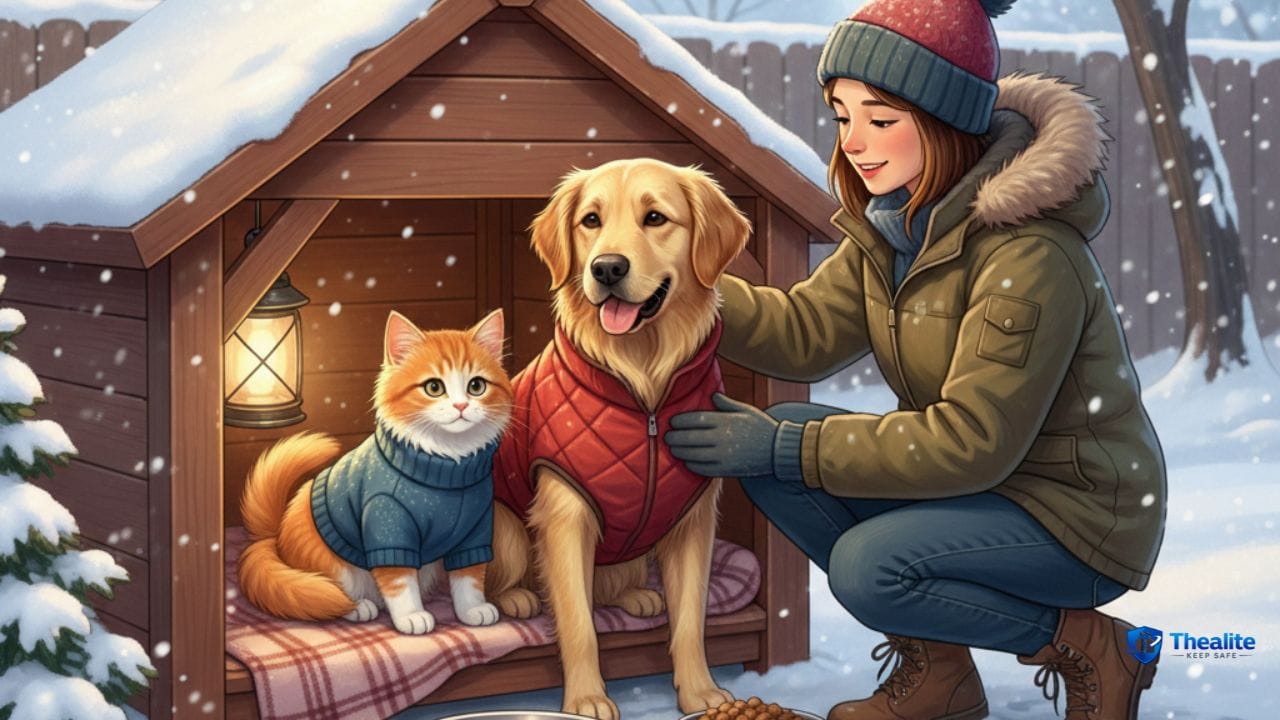
Cold weather can be dangerous for pets—even if they have fur. In many parts of the U.S., winter brings freezing temperatures, icy sidewalks, road salt and de-icers, winter storms, and power outages. Pets can develop **hypothermia** or **frostbite**, slip on ice, ingest harmful chemicals, or get lost during storms when doors are opened and routines change.
The good news is most winter pet emergencies are preventable with a simple system: limit exposure, protect paws and skin, make your home and car safer, and have a storm plan. This guide covers dogs and cats (including outdoor cats), plus quick tips for other common pets.
Related reading on your site: How to Keep Pets Safe in Hot Weather • How to Keep Pets Safe During a Tornado • How to Keep Outdoor Cats Safe at Night • How to Keep Cats Safe Outside • How to Keep Your Dog Safe in the Car
Quick Answer (Winter Safety Rules That Matter Most)
- Bring pets indoors during freezing temps, wind chill, and storms—especially at night.
- Limit outdoor time and supervise bathroom breaks (don’t let pets wander in snow/ice).
- Protect paws from ice and salt: wipe feet after walks, and consider booties or paw balm.
- Keep pets dry—wet fur + wind can cause rapid chilling.
- Watch for hypothermia and frostbite signs; act fast if you see them.
- Avoid toxic chemicals like antifreeze, ice melt, and rodenticides.
- Use winter car safety: never leave pets in a cold car and secure them during travel.
- Prepare for storms: ID tags + microchip, emergency kit, and a plan if power goes out.
Why Cold Weather Is Dangerous for Pets
Cold affects pets in a few predictable ways. Understanding them helps you prevent emergencies.
1) Hypothermia (body temperature drops too low)
Hypothermia can happen when a pet is exposed to cold for too long—especially if they’re wet or in wind. Smaller pets and older pets are at higher risk.
2) Frostbite (skin and tissue freeze)
Frostbite typically affects ears, tail tips, paws, and noses. It can look mild at first but worsen later.
3) Ice and salt hazards
Ice causes slips and joint injuries. Road salt and de-icers can irritate paws and can be toxic if licked.
4) Chemical poisoning (especially antifreeze)
Antifreeze is extremely dangerous. Even small amounts can be deadly. Some ice melts and garage chemicals also pose risks.
Step 1: Know Which Pets Need Extra Protection
Some pets can tolerate cold better than others, but no pet is invincible. Extra caution is needed for:
- Small dogs, short-haired dogs, and puppies
- Senior pets or pets with arthritis
- Pets with heart or respiratory conditions
- Very young kittens/cats and thin outdoor cats
- Any pet that gets wet outdoors
Step 2: Limit Outdoor Time (And Make It Supervised)
In cold weather, your goal isn’t to eliminate outdoor time—it’s to keep it short, supervised, and purpose-driven.
For dogs
- Do shorter walks more often instead of one long walk.
- Choose daytime walks when it’s warmer and brighter.
- Use a harness for better control on ice (reduces slip risk).
- Keep bathroom breaks short—especially in wind or wet snow.
For cats (especially outdoor cats)
Outdoor cats are at higher risk in winter because they can get trapped in sheds/garages or hide under cars.
- Bring cats indoors at night (biggest safety upgrade).
- Provide a warm indoor space during cold snaps and storms.
- If a cat must stay outdoors, provide insulated shelter and daily checks (working/barn cats).
Outdoor cat safety resources: How to Keep Cats Safe Outside • How to Keep Outdoor Cats Safe at Night.
Step 3: Protect Paws From Salt, Ice, and Cracks
Paw injuries are one of the most common winter problems. Salt and ice melt can burn paw pads and trigger licking (which can lead to stomach upset or poisoning).
Paw protection options
- Wipe paws after every walk (including between toes).
- Use dog booties for heavy salt/ice conditions (train gradually).
- Use paw balm as a protective barrier (apply before walks).
- Trim long fur between paw pads (reduces ice ball buildup).
Signs paws are irritated
- Limping, licking paws, or refusing to walk
- Redness, cracking, or bleeding pads
- Ice balls stuck between toes
Step 4: Keep Pets Warm and Dry
Wet fur steals body heat quickly. If your pet comes inside damp, dry them off right away—especially belly and paws.
Warmth tips that actually help
- Use a pet sweater or coat for short-haired dogs on cold walks.
- Towel-dry after snow or rain; consider a quick rinse if paws are salty.
- Provide warm bedding away from drafts (not on cold tile).
- For outdoor shelters: use straw (better insulation than blankets when wet).
Step 5: Prevent Poisoning (Antifreeze, Ice Melt, Rodenticides)
Winter brings chemicals into garages, driveways, and sidewalks. Prevention is much easier than treatment.
Antifreeze safety
- Clean up spills immediately (even small drips matter).
- Store antifreeze and car fluids locked away.
- Watch for puddles in garages/driveways and keep pets away.
Ice melt safety
- Use pet-friendlier ice melt when possible (still wipe paws after).
- Don’t let pets lick paws after walks—wipe first.
- Keep pets away from freshly treated sidewalks until you’ve assessed residue.
Rodent poison risk
- Avoid rodenticides when possible (secondary poisoning is a risk).
- If used, follow label directions and keep baits inaccessible to pets.
Step 6: Winter Car Safety for Pets
People often hear about hot cars, but cold cars are risky too—especially if the car is off. Pets can chill quickly in freezing temps.
Car safety rules
- Don’t leave pets in a parked car in freezing weather.
- Use a secure restraint: harness seatbelt or secured crate.
- Bring a blanket for longer winter trips, but avoid covering faces/ventilation.
More: How to Keep Your Dog Safe in the Car.
Step 7: Prepare for Winter Storms and Power Outages
Storms change routines and increase escape risk. Doors open, fences get buried in snow, and pets panic during loud weather. Preparation keeps small problems from becoming missing-pet emergencies.
Storm readiness basics
- Make sure ID tags are current and microchips are registered with updated contact info.
- Keep leashes, carriers, and harnesses accessible (not buried in storage).
- Stock a pet emergency kit: food, water, meds, bowls, waste bags, and copies of vet records.
- Have a warm safe room plan if power goes out (extra blankets, safe heat sources).
Emergency planning mindset: How to Keep Pets Safe During a Tornado.
Warning Signs: Hypothermia and Frostbite
Know the signs so you can act early.
Hypothermia signs
- Shivering (early), weakness, lethargy
- Cold ears/paws, slow movement
- Confusion, stumbling, pale gums (more serious)
Frostbite signs
- Pale/gray or very cold skin on ears, paws, tail, nose
- Swelling or blisters later as tissue warms
- Pain or sensitivity when touched
What to Do If Your Pet Gets Too Cold
If you suspect hypothermia or frostbite, contact a vet promptly. Immediate first steps:
- Bring your pet indoors to a warm, dry place.
- Dry them thoroughly (especially belly and paws).
- Warm gradually with blankets; avoid direct high heat (heating pads on high can burn).
- Offer room-temperature water (don’t force).
- Call your vet or emergency clinic for guidance.
Special Tips for Other Pets
If you have pets beyond cats and dogs, winter safety still matters:
- Rabbits/guinea pigs: keep enclosures out of drafts; bring indoors during freezing temps; provide extra bedding.
- Birds: avoid cold drafts and keep cages away from windows; maintain stable indoor temps.
- Reptiles: power outages can be dangerous—have a backup heat plan appropriate for your species (vet guidance).
Winter Pet Safety Checklist (Copy/Paste)
- Limit outdoor time; supervise bathroom breaks
- Bring pets indoors at night and during cold snaps/storms
- Wipe paws after walks; protect paws from salt and ice
- Dry pets after snow/rain; use coats for short-haired dogs
- Prevent poisoning: antifreeze locked up, spills cleaned, safe ice melt when possible
- Never leave pets in a cold parked car
- Storm plan: ID + microchip, carrier/leash ready, pet emergency kit stocked
- Know hypothermia/frostbite signs and call a vet if concerned
FAQs
Do pets get hypothermia even with fur?
Yes. Fur helps, but pets can still become dangerously cold—especially if wet, in wind, or exposed for too long.
When is it too cold to walk a dog?
It depends on your dog’s size, coat, age, and health. In freezing temps or wind chill, keep walks short and watch for shivering, paw lifting, or reluctance.
How do I protect my dog’s paws from road salt?
Wipe paws after walks, consider booties, and use paw balm. Prevent licking until paws are clean.
Should outdoor cats be brought inside in winter?
Yes whenever possible—especially at night and during storms. Outdoor cats face cold exposure and risks like hiding under cars or getting trapped.
Is antifreeze really that dangerous to pets?
Yes. Antifreeze can be lethal even in small amounts. Store it safely and clean up any spills immediately.
Conclusion
Keeping pets safe in cold weather is mostly about predictable routines: reduce exposure, protect paws, keep pets dry, and prevent chemical poisoning. Bring pets indoors during freezing temps and storms, and prepare for power outages with a simple emergency kit. With these layers in place, winter becomes safer—and a lot less stressful—for both you and your pets.

As a digital marketer, she has received multiple international awards, including Campaign of the Year at the 2023 European Content Awards and Best Use of Content Marketing at the 2022 Global Search Awards. Nicai holds an MSc in Marketing (First Class Honours) from the UCD Smurfit Graduate Business School and she has also completed the Artificial Intelligence Programme at Oxford University’s Saïd Business School. She is also a contributing writer for publications such as Entrepreneur and Esquire.