When a child is in your care—whether you’re babysitting, helping family, or working in childcare—you’re responsible for more than “watching them.” Safety comes from active supervision, a safe environment, clear rules, and knowing what to do if something goes wrong.
This U.S.-focused guide gives practical, non-scary steps that caregivers can follow. It covers infants, toddlers, and older kids, plus pickup rules, medication safety, and emergency planning. Use the checklist at the end as your quick reference.
Quick Answer (The Caregiver Safety System)
- Get key info from parents/guardians: allergies, meds, routines, emergency contacts, pickup rules.
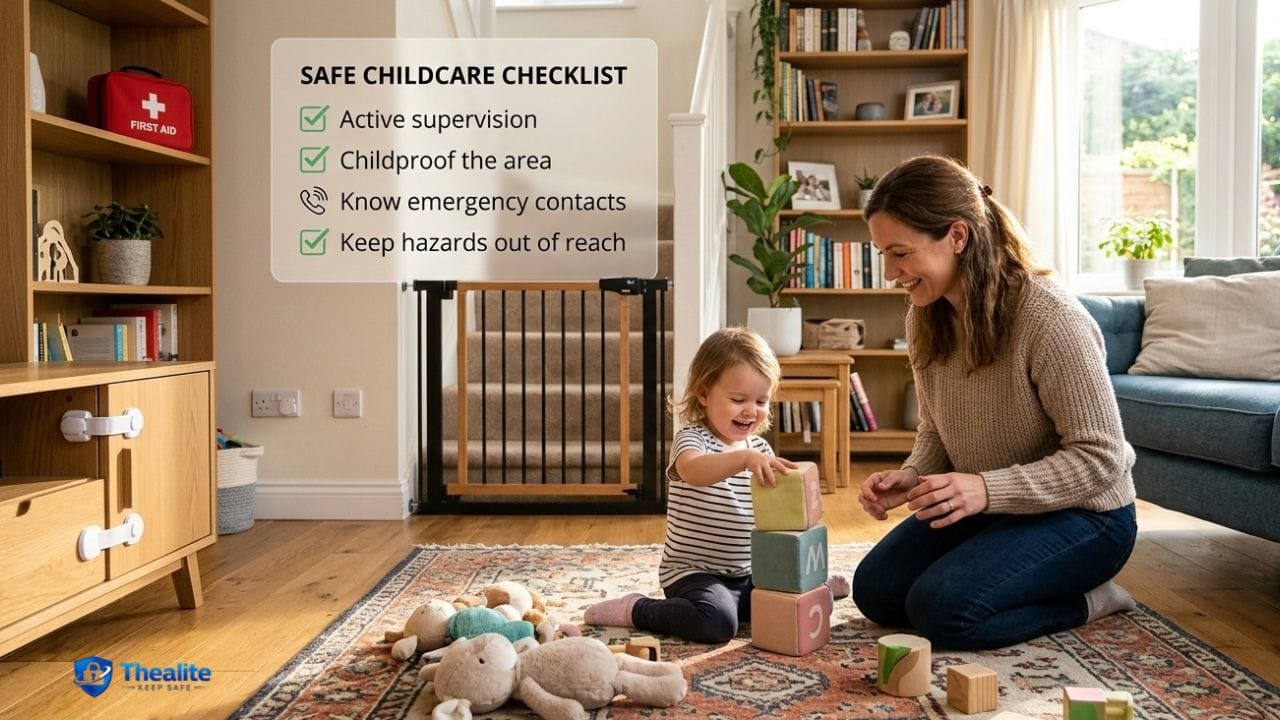
- Use active supervision (especially near water, streets, pets, stairs, and kitchens).
- Make the environment safer: remove choking hazards, secure chemicals/meds, lock doors/gates as needed.
- Follow safe sleep rules for infants (back to sleep, firm surface, no loose bedding).
- Use car seat/booster correctly every ride; never leave a child alone in a car.
- Food safety: cut foods to reduce choking; watch high-risk foods for toddlers.
- Have an emergency plan: know the address, know when to call 911, keep a first-aid kit accessible.
- Document incidents and communicate clearly with parents.
Step 1: Start With a 2-Minute Safety Brief From the Parent
Before the parent leaves, get the information you need to keep the child safe and to respond fast in an emergency.
Ask for these essentials (write them down)
- Child’s full name and age
- Parent/guardian phone numbers (and a backup contact)
- Home address (needed for 911)
- Allergies (food/medicine/environmental) and signs of a reaction
- Medications (where they are, when to use, dosage instructions if applicable)
- Medical needs (asthma inhaler, EpiPen, diabetes supplies)
- Bedtime routine and safe sleep instructions for infants
- Screen time and behavior rules (so you don’t improvise)
- Pickup rules: who is allowed to pick up the child and what verification to use
- Where safety items are: first-aid kit, fire extinguisher, flashlight
Tip: If you’re watching the child outside their home, also get consent for emergency medical treatment and preferred hospital/urgent care if possible.
Step 2: Active Supervision (The #1 Safety Tool)
Most serious child injuries happen during ‘quiet moments’ when adults assume the child is fine. Active supervision means being close enough to intervene.
High-risk moments that require extra attention
- Water (bath, pool, beach, buckets, even shallow water)
- Streets and parking lots
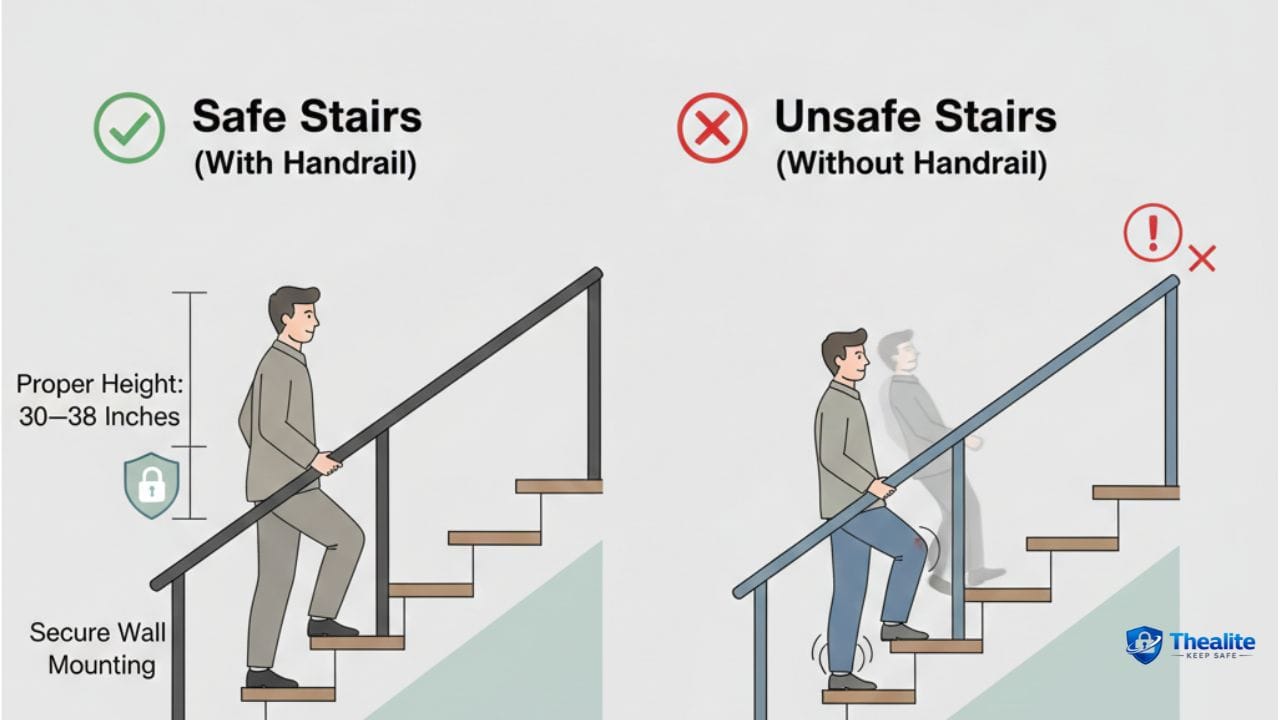
- Stairs and balconies
- Kitchen cooking (hot surfaces, sharp tools)
- Pets (even friendly dogs can react unpredictably)
- Playgrounds and climbing
Simple rule: if a child is near water, you are within arm’s reach (especially toddlers).
Step 3: Make the Space Safer (Fast Childproof Scan)
You don’t need to redesign the house—just remove obvious hazards for the time you’re in charge.
Do a quick scan for:
- Choking hazards (coins, small toys, batteries, magnets)
- Medications and vitamins (lock away; never leave on counters)
- Cleaning supplies/chemicals (secure under-sink cabinets)
- Sharp objects (knives, scissors, razors)
- Cords and blind strings (strangulation risk)
- Unsecured furniture (tip-over risk)
If there are firearms in the home, they should be locked away securely and inaccessible to children. If you’re unsure, ask the parent directly.
Step 4: Safe Sleep for Babies (Non-Negotiable)
Infant sleep safety is one of the most important caregiver responsibilities. Follow the parent’s routine, but also follow safe sleep principles.
Safe sleep basics (U.S. guidance)
- Baby sleeps on their back.
- Firm, flat sleep surface (crib/bassinet) with a fitted sheet.
- No pillows, blankets, stuffed animals, or loose bedding in the sleep space.
- Avoid sleeping on couches or adult beds with infants.
If the baby falls asleep in a car seat or swing, move them to a safe sleep surface when practical.
Step 5: Choking Prevention and Meal Safety
Choking is a major risk for toddlers and young children. Food and small objects are the most common causes.
High-risk foods and safer prep
- Cut grapes, cherry tomatoes, and hot dogs lengthwise (and into small pieces for toddlers).
- Avoid whole nuts and hard candies for young kids.
- Spread nut butter thinly; avoid large sticky globs.
- Supervise meals; no running or playing while eating.
If the child has allergies, follow parent instructions strictly and avoid ‘new’ foods without permission.
Step 6: Allergy and Medication Safety
Allergies and medication errors are high-stakes. If a child has an EpiPen or inhaler, you must know where it is and how it’s used.
Allergy safety rules
- Read labels; avoid cross-contact (separate utensils, wash hands).
- Know the child’s symptoms and emergency plan.
- If serious allergic reaction signs appear, call 911 and follow the emergency plan.
Medication safety rules
- Give only parent-approved medications at the instructed dose.
- Use proper measuring tools (not kitchen spoons).
- Store meds out of reach and locked when possible.
- Never call medicine ‘candy.’
Step 7: Car and Travel Safety
If you drive with a child, the caregiver’s responsibility is to use the correct restraint every time and never leave the child unattended.
- Use the correct car seat/booster for the child’s age/size per parent instructions.
- Buckle correctly every ride—even short trips.
- Never leave a child alone in a car (even for a minute).
- Use child locks if appropriate; keep doors locked in parking lots.
Step 8: Public Place Safety (Stores, Parks, Events)
If you take a child into public spaces, prevent separation and have a plan if it happens.
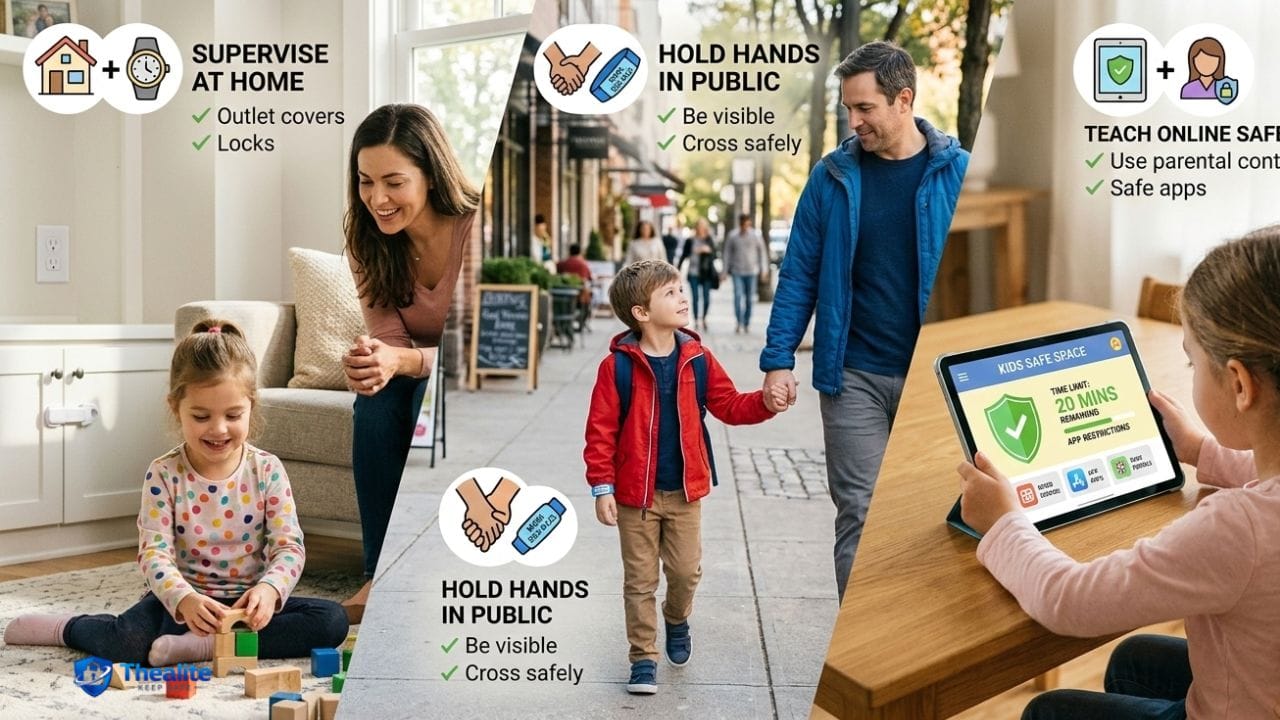
- Set rules at the door: stay where I can see you, hold hands in parking lots.
- Choose a meeting spot and teach the child to stop and stay if separated.
- Teach safe helpers (employee, security, or a parent with kids).
Related: How to Keep Your Child Safe in Public.
Step 9: Pickup and Drop-Off Rules (Prevent Confusion)
One of the most overlooked safety issues is pickup authorization. Caregivers should never hand a child to an unapproved person.
Best pickup practices
- Get a list of approved pickup people from the parent.
- Use a simple code word (family password) for unexpected pickup changes.
- If someone arrives and you’re unsure, keep the child with you and call the parent to confirm.
- Don’t share the child’s personal info with strangers who ask questions.
Step 10: Emergency Plan (Know What to Do Under Stress)
Emergencies feel chaotic. A simple plan helps you act fast.
Know these before you need them
- The exact address (for 911).
- Where the first-aid kit is.
- Parent contacts and a backup contact.
- Any medical action plan (asthma/allergy).
When to call 911
- Breathing trouble, severe allergic reaction, uncontrolled bleeding, loss of consciousness.
- Choking when the child cannot breathe or speak.
- Serious injury, suspected poisoning, or any situation where you feel the child is in immediate danger.
Step 11: Communication and Documentation
Parents trust caregivers who communicate clearly. If anything unusual happens, document it.
- Log meds given (time and dose) if any medications are used.
- Report injuries or near-misses immediately.
- If an incident happens, write down what happened and what you did (helps parents and healthcare providers).
Copy/Paste Checklist: Keeping a Child Safe While in Your Care
- Get parent brief: contacts, address, allergies, meds, routines, pickup rules
- Active supervision (extra near water, streets, pets, stairs, kitchen)
- Quick childproof scan: choking hazards, meds/chemicals, sharps, cords
- Safe sleep: back to sleep, firm surface, no loose bedding
- Meal safety: cut high-risk foods; supervise eating; follow allergy rules
- Meds: parent-approved only; correct measuring; store locked/out of reach
- Car safety: correct car seat/booster; buckle every ride; never leave child in car
- Public: parking lot hand-holding; lost-child plan; safe helpers
- Pickup: approved list + code word; call parent if unsure
- Emergency: know address, first-aid kit, when to call 911; document incidents
FAQs
What is the most important rule when caring for a child?
Active supervision—being close enough to intervene—prevents many common injuries, especially around water, streets, kitchens, and pets.
What should I ask parents before babysitting?
Emergency contacts, allergies/medications, routines (especially sleep), house rules, and pickup authorization details.
How do I keep toddlers from choking?
Cut high-risk foods into safer shapes, keep small objects off the floor, and supervise meals (no running or playing while eating).
What if someone shows up to pick up the child and I’m not sure?
Do not hand the child over. Keep the child with you and call the parent/guardian to confirm, using a code word system if available.
When should I call 911?
Any breathing trouble, severe allergic reaction, choking with inability to breathe, uncontrolled bleeding, loss of consciousness, or any situation where the child is in immediate danger.
Conclusion
Keeping a child safe while in your care is about preparation and consistency: get the parent brief, supervise actively, reduce hazards, follow safe sleep rules, take choking and allergy safety seriously, and have a clear pickup and emergency plan. When you use routines instead of improvising, children stay safer—and caregivers feel more confident.

As a digital marketer, she has received multiple international awards, including Campaign of the Year at the 2023 European Content Awards and Best Use of Content Marketing at the 2022 Global Search Awards. Nicai holds an MSc in Marketing (First Class Honours) from the UCD Smurfit Graduate Business School and she has also completed the Artificial Intelligence Programme at Oxford University’s Saïd Business School. She is also a contributing writer for publications such as Entrepreneur and Esquire.