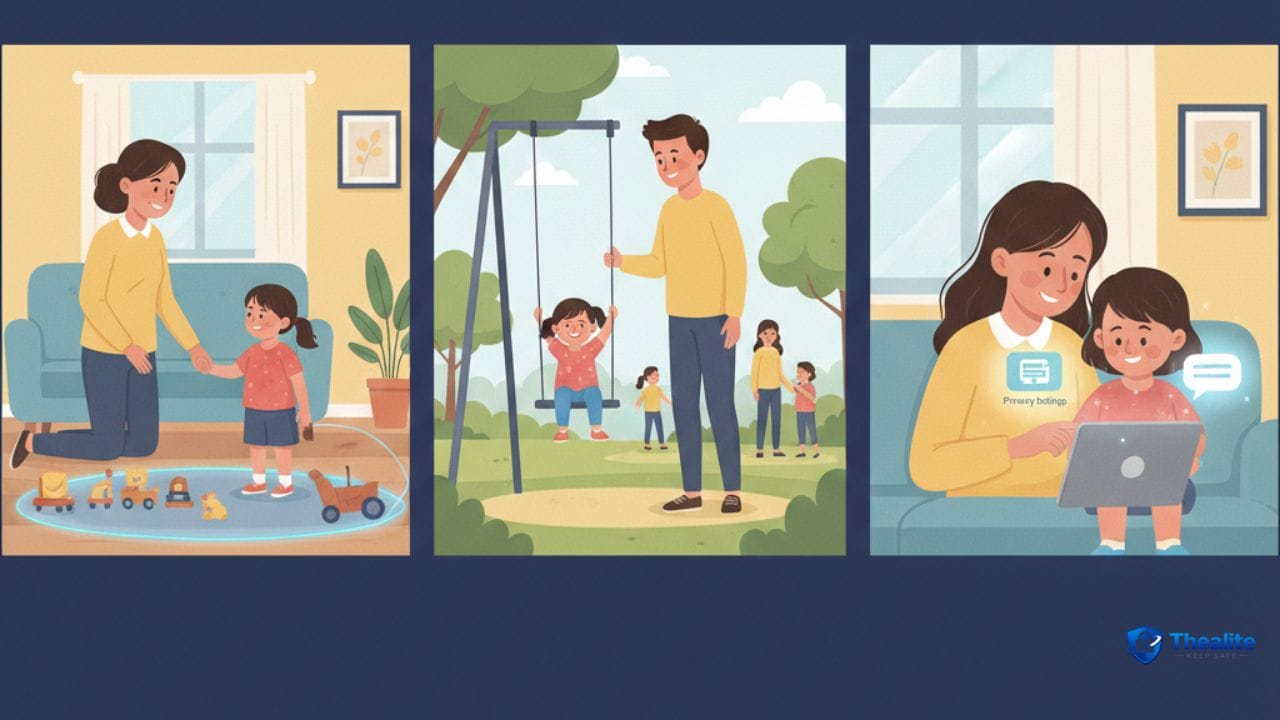
The best way to keep your child safe from predators is to combine three things: clear family rules, consistent supervision habits, and age-appropriate online safety controls. Most safety comes from everyday choices—knowing where your child is, who they’re with, and building a home environment where your child feels comfortable telling you anything.
First: What “Predator Safety” Really Means
Parents often imagine a stranger in a dark alley. In real life, risk can also come from people who build trust over time. That’s why safety planning is not about fear. It’s about smart boundaries and strong communication.
This guide focuses on practical prevention. It avoids graphic detail and keeps steps simple and doable.
10 Simple Rules Every Child Should Know
Keep rules short. Repeat them often. Practice them like a fire drill.
- 1) My body belongs to me. I don’t have to hug, kiss, or touch anyone if I don’t want to.
- 2) I don’t go anywhere with someone without checking with my parent/guardian first.
- 3) I don’t accept gifts, rides, or “special favors” without asking my parent/guardian.
- 4) I don’t share my full name, school, address, or phone number with strangers.
- 5) I don’t keep “secrets” with adults. Surprises are okay, secrets are not.
- 6) If I feel unsafe, I can say NO loudly and leave.
- 7) If I get separated, I find a safe adult (like a store employee) and ask for help.
- 8) I use the buddy system in public places.
- 9) I tell my parent/guardian if someone makes me uncomfortable—no matter what.
- 10) It’s never my fault if an adult behaves badly.
Teach Boundaries Without Shame
Kids learn safety faster when the conversation feels normal and calm.
Simple phrases that work:
- “You can always say ‘no thank you’ to touch.”
- “You don’t owe anyone a hug.”
- “If you ever feel weird, you can tell me and you won’t be in trouble.”
Use Real-Life Practice (Role Play)
Role play helps kids react faster under stress.
Practice scenarios like:
- A stranger asks for help finding a pet or lost item.
- Someone offers candy, a toy, or a ride.
- A person asks your child to go somewhere “just for a minute.”
- Your child gets separated from you in a store.
Keep it short. Make it empowering, not scary.
Public Safety Habits That Reduce Risk
These habits make a big difference in everyday life.
- Use the buddy system at parks, malls, events, and restrooms.
- Agree on a meeting spot if you get separated.
- Teach your child to stay in ‘arm’s reach’ in crowds (age-appropriate).
- Avoid distractions when supervising (phone calls, long chats).
- Know who is picking up your child. Use a password phrase for pickups.
- Check visibility at play areas (avoid hidden corners and isolated spots).
School, Sports, and Activities: Smart Safety Checks
Most kids spend time with trusted organizations. Still, it’s okay to ask questions.
Helpful checks for parents:
- Ask about background checks and supervision policies.
- Avoid one-on-one situations behind closed doors when possible.
- Prefer programs with open-door/observable spaces.
- Make sure your child knows they can contact you anytime.
- Teach your child to speak up if a situation feels wrong.
Online Safety Matters Too (Predators Can Start Online)
Many safety issues begin with messaging, games, or social apps. Lock down privacy and keep communication open.
Strong online safety steps:
- Keep accounts private and limit who can message your child.
- Turn off location sharing and tagging.
- Limit chat in games to friends-only when possible.
- Make a rule: no moving chats to secret apps or private accounts.
- Teach your child to show you any message that feels weird or pressuring.
For a full setup guide, read
this related guide: How to Keep Children Safe Online.
Warning Signs to Take Seriously (Keep It Simple)
These signs do not always mean abuse. But they are worth attention.
- Sudden fear of a person or place
- New secrecy about phone, messages, or social accounts
- Unusual gifts or money with unclear source
- Big mood changes: anxiety, anger, sadness, withdrawal
- Sleep problems or nightmares
- Avoiding activities they used to like
- Using new words or topics that seem adult for their age
What to Do If Something Feels Off
Trust your instincts. You don’t need 100% proof to take protective steps.
- 1) Stay calm when talking to your child.
- 2) Ask open questions: “What happened?” “How did that make you feel?”
- 3) Avoid leading questions. Let them explain in their own words.
- 4) Save evidence if it’s online (screenshots).
- 5) Increase supervision and adjust routines immediately.
- 6) If you believe your child is in danger, contact local authorities right away.
If Your Child Tells You Something Serious
Your first response matters. A supportive response helps your child keep talking.
Helpful responses:
- “Thank you for telling me.”
- “You did the right thing.”
- “This is not your fault.”
- “I’m here with you, and we’ll handle this together.”
Home Safety Basics That Help
These steps don’t cost much, but they reduce risk.
- Know your child’s friends and their families.
- Be cautious with sleepovers. Ask who will be there and how supervision works.
- Keep devices in common areas for younger kids.
- Use clear rules for visitors and childcare.
- Teach children to check in before going anywhere, even with familiar people.
A Simple Family Safety Plan (Copy/Paste)
Write this down and review monthly:
- Trusted adults list: 3 people my child can talk to.
- Pickup password phrase: ____________
- Meet-up spot in busy places: ____________
- Emergency phone numbers saved in parent + child device (if they have one).
- Online rule: friends-only messages + show any weird messages.
FAQs
How do I talk to my child about predators without scaring them?
Use simple rules and focus on safety skills. Keep your tone calm. Emphasize that your child can always tell you anything without getting in trouble.
What is the most important rule for kids?
Teach body boundaries and the idea that they don’t keep secrets with adults. Also teach them to tell a trusted adult if something feels wrong.
Should I track my child’s phone?
For younger kids, location sharing can be helpful. But it’s not a replacement for communication, privacy settings, and supervision.
What should I do if a stranger approaches my child in public?
Move closer, stay calm but firm, and remove your child from the situation. If needed, alert staff/security and report suspicious behavior.
More “Keep Safe” Guides
Explore more safety topics at Thealite Keep Safe. If you need to reach the site team, use Contact.

As a digital marketer, she has received multiple international awards, including Campaign of the Year at the 2023 European Content Awards and Best Use of Content Marketing at the 2022 Global Search Awards. Nicai holds an MSc in Marketing (First Class Honours) from the UCD Smurfit Graduate Business School and she has also completed the Artificial Intelligence Programme at Oxford University’s Saïd Business School. She is also a contributing writer for publications such as Entrepreneur and Esquire.