Hotel rooms feel private, but they’re not the same as your home. Multiple people can access rooms (front desk staff, housekeeping, maintenance), and travelers often relax their habits—leaving phones, wallets, jewelry, and laptops out in the open. That’s when opportunistic theft happens.
The goal isn’t to be paranoid. The goal is to use a simple system: reduce what you bring, keep essentials on you, secure backups, use the room safe correctly, and remove temptation before staff entry.
Quick Answer (Hotel Valuables Safety System)
- Bring less: don’t travel with valuables you won’t use.
- Keep essentials on you: phone, primary card, small cash, and ID as needed.
- Split backups: spare cash/cards and documents stored separately from your daily wallet.
- Use the room safe correctly: test it, set a unique code, and don’t store your only backup there.
- Use front desk secure storage for high-value items when offered.
- Before leaving the room (especially on housekeeping days): clear counters and secure valuables.
- Lock the room and use deadbolt/latch when inside; don’t open the door without verifying.
- If something goes missing: document, report, lock cards, and secure accounts fast.
Step 1: What Counts as ‘Valuables’ in a Hotel Room?
Most travelers think only of cash and jewelry, but valuables usually include:
- Cash, credit/debit cards, and spare cards
- Passport/ID and travel documents
- Jewelry, watches, and sentimental items
- Laptop, tablet, camera, headphones
- Car keys and key fobs
Rule: if losing it would ruin your trip or create a major headache, treat it as a valuable.
Step 2: The #1 Rule—Reduce What You Bring
You can’t lose what you didn’t bring. Before a trip, decide what you truly need.
- Bring one primary payment method + one backup.
- Leave expensive jewelry at home unless you need it for a specific event.
- Don’t carry your entire wallet of cards/IDs.
- Keep high-value electronics limited to what you actually use.
Step 3: Keep Essentials With You
Many hotel theft stories start with leaving a wallet on a dresser. Carry essentials with you—especially when going to breakfast, the pool, or the lobby.
- Daily carry: one card + small cash + phone + ID as needed.
- Backups stay secured: spare cards/cash in safe or locked luggage.
Step 4: Use the Split-Backup System
A simple split makes you resilient:
- Primary: what you carry daily.
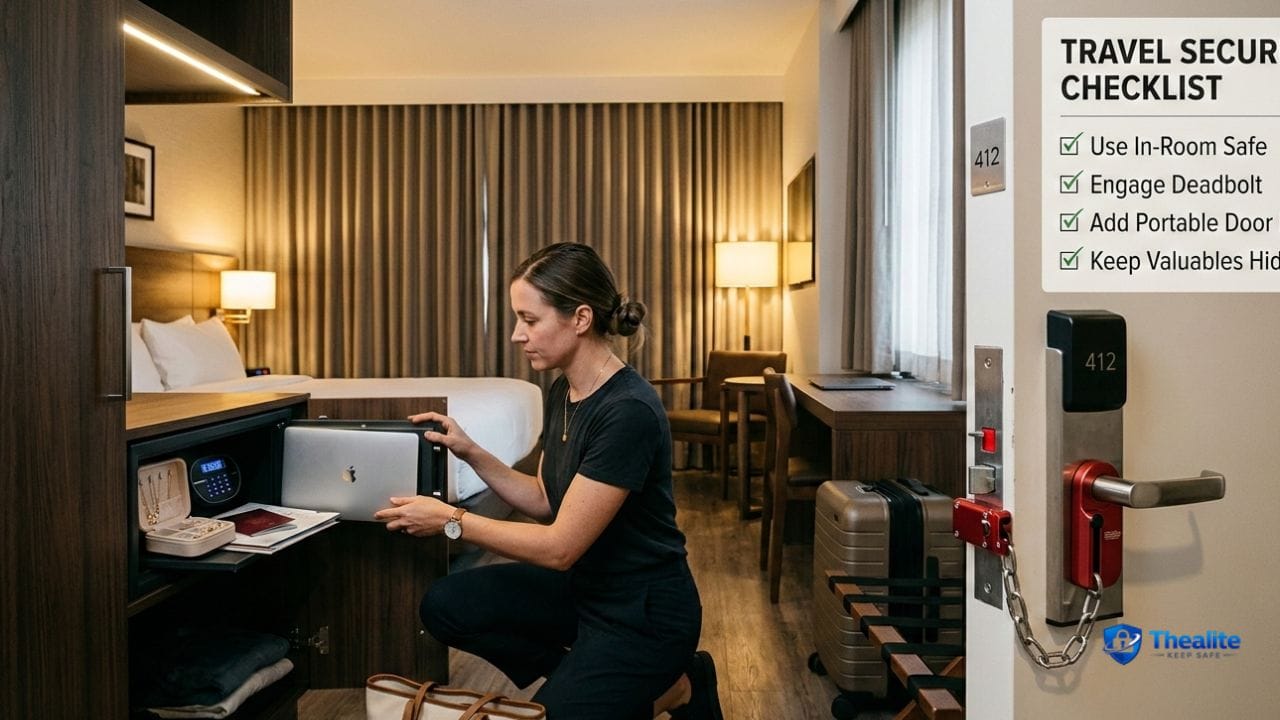
- Backup: secured in the room safe (spare card + backup cash + passport copy).
- Emergency: stored separately from the safe (small reserve or second backup card).
Step 5: Using the Hotel Room Safe (Do It the Right Way)
Room safes are useful, but not perfect. Treat them as one layer. Use them for small items, but don’t rely on them as your only backup.
Room safe best practices
- Test the safe when you check in (lock/unlock once).
- Use a unique code (not 0000, 1111, or your birthday).
- Store small valuables: backup cash, spare cards, passport copy, small jewelry.
- Remember what you stored—make a quick note so you don’t forget items at checkout.
When NOT to use the room safe
- If the safe looks loose, damaged, or unreliable.
- If you’re storing very high-value items and the hotel offers better secure storage.
Step 6: Front Desk Secure Storage
Some hotels offer secure storage or safe deposit options at the front desk. For high-value items, this can be a stronger choice.
- Ask the hotel about secure storage and access procedure.
- Get a receipt or record of what was stored if available.
- Understand access hours and rules.
Step 7: Housekeeping Days—Use a Reset Routine
Whether or not staff are involved in theft, the best practice is the same: remove temptation and remove uncertainty.
Before you leave the room
- Do a 30-second sweep: wallet, cash, passport, jewelry, electronics.
- Put backups into the safe or locked luggage.
- Clear counters/nightstands and keep valuables out of sight.
- If you don’t need service, use Do Not Disturb.
When you return
- Confirm valuables are where you expect them to be (quick check prevents late surprises).
- If anything is missing, report immediately while staff schedules are clear.
Step 8: Laptop and Electronics Safety
Electronics are high-value targets. Many travelers leave laptops on desks or plugged in. Use simple steps to reduce risk.
- Take your laptop with you if you can (especially in uncertain environments).
- If leaving it, store it out of sight (not on the desk) and consider locking luggage.
- Use full-disk encryption and a strong device passcode.
- Turn on device tracking and keep backups of important files.
Step 9: Don’t Open the Door to Surprise Visitors
Some hotel scams involve someone claiming to be staff. Don’t open the door without verifying.
- If someone knocks claiming maintenance/room service unexpectedly, call the front desk to confirm.
- Use the peephole and keep deadbolt/latch engaged when inside.
Step 10: What to Do If Valuables Go Missing
Act fast and document what happened.
- Check your system first (safe, luggage, pockets).
- Report to hotel management immediately and request incident documentation.
- If cards are missing, lock/freeze them via your banking app.
- If phone/laptop is missing, use tracking to lock/erase and change key passwords.
- File a police report for significant theft or insurance claims.
Copy/Paste Checklist: Keep Valuables Safe in a Hotel Room
- Bring less: don’t travel with valuables you won’t use
- Carry essentials daily (phone + one card + small cash + ID as needed)
- Split backups (spare card/cash stored separately from wallet)
- Use room safe correctly: test it, unique code, don’t store your only backup there
- Use front desk secure storage for high-value items when available
- Before housekeeping: sweep and secure valuables; clear counters
- Lock door and use deadbolt/latch when inside
- Verify any unexpected visitors through front desk
- If missing: report immediately, lock cards, track/lock devices, document everything
FAQs
Is it safe to keep valuables in a hotel room safe?
It can help as one layer for small valuables, backup cash, and spare cards. Test it, use a unique code, and don’t store your only backup in the safe.
What’s the safest place to keep a passport in a hotel room?
If you don’t need it daily, store it securely (room safe or front desk secure storage when available). Keep a copy separately and carry only what you need.
How do I keep jewelry safe in a hotel room?
Bring minimal jewelry, store it in the room safe (or front desk storage for high value), and avoid leaving it on counters or nightstands.
Should I leave my laptop in the hotel room?
If possible, take it with you. If you must leave it, store it out of sight, use device encryption and a strong password, and consider locked luggage or secure storage.
What should I do if something is stolen from my hotel room?
Report immediately to hotel management, document details, lock cards/accounts, and file a police report if needed for major losses or insurance.
Conclusion
To keep valuables safe in a hotel room, use a simple system: bring less, carry essentials, secure backups, and clear counters before staff entry. Use the room safe as one layer (and front desk storage for high value), keep devices locked and trackable, and act quickly if anything goes missing.

As a digital marketer, she has received multiple international awards, including Campaign of the Year at the 2023 European Content Awards and Best Use of Content Marketing at the 2022 Global Search Awards. Nicai holds an MSc in Marketing (First Class Honours) from the UCD Smurfit Graduate Business School and she has also completed the Artificial Intelligence Programme at Oxford University’s Saïd Business School. She is also a contributing writer for publications such as Entrepreneur and Esquire.