If your safe smells musty, papers feel damp, or metal items are starting to rust, the problem is almost always the same: humidity gets trapped inside the safe and temperature changes create condensation. Safes don’t get much airflow, so once moisture builds up, it tends to stay.
The good news is that you don’t need complicated gear to fix it. You need the right items inside the safe—and a simple routine to keep them working. This guide explains the best things to put in a safe to keep moisture out, how to use each option correctly, and the common mistakes that make humidity problems come back.
Quick Answer
To keep moisture out of a safe, put these inside: **(1) a hygrometer** to measure humidity, **(2) desiccant** (rechargeable silica gel canisters) to absorb moisture, **(3) an electric dehumidifier rod** (if your safe supports power) to reduce condensation, and **(4) protective pouches** for documents or valuables. For most U.S. homes, the best setup is a **rod + desiccant + hygrometer**.
Why Moisture Builds Up in Safes (So You Choose the Right Fix)
A safe is a mostly sealed metal box. When you open the door, room air enters. If that air is humid, it carries moisture inside. When the safe cools later (nighttime, seasonal swings, basement/garage changes), water can condense on the interior. Because there’s little airflow, that moisture doesn’t escape easily.
Situations that make moisture worse
- Safe placed in a basement or garage (higher humidity and bigger temperature swings).
- Safe sitting directly on concrete (cool surface encourages condensation).
- Safe packed tightly with fabric/foam items that hold moisture.
- No humidity control tools inside (or not enough capacity).
- Desiccant not recharged/replaced regularly.
- Storing damp items inside (wet cases, sweaty holsters, recently cleaned items).
The Best Things to Put in a Safe to Keep Moisture Out
These are the most effective categories, ranked by impact.
1) Hygrometer (So You’re Not Guessing)
A hygrometer is a small device that measures humidity (relative humidity %). It’s the simplest way to know whether your setup is working.
- Place it where you can read it easily (near the door or on a shelf).
- Check it monthly (weekly during very humid seasons).
- If humidity stays high, add more desiccant, add a rod, or improve safe placement.
Why it matters: without a hygrometer, many people keep buying moisture products but never confirm if humidity actually dropped.
2) Desiccant (Rechargeable Silica Gel Canisters)
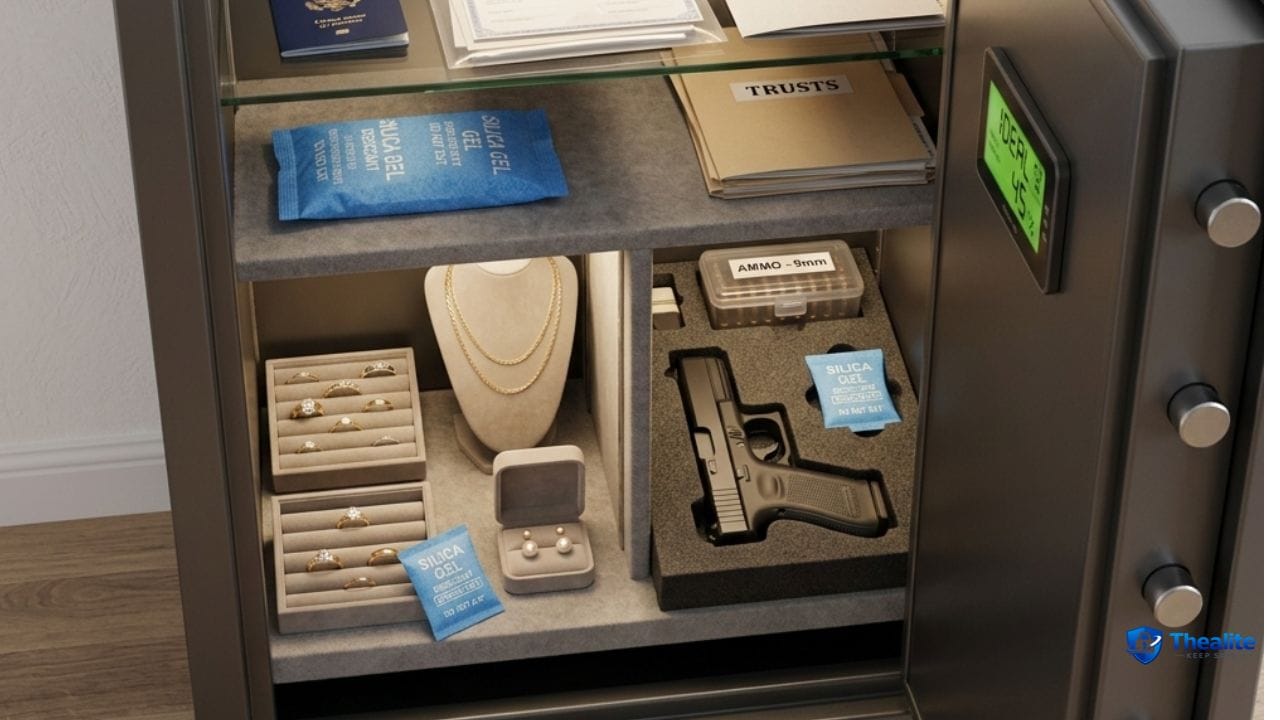
Desiccant absorbs moisture from the air. Rechargeable silica gel canisters are popular because you can “reset” them instead of constantly buying new packs.
- Use enough for the size of your safe (bigger safe = more desiccant capacity).
- Recharge or replace on schedule (more often in humid environments).
- Place desiccant where air can circulate—don’t bury it under stacks.
Tip: a tiny silica packet that comes with shoes isn’t enough for a large safe. Think in ‘capacity’ not ‘one packet.’
3) Electric Dehumidifier Rod (Anti-Condensation Tool)
A dehumidifier rod gently warms the air inside the safe. Warmer air holds moisture better, so condensation becomes less likely. This is especially helpful for metal safes in humid regions.
- Use only if your safe supports power pass-through or safe wiring.
- Keep cords tidy and protected; follow manufacturer instructions.
- Combine with desiccant for best results (rod reduces condensation; desiccant absorbs humidity).
4) Protective Pouches and Barriers (Documents, Cash, Photos)
Even with good humidity control, it’s smart to add a barrier for sensitive items like passports, birth certificates, photos, and cash.
- Fire-rated document pouch for critical papers (adds a layer against heat and moisture exposure).
- Acid-free sleeves for photos and important paper archives.
- Organized envelopes/boxes for cash (avoid sealing slightly damp items in airtight plastic).
Cash-specific humidity caution: How to Keep Money From Molding in a Safe.
5) Moisture-Resistant Storage Habits (What You Put IN Matters)
Not everything that goes in a safe belongs there. Some items bring moisture with them or trap moisture.
- Avoid storing damp holsters, wet cases, or sweaty gear in the safe.
- Avoid foam-lined cases long-term (foam can hold moisture against metal).
- Let recently cleaned metal items fully dry before storing.
- Keep paper items off the safe floor/walls using shelves or trays.
Best Setup Examples (Choose One)
Setup A: Small document safe (interior closet)
- 1 hygrometer
- 1–2 rechargeable desiccant canisters
- Fire-rated document pouch for vital papers
Setup B: Large home safe or gun safe (moderate humidity)
- 1 hygrometer
- Electric dehumidifier rod
- Multiple desiccant canisters (backup + capacity)
- Shelves/trays so items aren’t against walls/floor
Setup C: Garage or basement safe (high humidity risk)
- Everything in Setup B
- More desiccant capacity (plan frequent recharging)
- Keep the safe off bare concrete (mat/platform)
- More frequent humidity checks (weekly during humid season)
If your safe is in a garage, see: Can You Keep a Gun Safe in the Garage.
What NOT to Put in a Safe (Common Moisture Mistakes)
- Tiny silica packets as your only moisture control for a large safe (not enough capacity).
- Open cups of baking soda (can spill; not a reliable moisture-control system for safes).
- Damp fabric, wet cases, sweaty holsters, or anything that feels humid to the touch.
- Foam cases that hold moisture against metal for long-term storage.
- Airtight plastic bags for items that aren’t fully dry (traps moisture inside).
- Anything that blocks airflow completely (overstuffing reduces effectiveness).
How Often Should You Replace/Recharge Moisture Control Items?
It depends on your home’s humidity, safe size, and how often you open it. Instead of guessing, use your hygrometer as the guide.
- If humidity rises or musty smell appears, recharge/replace desiccant immediately.
- In humid seasons, many people recharge more often.
- After long door-open sessions (organizing), expect humidity to rise—check a few days later.
If Your Safe Already Smells Musty: Quick Reset Plan
- Remove items and let them air out in a dry room (away from direct heat).
- Leave the safe door open for several hours (or overnight) to dry the interior.
- Replace or recharge desiccant right away.
- Add a hygrometer if you don’t already have one.
- Add a dehumidifier rod if humidity remains high.
Copy/Paste Checklist: What to Put in a Safe to Keep Moisture Out
- Hygrometer (humidity meter) inside the safe
- Rechargeable desiccant canisters (enough capacity for safe size)
- Dehumidifier rod (if safe supports power), especially in humid areas
- Fire-rated document pouch for critical papers
- Shelves/trays to keep items off safe floor/walls
- No damp items stored inside; avoid foam cases long-term
- Monthly humidity check + smell test; recharge desiccant on schedule
FAQs
What’s the best thing to put in a safe to keep moisture out?
A combination works best: a hygrometer to measure humidity, desiccant to absorb moisture, and a dehumidifier rod to reduce condensation (if your safe supports power).
Do silica gel packs really work in safes?
Yes, but only if you use enough and recharge/replace them regularly. A big safe needs more desiccant capacity than a small safe.
Is a dehumidifier rod better than desiccant?
They solve different problems. A rod reduces condensation by warming the air, while desiccant absorbs humidity. Using both together is often the best setup.
Why does my safe still smell musty after adding desiccant?
You may not have enough desiccant capacity, it may be saturated, or the safe location is too humid (garage/basement). Add a hygrometer, increase capacity, and improve placement if possible.
Can moisture damage documents in a fireproof safe?
Yes. Fire resistance doesn’t always mean moisture-proof. Use humidity control plus document pouches and keep papers off the safe floor/walls.
Conclusion
To keep moisture out of a safe, don’t rely on one tiny packet or guesswork. Use a simple system: measure humidity with a hygrometer, absorb moisture with rechargeable desiccant, reduce condensation with a dehumidifier rod when possible, and protect sensitive items with pouches and smart storage. With a monthly check and occasional desiccant recharging, your safe can stay dry year-round.

As a digital marketer, she has received multiple international awards, including Campaign of the Year at the 2023 European Content Awards and Best Use of Content Marketing at the 2022 Global Search Awards. Nicai holds an MSc in Marketing (First Class Honours) from the UCD Smurfit Graduate Business School and she has also completed the Artificial Intelligence Programme at Oxford University’s Saïd Business School. She is also a contributing writer for publications such as Entrepreneur and Esquire.