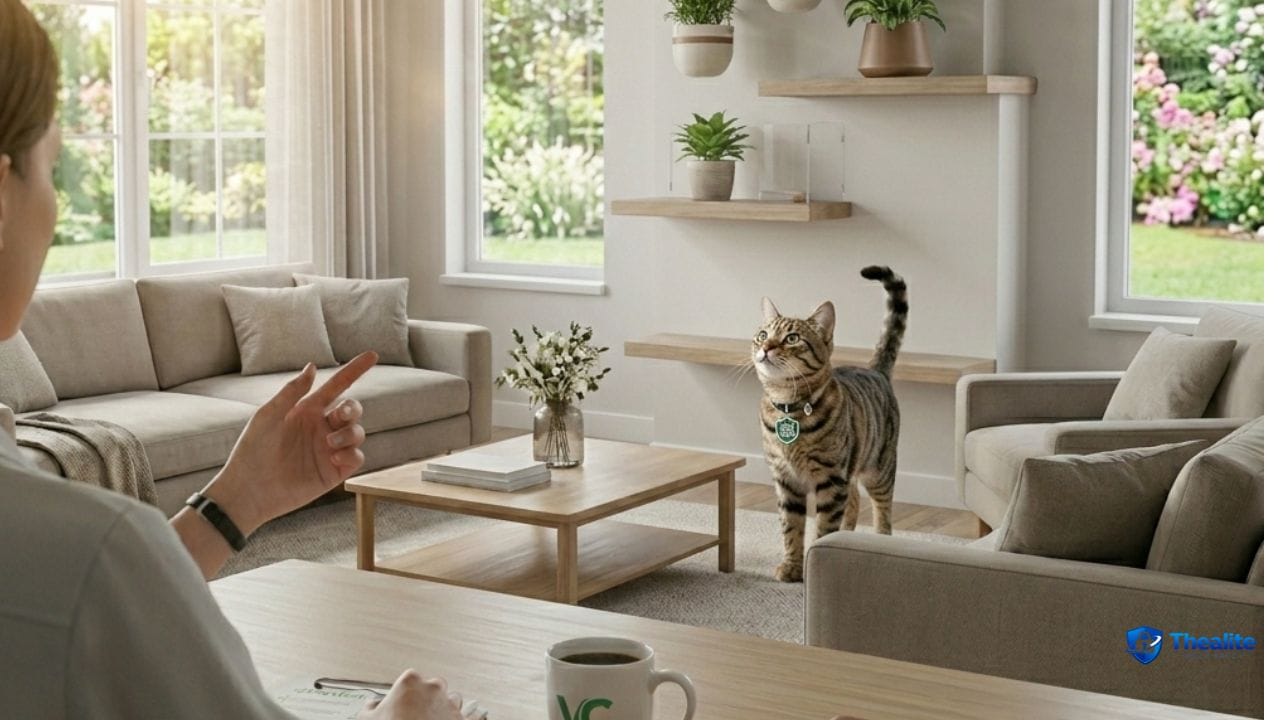
If you have cats and houseplants, you’ve probably seen the same two problems: **chewing** (leaves become snacks) and **digging** (soil becomes a litter box). Beyond the mess, there’s a bigger concern: some common houseplants are toxic to cats. So a good plan protects both sides—**your plants stay intact, and your cat stays safe**.
This U.S.-focused guide explains why cats attack plants, what actually works to stop it, safe deterrents, better plant placement, and cat-friendly alternatives like cat grass. You’ll also get a copy/paste checklist at the end.
Quick Answer
To keep plants safe from cats: (1) move plants to harder-to-reach locations (shelves, hanging planters, closed rooms), (2) block soil access with physical barriers (rocks, pinecones, mesh, or a plant cover), (3) redirect chewing with cat grass and more play/enrichment, and (4) use safe deterrents (double-sided tape, citrus scent near the pot—not on the cat). Also, remove or secure any plant that could be toxic to cats.
Why Cats Chew and Dig in Plants
Cats don’t usually destroy plants “to be bad.” Common reasons include:
- Boredom or attention-seeking (plants are interactive).
- Natural chewing/foraging behavior (especially in young cats).
- Upset stomach behavior (some cats chew greens).
- Texture attraction (dangly leaves, soil movement).
- Scent attraction (fertilizers or potting soil smells interesting).
Step 1: Protect Your Cat First (Toxic Plant Check)
Before you focus on plant protection, make sure the plants themselves aren’t dangerous. Some popular houseplants can cause vomiting, drooling, mouth irritation, or worse. If you’re unsure about a plant, treat it as risky until confirmed.
Practical safety rules
- Identify every plant in your home (use the pot label or a plant ID app).
- Keep unknown plants out of reach until you confirm they’re cat-safe.
- If your cat chews a plant and shows vomiting, drooling, lethargy, or trouble breathing—contact a vet or animal poison hotline immediately.
Step 2: Use Placement as Your #1 Plant Protection Tool
The easiest way to stop chewing and digging is to make access inconvenient. Cats are athletic, but they still prefer easy targets.
Better placement options
- Hanging planters (high success when installed safely).
- Wall shelves with enough depth and stability (avoid wobble).
- Plant cabinets or glass-front display cabinets with ventilation.
- Rooms with doors (close them when you can’t supervise).
Placement mistakes
- Plants on low tables or windowsills (easy access).
- Plants near launching points (sofa backs, cat trees, stacked furniture).
- Large floor pots with loose soil (digging invitation).
Step 3: Stop Digging With Soil Barriers
If your cat’s main habit is digging, treat the soil surface like a protected zone. Physical barriers work better than sprays.
Best soil barrier ideas (cat-safe)
- Large smooth rocks or river stones covering the soil surface (harder to dig).
- Pinecones (texture discourages pawing).
- Plastic or metal mesh cut to pot size (with holes for watering).
- A breathable plant cover or pot topper designed for houseplants.
Tip: keep barriers stable so cats can’t flip them easily.
Step 4: Stop Chewing With Redirection (Works Better Than Punishment)
If a cat wants to chew, you’ll have more success giving them a safe option than trying to eliminate the behavior completely.
Redirection tools
- Cat grass (wheatgrass) as a legal chewing plant.
- Interactive play (10–15 minutes daily reduces boredom chewing).
- Puzzle feeders and treat toys (enrichment reduces plant targeting).
- More scratching options (scratching + climbing outlets reduce “plant play”).
Simple routine that helps
- Play session before your workday or bedtime.
- Feed after play (mimics hunt → eat → rest).
- Keep cat grass near the plants they target (redirect at the moment).
Step 5: Safe Deterrents That Don’t Harm Cats
Deterrents work best when they’re safe, consistent, and paired with redirection. Avoid anything that could poison or injure your cat.
Safe deterrent options
- Double-sided tape on the pot edge/shelf (many cats dislike the feel).
- Aluminum foil around the pot base (temporary; some cats dislike it).
- Citrus scent near the pot (many cats dislike citrus—keep it away from direct contact).
- Motion-activated air puff device aimed near the plant area (not at the cat’s face; use responsibly).
Avoid these
- Essential oils applied to plants (some can be harmful to cats).
- Harsh chemical sprays or homemade mixtures without vet-approved guidance.
- Physical punishment or yelling (often increases anxiety and doesn’t teach alternatives).
Step 6: Make Plants Less ‘Fun’ to Cats
Cats love movement and dangling parts. Reduce temptation:
- Prune long dangling leaves (where safe for the plant).
- Use heavier planters so cats can’t tip them.
- Avoid placing toys near plants (cats can link play to plant area).
- Cover exposed soil and remove loose top-dressing pieces.
Step 7: Protect Your Home From Mess and Damage
Even with barriers, some cats still knock pots over. Prevent damage and injury.
- Use non-breakable pots (or heavy ceramic that won’t tip easily).
- Anchor tall plants to a stable surface if needed.
- Use drip trays or waterproof mats to protect floors.
- Avoid placing plants where falling pots could injure pets or kids.
Home-safety mindset: How to Keep Your Home Safe.
If Your Cat Still Won’t Stop: Troubleshooting
If you tried barriers and redirection, check these factors:
- Is the cat bored or under-stimulated? Increase play/enrichment.
- Is the plant near a favorite window perch? Move either the plant or the perch.
- Is your cat seeking greens? Provide cat grass consistently.
- Is the cat stressed? New pets/changes can increase compulsive behaviors—talk to a vet if it escalates.
Copy/Paste Checklist: Keep Plants Safe From Cats
- Identify plants and remove/secure any toxic plants
- Move plants to high/closed locations (hanging, shelves, cabinet, closed room)
- Block soil access (rocks/pinecones/mesh pot cover)
- Provide cat grass and increase daily play/enrichment
- Use safe deterrents (double-sided tape, foil, citrus near pot—not on cat)
- Avoid essential oils and harsh sprays around cats
- Use stable pots and floor protection mats
- If chewing/digging persists, reassess boredom/stress and talk to a vet
FAQs
How do I stop my cat from eating my houseplants?
Use a combination of placement (out of reach), redirection (cat grass), and safe deterrents. The goal is to make plants inconvenient and give a safe chewing alternative.
What’s the best thing to put on top of soil so cats won’t dig?
Large smooth stones, pinecones, or a mesh pot cover work well because they physically block digging.
Are citrus sprays safe to use around cats?
Many cats dislike citrus, but avoid spraying plants with unknown mixtures. Using citrus scent near the pot can work—keep it mild and away from direct cat contact.
Do motion-activated deterrents work?
They can help for persistent cats when used responsibly near the plant area. Pair deterrents with enrichment and a cat-friendly alternative.
Should I punish my cat for chewing plants?
Punishment usually doesn’t teach the right behavior and can increase stress. Redirect and reward better choices instead.
Conclusion
To keep plants safe from cats, use a layered plan: place plants out of easy reach, block soil access with physical barriers, redirect chewing with cat grass and enrichment, and use safe deterrents when needed. Most importantly, remove or secure any plant that could be toxic to cats. With a few smart changes, your plants can thrive—and your cat can stay safe and entertained.
Related reading on your site: How to Keep Outdoor Cats Safe • How to Keep Outdoor Cats Safe at Night • How to Keep Cats Safe Outside • How to Keep Outdoor Cats Safe • How to Keep Your Home Safe

As a digital marketer, she has received multiple international awards, including Campaign of the Year at the 2023 European Content Awards and Best Use of Content Marketing at the 2022 Global Search Awards. Nicai holds an MSc in Marketing (First Class Honours) from the UCD Smurfit Graduate Business School and she has also completed the Artificial Intelligence Programme at Oxford University’s Saïd Business School. She is also a contributing writer for publications such as Entrepreneur and Esquire.