Outdoor cats can live rich, adventurous lives—but outdoor life comes with real risks: cars, predators, parasites, fights, toxins, and weather. If you want an outdoor cat to stay safe long-term, the goal is to reduce risk while still allowing enrichment. That usually means controlled outdoor time (catios, secure yards, leash training) or at least strong routines like bringing cats inside at night.
This U.S.-focused guide covers the safest outdoor options, predator and night safety, health protection, and practical habits that prevent most outdoor-cat emergencies. It ends with a copy/paste checklist.
Quick Answer (The Outdoor Cat Safety System)
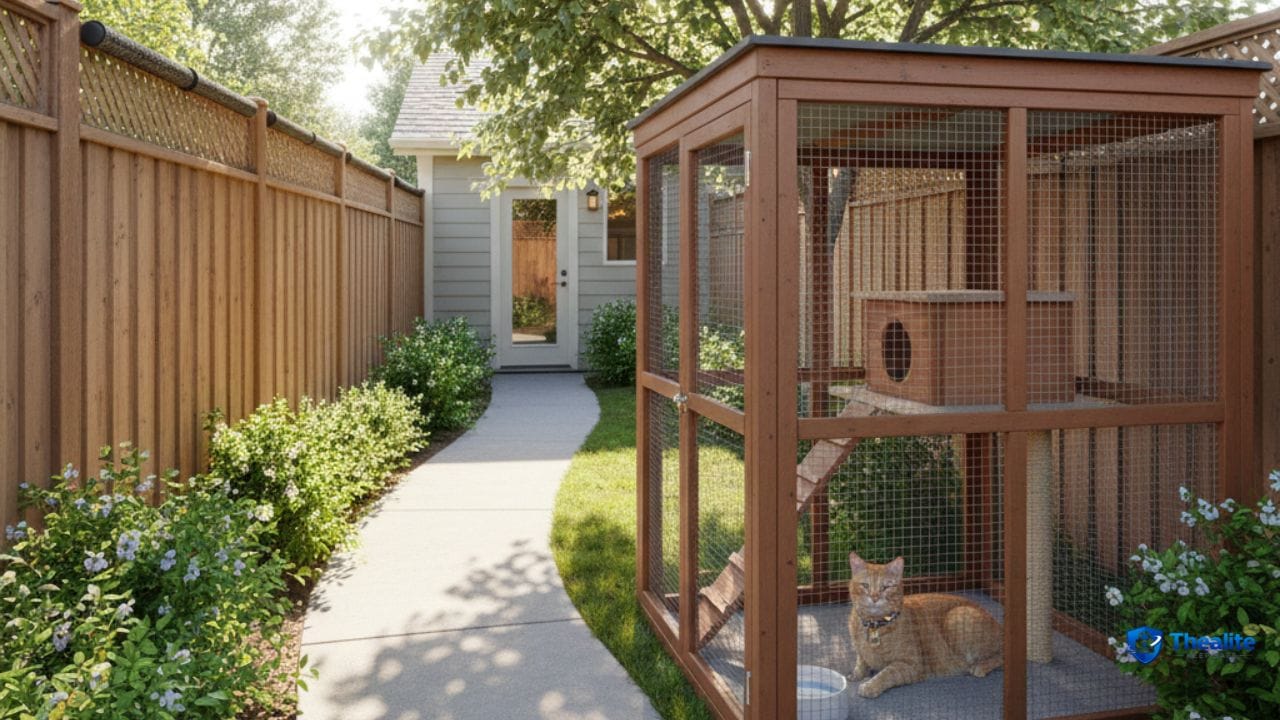
- Safest option: catio or enclosed run (outdoor time without roaming).
- Next safest: harness + leash training for supervised outdoor time.
- If free-roaming: bring cats indoors at night and during peak predator hours.
- Vaccines + parasite prevention (fleas, ticks, worms) with vet guidance.
- Microchip + breakaway collar + ID tag (critical for recovery).
- Reduce risks in the yard: remove toxins, secure trash, avoid rodent poison.
- Use a routine: feeding schedule and recall cue so your cat comes home reliably.
Why Outdoor Cats Are at Risk
Outdoor risk depends on your neighborhood, but common dangers include:
- Cars and traffic (especially near busy roads).
- Predators (coyotes, dogs, foxes, bobcats, owls, hawks).
- Parasites and diseases (fleas, ticks, worms, and contagious viruses).
- Fights with other cats (injuries and infections).
- Toxins (antifreeze, pesticides, rodent poison, toxic plants).
- Weather extremes (heat, cold, storms).
Step 1: Choose the Safest Outdoor Setup
Outdoor safety improves dramatically when you shift from ‘roaming’ to ‘controlled outdoor time.’
Option A (Safest): Catio or enclosed run
- Cats get fresh air and stimulation without roaming.
- Great for predator-heavy areas or near traffic.
- Works for many cats with minimal training.
Option B: Harness + leash (supervised)
- Start training indoors and keep early sessions short.
- Use a cat-specific harness (not a collar leash).
- Choose quiet areas; avoid dogs and loud traffic early on.
Option C: Controlled yard time (supervised)
- Best with fencing or barriers that reduce escape.
- Only when an adult is actively watching.
- Avoid dawn/dusk (predator activity increases).
Option D: Free-roaming (highest risk)
If your cat roams freely, you can still reduce risk with routines: night indoor rule, ID, vet prevention, and safer yard management.
Step 2: Night Safety (The Single Biggest Rule)
If you do only one thing to make an outdoor cat safer, do this bring them inside at night. Nighttime is peak activity for many predators, and it’s when cats are hardest to see and protect.
- Bring cats inside before dusk.
- Avoid dawn outdoor time too (another high predator window).
- Use a consistent evening feeding routine to bring cats home.
More night guidance: How to Keep Outdoor Cats Safe at Night.
Step 3: Predator Protection (Coyotes, Dogs, Birds of Prey)
Predator risk varies by region. In many U.S. suburbs, coyotes are the main threat to outdoor cats.
Practical predator reduction
- Don’t leave cat food outside overnight (attracts wildlife).
- Secure trash and remove fallen fruit (reduces rodents and wildlife).
- Trim dense hiding cover near the house (predators can ambush).
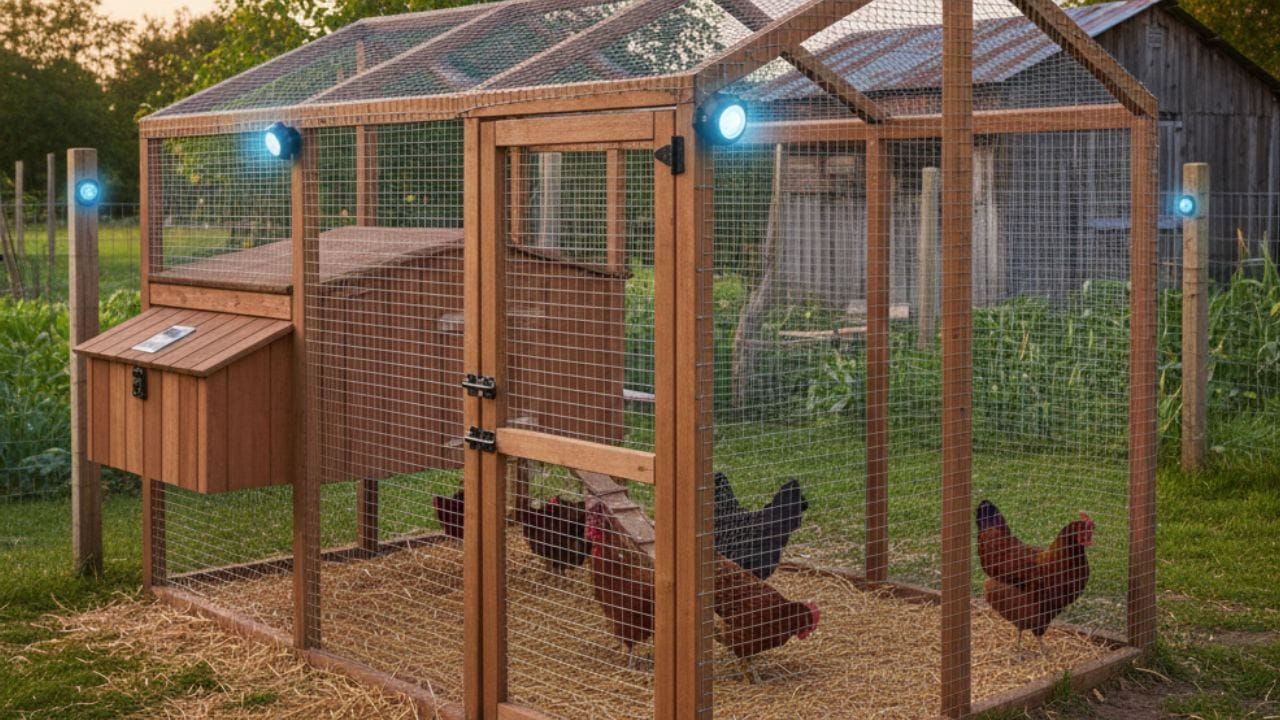
- Use motion-activated lights or sprinklers in high-risk areas.
- Keep cats indoors at night and during dawn/dusk windows.
Coyote-specific mindset: How to Keep Barn Cats Safe From Coyotes.
Step 4: Health Safety (Vaccines + Parasite Prevention)
Outdoor cats have higher exposure to parasites and diseases. Work with a veterinarian to set up the right prevention plan.
Common health basics (vet-guided)
- Core vaccinations appropriate for your region and cat’s lifestyle.
- Flea and tick prevention (cat-safe products only).
- Deworming plan as recommended.
- Spay/neuter (reduces roaming, fights, and injury risk).
Step 5: Identification (Microchip + Breakaway Collar)
Outdoor cats slip collars and wander. ID dramatically increases the chance you get your cat back.
- Microchip (can’t fall off).
- Breakaway collar with ID tag (important: breakaway for safety).
- Recent photos of your cat (helpful for lost posters and social posts).
Step 6: Yard Hazards to Remove (Toxins and Traps)
Many outdoor cat emergencies come from toxins and accidents.
Remove or secure these hazards
- Antifreeze and automotive fluids (highly dangerous).
- Rodent poison (secondary poisoning risk).
- Open sheds/garages with chemicals and sharp tools.
- Uncovered trash, compost, and food scraps.
- Toxic plants (confirm cat-safe options).
Snake and pest safety
In some regions, snakes are a real risk—especially if rodents are present.
Helpful: How to Keep Snakes Out of Your Yard Safe for Pets.
Step 7: Weather Safety (Heat, Cold, Storms)
Outdoor cats are vulnerable to weather extremes. Controlled outdoor time makes weather safety easier.
Hot weather rules
- Provide shade and fresh water if your cat is outside.
- Avoid outdoor time during extreme heat; bring cats inside.
- Watch for overheating signs: heavy panting, drooling, weakness.
More: How to Keep Pets Safe in Hot Weather.
Cold weather rules
- Bring cats inside during freezing temperatures and storms.
- Provide a dry shelter if outdoor time is unavoidable.
- Be cautious around cars—cats can hide near engines in cold weather.
More: How to Keep Pets Safe in Cold Weather.
Step 8: Training and Routines That Save Outdoor Cats
Outdoor cats stay safer when they return reliably. Routines and recall cues make a difference.
- Use a consistent feeding schedule (same times daily).
- Create a recall cue (treat bag shake, specific call).
- Keep outdoor time limited and predictable (not all-night roaming).
- Use supervised outdoor time when possible.
What to Do If Your Outdoor Cat Doesn’t Come Home
Most missing cats are nearby and hiding. Search smart, not loud.
- Search at dusk/early night with a flashlight (eye shine).
- Check under decks, sheds, bushes, and neighbors’ garages.
- Ask neighbors to check closed spaces (sheds/garages).
- Put familiar bedding and scent items outside.
- Post clear photos on local community groups and contact shelters/vets.
Copy/Paste Checklist: Keep an Outdoor Cat Safe
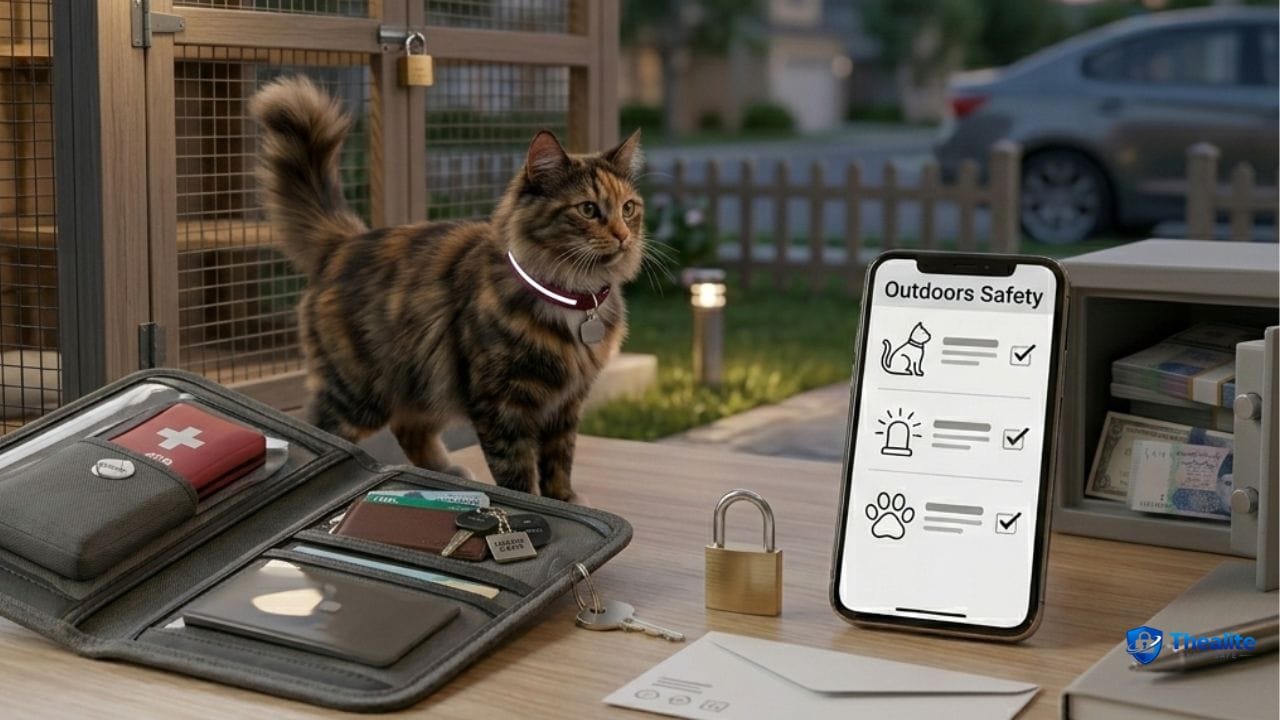
- Prefer controlled outdoor time: catio/run or harness + leash
- Indoors at night and during dawn/dusk predator hours
- Vaccines + flea/tick + deworming plan with vet guidance
- Microchip + breakaway collar + ID tag
- No food left outside overnight; secure trash and attractants
- Remove toxins (antifreeze, rodent poison) and secure chemicals
- Shade + water in heat; bring inside in freezing weather/storms
- Daily routine + recall cue so cat returns reliably
FAQs
Is it safe for cats to live outdoors?
Outdoor life has higher risks than indoor life, but you can reduce risk with controlled outdoor time (catio or leash), night indoor routines, and strong health/ID protection.
What is the safest way to let a cat outside?
A catio or enclosed run is one of the safest options. It provides stimulation without roaming risks.
How do I protect my outdoor cat from coyotes?
Bring cats inside at night, don’t leave food out, reduce attractants, and use motion lights/sprinklers. Coyotes are often most active at night and dawn/dusk.
Do outdoor cats need flea and tick prevention?
Yes, in many areas. Talk to a vet for cat-safe prevention products and timing.
Should I put a collar on an outdoor cat?
A breakaway collar with an ID tag is helpful, but microchipping is even more reliable because collars can come off.
Conclusion
To keep an outdoor cat safe, focus on controlled outdoor time and strong routines. The safest choices are catios and leash training. If your cat roams, bring them inside at night, reduce predator attractants, protect their health with vet-guided prevention, and use microchips and breakaway collars. With simple systems, you can dramatically reduce outdoor-cat risk while still giving them enrichment.

As a digital marketer, she has received multiple international awards, including Campaign of the Year at the 2023 European Content Awards and Best Use of Content Marketing at the 2022 Global Search Awards. Nicai holds an MSc in Marketing (First Class Honours) from the UCD Smurfit Graduate Business School and she has also completed the Artificial Intelligence Programme at Oxford University’s Saïd Business School. She is also a contributing writer for publications such as Entrepreneur and Esquire.