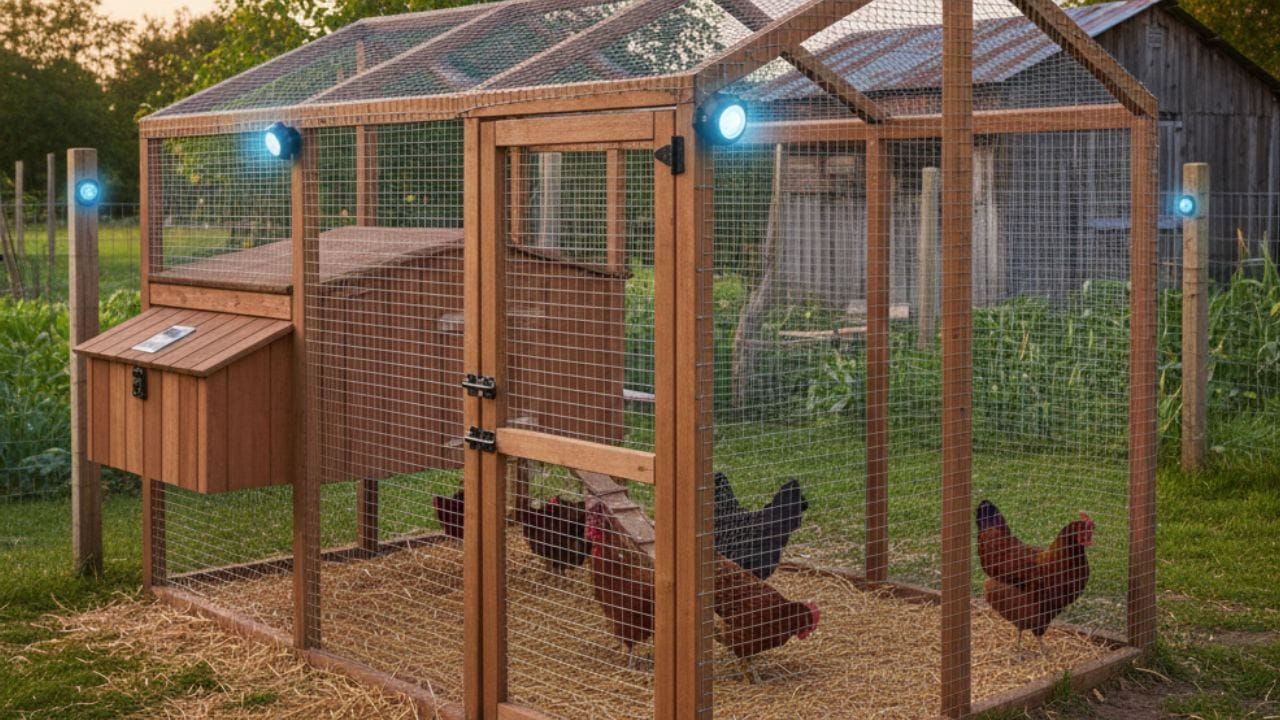
To keep chickens safe from predators, you need a predator-proof coop at night and a protected run during the day. Use hardware cloth (not chicken wire) on openings, secure doors with strong latches, block digging with an apron or buried barrier, and cover the run to stop hawks. Most attacks happen at night, so a locked, solid coop is your best defense.
Why Chickens Get Targeted
Chickens are easy prey. They don’t run far, they sleep deeply at night, and they stay in the same area every day. Predators learn your routine fast. Your job is to make the coop and run too hard to break into.
Know Your Predator Types (So You Build the Right Defense)
Most predators fall into three groups:
- Diggers (raccoons, foxes, coyotes, dogs)
- Climbers/handy openers (raccoons especially)
- Aerial hunters (hawks, owls)
1) Predator-Proof the Coop (Night Safety First)
Night is the danger zone for chickens. If your coop is solid and locked, you prevent most losses.
Use hardware cloth on every opening
Chicken wire is made to hold chickens in, not keep predators out. Hardware cloth is stronger and harder to tear.
Where to use it:
- Windows and vents
- Run walls
- Any gap bigger than about a finger width
Secure doors with predator-resistant latches
Some predators can open simple hooks or loose latches. Use strong latches and check them daily.
Good latch habits:
- Use a two-step latch (latch + carabiner) if predators are persistent.
- Make sure doors close tight with no flex.
- Repair loose hinges and warped doors quickly.
2) Stop Digging (The #1 Run Weakness)
Many predators dig under fencing. If you only protect the walls, they’ll go underneath.
Two strong options:
Option A: Buried barrier
Bury hardware cloth or sturdy wire down along the perimeter.
Option B: Apron method
Lay hardware cloth flat on the ground around the run perimeter (like a skirt) and cover it with soil or mulch. Predators start digging at the fence line and hit the barrier.
3) Cover the Run (Protect Against Hawks)
If you free-range, hawks can be a real threat in many areas. A covered run is the simplest protection.
Run cover options:
- Netting designed for poultry runs
- Hardware cloth roof (strongest but more work)
- Solid roof panels in part of the run (also adds weather shelter)
4) Reduce Predator Interest (Clean, Calm, Routine)
Predators come back when they find food and easy access. Make your yard less attractive.
Do this:
- Lock feed in sealed metal bins (don’t leave feed out overnight).
- Clean up spilled feed and scraps.
- Secure trash and compost (it attracts raccoons and foxes).
- Collect eggs daily (fewer smells and fewer reasons to visit).
5) Add Deterrents (Helpful, But Not a Substitute)
Deterrents can reduce visits, but they don’t replace a strong coop.
Deterrents that can help:
- Motion-activated lights (helps at night)
- Motion sprinklers (works for some animals)
- A well-trained livestock guardian dog (serious commitment)
- Secure perimeter fencing (helps, but still protect coop/run)
6) Daily Checklist (5 Minutes That Prevents Attacks)
Quick daily routine:
- Morning: check for holes, digging, or bent wire along the run.
- Check latches and door alignment.
- Remove leftover food before night.
- At dusk: lock chickens inside the coop.
- Listen for unusual noises at night (especially if you had a recent predator visit).
7) Signs a Predator Tried to Break In
If you see these signs, upgrade security fast:
- Scratches or bite marks on doors and frames
- Bent wire, torn mesh, or pulled staples
- Holes dug at the fence line
- Feathers scattered (especially near the run)
- Missing birds at dawn
Cold Weather and Heat Safety (Bonus)
Weather stress can make chickens more vulnerable. Provide shelter, ventilation, and shade.
Related: how to keep pets safe in cold weather and how to keep pets safe in hot weather.
Quick Checklist: How to Keep Chickens Safe From Predators
- Lock chickens in a solid coop at night
- Use hardware cloth on openings (not chicken wire)
- Secure doors with strong latches (add carabiners if needed)
- Block digging with an apron or buried barrier
- Cover the run to prevent hawk attacks
- Store feed securely and remove food at night
- Inspect fencing and latches daily
FAQs
What is the best material to keep predators out of a chicken coop?
Hardware cloth is one of the best choices for vents and run walls because it’s much stronger than chicken wire.
Do predators attack chickens at night or during the day?
Both can happen, but many serious attacks occur at night when chickens are roosting. A locked coop is critical.
Will chicken wire stop raccoons?
Chicken wire is often too weak. Raccoons can tear or pry it. Hardware cloth and strong latches work better.
How do I stop predators from digging under the run?
Use a buried barrier or an apron of hardware cloth around the perimeter so they hit wire when they start digging.
More “Keep Safe” Guides
Explore more safety topics at Thealite Keep Safe.

As a digital marketer, she has received multiple international awards, including Campaign of the Year at the 2023 European Content Awards and Best Use of Content Marketing at the 2022 Global Search Awards. Nicai holds an MSc in Marketing (First Class Honours) from the UCD Smurfit Graduate Business School and she has also completed the Artificial Intelligence Programme at Oxford University’s Saïd Business School. She is also a contributing writer for publications such as Entrepreneur and Esquire.