The classic egg drop challenge is a rite of passage in science classrooms across the country. It is an exciting, hands-on experiment that teaches students about physics, engineering, and problem-solving. The goal is simple: design a container that prevents a raw egg from cracking when dropped from a significant height. However, while students are busy thinking about gravity and shock absorption, parents and teachers must prioritize the safety of the testing environment. Knowing how to construct a successful design and how to test it without causing injuries or massive messes ensures the project remains a fun, educational experience for everyone involved.
Why Egg Drop Projects Are Popular
Teachers love the egg drop project because it brings abstract science concepts to life. Instead of just reading about Newton’s laws of motion, force, and air resistance in a textbook, students get to see these forces in action. It encourages creativity, as there is no single “right” way to build a successful container. Furthermore, it teaches resilience; many designs will fail on the first try, prompting students to analyze what went wrong, tweak their blueprints, and test again.
How to Keep an Egg Safe from a Drop with Simple Design Ideas
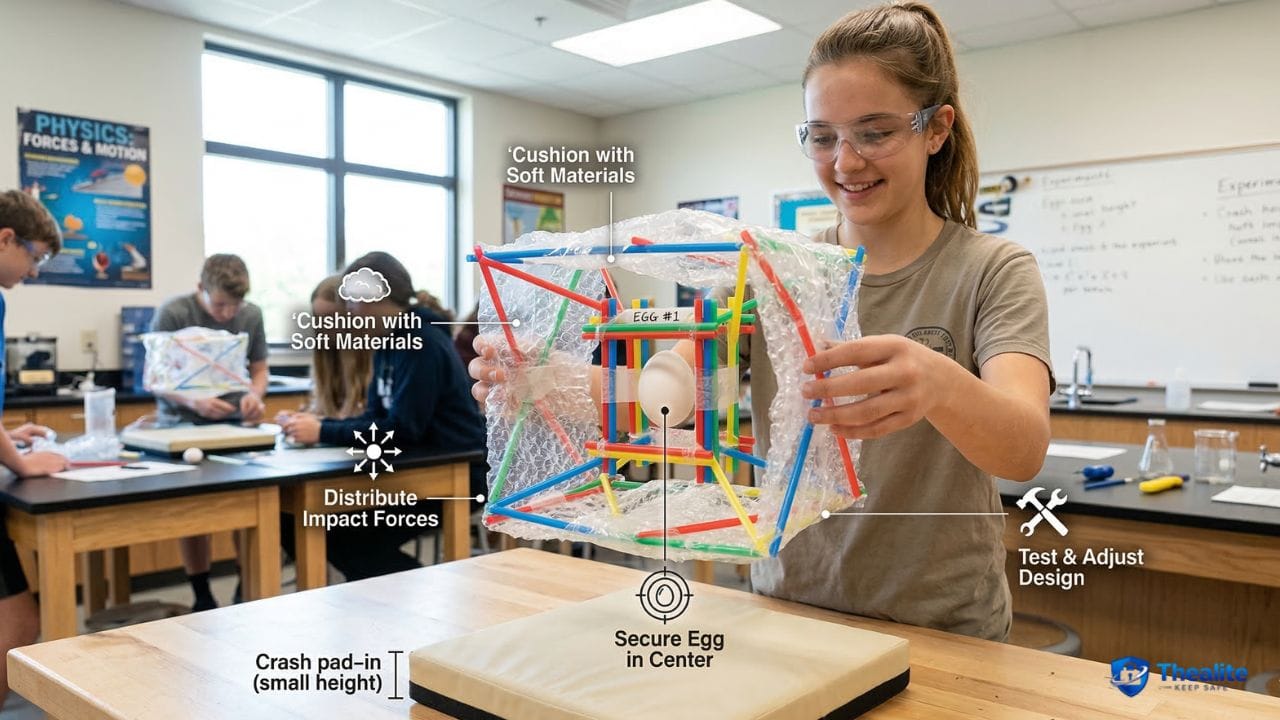
If you are trying to figure out how to keep an egg safe from a drop, you need to understand the physics of the impact. The sudden stop when the container hits the ground is what cracks the shell. To prevent this, successful designs rely on three main strategies: cushioning the egg, slowing down the fall, and spreading out the force of the impact.
How Cushioning, Slowing the Fall, and Spreading Impact Help
Cushioning acts as a shock absorber. By surrounding the egg with soft, compressible materials, you increase the amount of time it takes for the egg to come to a complete stop, which drastically reduces the force of the impact. Slowing the fall usually involves creating air resistance, most commonly by attaching a parachute made from a plastic bag to the top of the container. Finally, spreading the impact involves suspending the egg in the center of a rigid frame (like a cardboard box or a cage of drinking straws) using rubber bands or string, so the outer frame takes the hit while the egg floats safely inside.
Easy Materials Students Often Use
You do not need expensive materials to build a winning design. In fact, using simple, recycled household items is highly encouraged. Some of the best materials include:
- Bubble wrap, cotton balls, or foam packing peanuts for dense cushioning.
- Plastic grocery bags and string to build lightweight parachutes.
- Cardboard boxes, empty milk cartons, or plastic cups for the outer shell.
- Drinking straws and rubber bands to create suspension systems.
Using items you already have at home is the best way to keep your money safe from unnecessary craft store spending while teaching kids the value of upcycling.
Classroom and Home Safety Tips for Egg Drop Experiments
Physical safety during the construction and testing phases is just as important as the physics lesson itself. When children are searching online for design inspiration, parents should monitor their browsing; it is always a good time to review how to keep kids safe online to ensure they stay on educational websites. During the building phase, supervise the use of hot glue guns, scissors, and utility knives.
Avoid using hazardous materials in the design. Students should never use glass, sharp metal, or heavy wooden blocks, as these can shatter or cause injury if the container bounces unpredictably upon landing. Additionally, avoid using electronic components like small fans or motorized parts. If a child uses batteries for other science fair projects, you must teach them how to keep lithium batteries safe, but for a standard egg drop, keep it strictly to analog, soft materials.
How to Test an Egg Drop Project More Safely
The actual drop test requires adult supervision. If you are dropping the project from a balcony, a second-story window, or a tall ladder, the adult should be the one dropping it to prevent falls. Establish a clear “drop zone” on the ground and make sure all spectators stand well back before the countdown begins.
Raw eggs carry the risk of salmonella. If an egg breaks, clean up the mess immediately with disinfectant wipes and ensure everyone washes their hands with warm, soapy water. Just as you safeguard your household files by knowing how to keep important documents safe at home, keep the school’s project guidelines and grading rubric in a safe folder so it doesn’t get covered in raw egg yolk during testing!
Common Egg Drop Mistakes to Avoid
A frequent mistake is not securing the egg tightly enough inside the cushioning. If the egg can rattle around inside the box, it will likely gain momentum and smash against the side of its own container upon impact. Another common error is making the entire contraption too heavy. A heavier box falls faster and hits the ground with much more force, completely canceling out the benefits of the internal cushioning.
What Makes One Design Work Better Than Another
The best designs balance weight and protection. A lightweight outer shell paired with dense, unmoving internal cushioning is almost always successful. A parachute helps immensely, but it must be large enough to catch the air and properly balanced so the container doesn’t flip upside down during the descent.
How to Explain the Science Behind the Project in Simple Words
When helping a student write their project report, keep the science simple. If they use forums or websites to research physics terms, take a moment to discuss how to keep your identity safe online and remind them not to share personal school information. To explain the science: “Gravity pulls the egg down, creating force. Cushioning makes the egg stop slower, which makes the force weaker so the shell doesn’t break. A parachute catches air to push back against gravity, slowing the fall.”
Frequently Asked Questions (FAQ)
How to keep an egg safe from a drop?
To keep an egg safe from a drop, you must reduce the force of the impact. You can do this by surrounding the egg with dense cushioning (like bubble wrap), creating a parachute to slow the fall, or suspending the egg inside a rigid outer frame.
What materials help protect an egg in a drop test?
Common, effective materials include bubble wrap, cotton balls, foam sponges, and crumpled newspaper for cushioning. Cardboard boxes or plastic cups work well for the outer shell, while plastic grocery bags make excellent parachutes.
How do you make an egg drop project safer?
Make the project safer by never using glass, sharp metal, or heavy wood in your design. During the test, have an adult perform the actual drop from the high location, and establish a clear drop zone on the ground away from spectators.
What is the best design for an egg drop challenge?
The best design is usually lightweight to reduce impact force, features a wide parachute to create air resistance, and holds the egg tightly in the center of the container surrounded by thick, immobile cushioning.
Why does cushioning help protect an egg?
Cushioning helps by increasing the time it takes for the egg to come to a complete stop upon hitting the ground. By stretching out the impact over a fraction of a second longer, it drastically reduces the peak force hitting the delicate shell.
How do you explain an egg drop project for school?
You can explain it simply by saying the project demonstrates physics. Gravity pulls the egg down, air resistance (from a parachute) slows it down, and shock absorption (from the cushioning) weakens the impact force so the egg survives.
What mistakes make an egg drop fail?
Common mistakes include making the container too heavy, which increases the impact force, and failing to secure the egg tightly inside. If the egg can rattle or bounce inside the box, it will likely break against its own container.
How can kids test an egg drop project safely?
Kids can test safely by dropping the project from lower heights first, like a staircase, under adult supervision. Always ensure the landing zone is clear, wear closed-toe shoes, and wash hands thoroughly if a raw egg breaks to prevent salmonella.

As a digital marketer, she has received multiple international awards, including Campaign of the Year at the 2023 European Content Awards and Best Use of Content Marketing at the 2022 Global Search Awards. Nicai holds an MSc in Marketing (First Class Honours) from the UCD Smurfit Graduate Business School and she has also completed the Artificial Intelligence Programme at Oxford University’s Saïd Business School. She is also a contributing writer for publications such as Entrepreneur and Esquire.