Traveling is one of life’s greatest joys, but nothing ruins a trip faster than a stolen suitcase or feeling vulnerable in an unfamiliar city. Whether you are navigating a crowded train station in Europe, waiting at a busy airport, or settling into a roadside motel here in the USA, protecting your personal belongings and your physical security should always be your top priority. Packing your bags and planning your itinerary is only half the battle; knowing how to navigate your journey securely ensures you can actually relax and enjoy your vacation.
Why Travel and Hotel Safety Matters
When you are far from home, a minor theft can quickly escalate into a major crisis. Beyond the immediate financial loss of a stolen camera, laptop, or cash, losing your gear can lead to severe stress and complicated legal headaches. For instance, if a thief snatches your laptop bag, you don’t just lose the hardware—you might suddenly need to figure out how to keep your identity safe online from thousands of miles away. Adopting strong travel safety habits is much easier than trying to fix a disaster after it happens.
How to Keep Your Luggage Safe While Traveling
If you are wondering exactly how to keep your luggage safe while traveling, the secret lies in constant vigilance and making your bags a hard target. Thieves look for easy opportunities, so your goal is to make accessing your belongings as difficult as possible across different transit environments.
At Airports
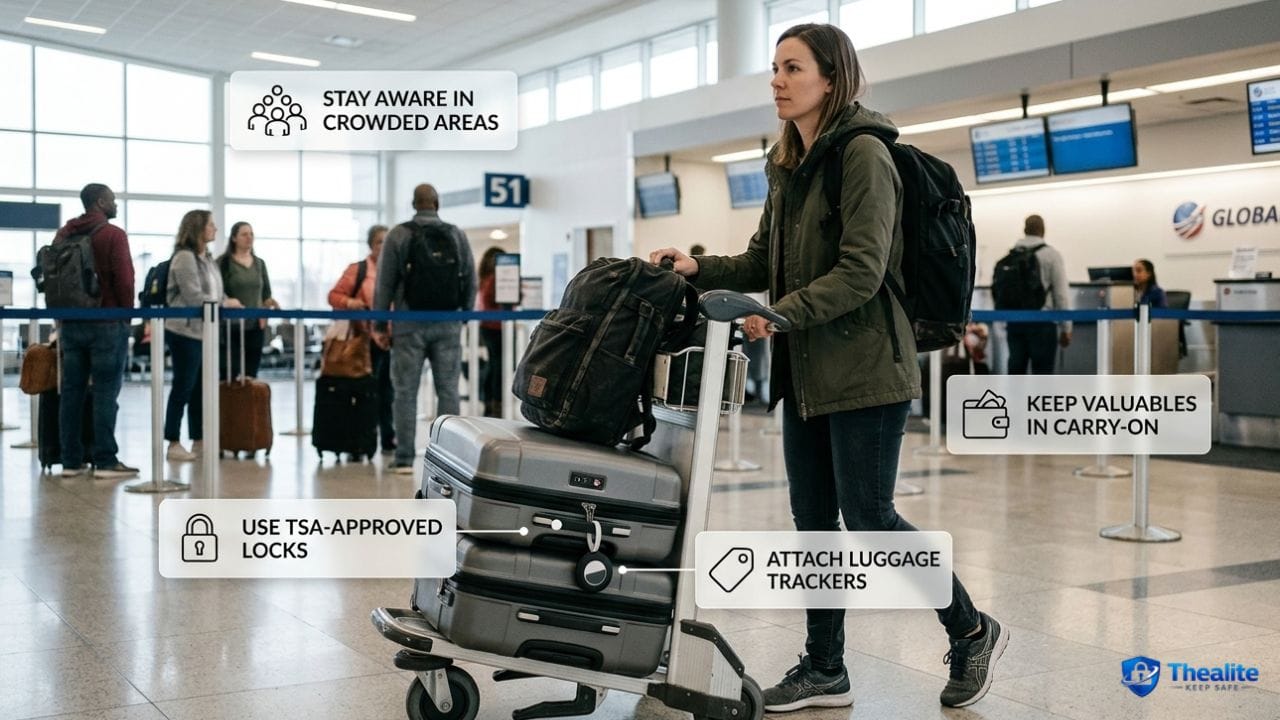
Airports are generally secure, but the chaos of check-in counters and baggage claims creates blind spots. Never leave your bags unattended, even for a quick bathroom trip. When claiming your checked bags, get to the carousel quickly so someone else doesn’t walk off with your suitcase by “mistake.”
At Train and Bus Stations
Trains and buses are prime spots for quick grab-and-go thefts. When sitting and waiting, loop a strap of your backpack or duffel bag around your leg or the leg of your chair. If you fall asleep, any tug on the bag will wake you up. On a train, try to keep your luggage on the rack directly above your seat, rather than at the end of the train car where you can’t see it.
At Hotels
When you arrive at your hotel, keep your hand on your luggage while checking in at the front desk. Once in your room, avoid leaving your bags wide open on the floor. Use the luggage rack, keep your zippers locked when you are not actively packing, and store your suitcase out of direct sight from the window or door.
How to Keep Yourself Safe in a Hotel Room
Securing your belongings is important, but knowing how to keep yourself safe in a hotel room is absolutely vital for your personal peace of mind. Your hotel room should be your private sanctuary, but you still need to take active steps to secure it.
- Use all the locks: The moment you enter your room, engage the deadbolt and the security chain or flip-lock. Never rely solely on the electronic door latch.
- Keep your room number private: If the front desk clerk says your room number out loud during check-in, politely ask for a different room and request they just write the number down. You do not want strangers in the lobby knowing where you sleep.
- Check the room upon entry: Prop the door open with your luggage and do a quick sweep of the room, checking the bathroom, closets, and behind the curtains before fully settling in.
- Never open the door for unexpected knocks: If someone claims to be hotel maintenance or room service that you didn’t order, call the front desk to verify before opening the door.
Luggage Locks, Trackers, Hotel Safes, and Room Security Devices
Technology and simple hardware are your best friends on the road. Always use TSA-approved luggage locks for your checked bags, and consider using small cable locks for your daypacks. One of the most effective modern travel hacks is tossing a Bluetooth tracker (like an Apple AirTag or Tile) inside your suitcase. This allows you to track your bag’s location right from your phone.
For your hotel room, portable security devices add a massive layer of protection. A cheap, portable door wedge alarm or a portable door lock that jams the door shut from the inside can stop an intruder even if they have a master key card.
Where to Store Passports, Cash, Cards, Electronics, and Backup Documents
Proper distribution of your valuables is a core travel safety rule. Never keep all your money, cards, and identification in one single place. If you carry a wallet, keep it in your front pocket. Use a hidden money belt or a neck pouch tucked under your shirt for your passport and large bills. If you want a deeper dive into this, learning exactly how to keep your money safe while traveling can save your entire vacation budget.
Leave a set of backup documents (copies of your passport, ID, and travel insurance) with a trusted family member. It’s highly recommended to understand how to keep important documents safe at home so that if you lose everything abroad, someone back home can securely email you the copies you need to get to an embassy.
Habits That Reduce Theft Risk While Traveling
Your daily habits on the road dictate your risk level. Blend in as much as possible and avoid flashing expensive jewelry, high-end cameras, or thick wads of cash in public. When dining at a sidewalk cafe, never hang your purse on the back of your chair or leave your phone sitting on the table where a passing thief could snatch it. Always walk with purpose, and if you need to check a map on your phone, step into a store or put your back against a wall so no one can approach you from behind.
What to Do If Your Bag, Passport, Wallet, or Phone is Lost or Stolen
If the worst happens, you need to act fast to minimize the damage:
- Lock your tech: If your smartphone is stolen, you must immediately secure your digital accounts. Knowing how to keep my phone safe from hackers by remotely wiping the device or locking it via “Find My” features is your first line of defense.
- Cancel your cards: Contact your bank immediately. This is why reviewing strategies on how to keep money safe while traveling is vital, so you have backup emergency cash while your cards are frozen.
- File a police report: Even if you don’t think you’ll get the items back, you will need a local police report to file a travel insurance claim.
- Contact your embassy: If your passport goes missing, head to your nearest embassy or consulate to get an emergency replacement.
Common Hotel and Luggage Safety Mistakes to Avoid
Many travelers fall victim to theft because of easily avoidable mistakes. Never pack your laptop, camera, prescription medication, or jewelry in your checked luggage—always keep these in your carry-on. Another major mistake is trusting overly friendly strangers who offer to “watch your bags” while you buy a train ticket. Finally, leaving valuables out in plain sight in your hotel room while the cleaning staff is working is a completely unnecessary risk. Put them in the room safe or lock them inside your suitcase.
Frequently Asked Questions (FAQ)
How to keep your luggage safe while traveling?
To keep your luggage safe while traveling, always keep your bags within your line of sight. Use TSA-approved locks on zippers, consider placing a Bluetooth tracker inside your suitcase, and physically loop bag straps around your arm or leg when sitting in crowded transit hubs.
How to keep yourself safe in a hotel room?
To keep yourself safe in a hotel room, always engage the deadbolt and security chain immediately after entering. Use a portable door lock or a door wedge alarm for extra security, keep your room number private, and never open the door to unexpected visitors without verifying with the front desk first.
Should you use the hotel room safe?
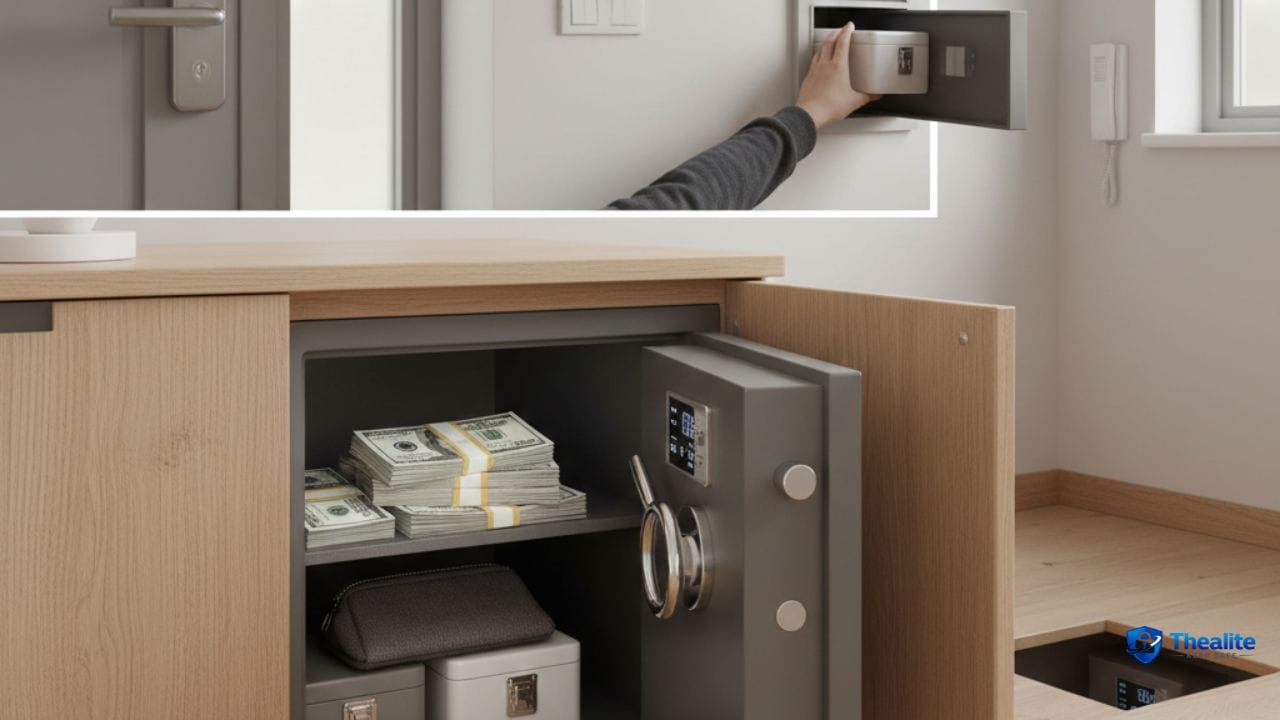
Yes, using the hotel room safe is generally better than leaving valuables out in the open. However, remember that hotel management has a master override code. For highly valuable items or large amounts of cash, consider keeping them on your person in a hidden money belt or locking them securely inside your hard-shell luggage.
Where should you keep your passport while traveling?
Your passport should be kept in a concealed money belt or neck pouch worn under your clothing while in transit. Once you arrive at your accommodation, it is best to lock it inside the hotel safe or inside your locked suitcase, carrying only a paper copy or a digital photo of it on your phone for daily excursions.
How do you keep luggage safe at the airport?
Keep your luggage safe at the airport by never leaving it unattended, even for a moment. Proceed directly to the baggage claim area after landing to retrieve checked bags immediately, and ensure your luggage tags have your contact information covered by a privacy flap.
What should you do if your luggage is stolen?
If your luggage is stolen, report it to the local transport authorities (like airport security or the train station master) immediately. File an official police report to ensure you have the necessary documentation for your travel insurance claim, and use your smartphone to track any Bluetooth trackers left in your bags.
How can solo travelers stay safer in hotel rooms?
Solo travelers should request rooms above the ground floor to prevent window break-ins. Avoid rooms located at the very end of long, isolated hallways, utilize secondary locking devices like portable door jammers, and consider leaving the TV on at a low volume when leaving the room to make it seem occupied.
Is it safe to leave valuables in checked luggage?
No, it is never safe to leave valuables in checked luggage. Items such as laptops, cameras, jewelry, passports, cash, and essential prescription medications should always be packed in your carry-on bag so they remain under your direct control at all times.

As a digital marketer, she has received multiple international awards, including Campaign of the Year at the 2023 European Content Awards and Best Use of Content Marketing at the 2022 Global Search Awards. Nicai holds an MSc in Marketing (First Class Honours) from the UCD Smurfit Graduate Business School and she has also completed the Artificial Intelligence Programme at Oxford University’s Saïd Business School. She is also a contributing writer for publications such as Entrepreneur and Esquire.