Every time you hit the road, you carry a variety of emergency items—a spare tire, jumper cables, and maybe a first aid kit. But one critical piece of safety gear is often overlooked: a portable fire extinguisher. Vehicle fires can happen suddenly due to mechanical failures, electrical shorts, or severe collisions. While your first instinct might be to pack an extinguisher in your trunk just in case, bringing a pressurized metal cylinder into a moving vehicle requires a bit of thoughtful planning. Understanding the rules of safe storage, temperature limits, and proper mounting will ensure your emergency gear is ready when you need it without becoming a hazard itself.
Why Some Drivers Keep a Fire Extinguisher in the Car
Drivers who commute long distances, travel through remote areas, or tow heavy trailers often carry a small fire extinguisher for peace of mind. A portable extinguisher provides a critical first line of defense against minor flare-ups before they engulf the entire vehicle. It can also be a lifesaver if you come across someone else’s minor roadside emergency or a small spreading campfire while parked at a national park. However, carrying one responsibly means knowing the limits of the equipment and exactly how to store it.
Is It Safe to Keep Fire Extinguisher in Car in Everyday Conditions?
One of the most common questions safety-conscious drivers ask is: is it safe to keep fire extinguisher in car? The answer is generally yes, provided you use an automotive-rated extinguisher and secure it properly. Standard dry chemical extinguishers rated for vehicles (usually ABC or BC ratings) are designed by manufacturers to withstand the normal temperature fluctuations of a car interior. However, safety depends entirely on two factors: protecting the canister from extreme, direct sunlight and ensuring it is physically mounted so it does not move.
Where to Mount or Store It So It Is Secure and Accessible
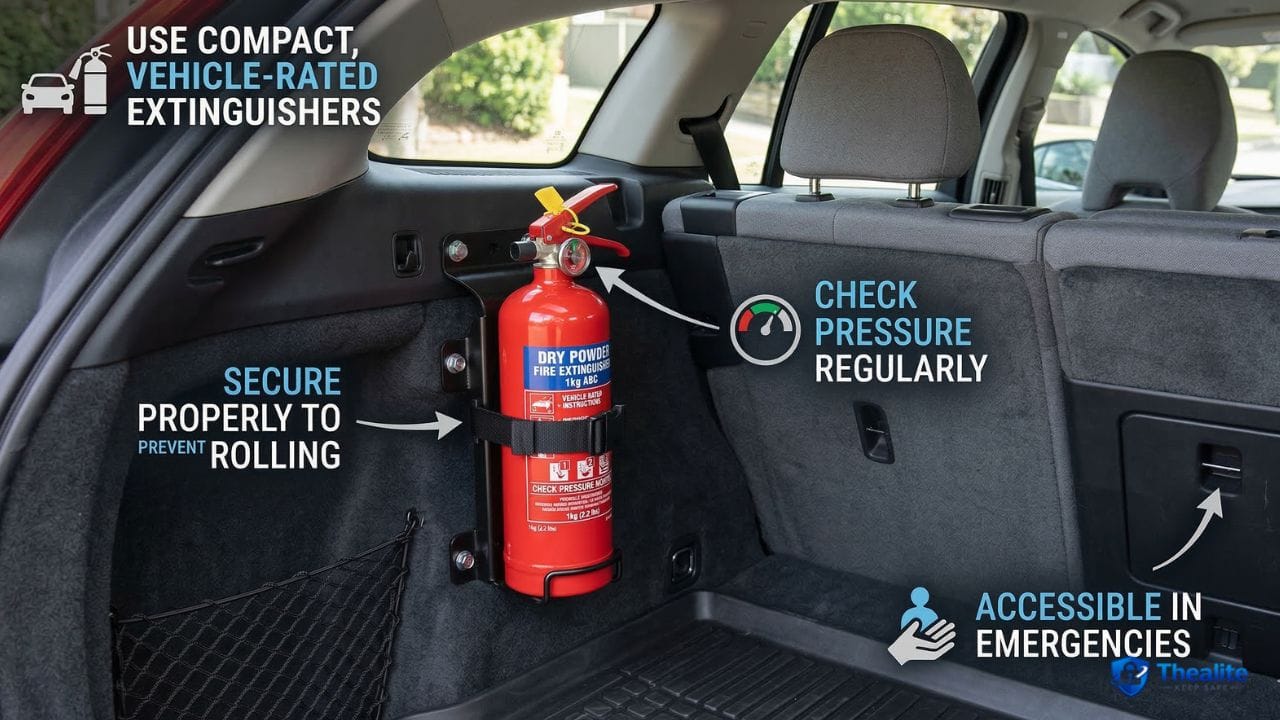
An unsecured fire extinguisher is highly dangerous. In the event of a sudden stop or a crash, a heavy, loose metal cylinder becomes a deadly projectile. You must secure it using a heavy-duty metal mounting bracket. The ideal location is securely bolted to the floorboard in the trunk, or under the front passenger seat if space allows and it does not interfere with seat movement. Never leave it rolling around loose on the back seat or the floor.
Heat, Pressure, Expiration Dates, and Inspection Basics
While automotive extinguishers are built for temperature swings, you should still avoid leaving them exposed to direct, baking sunlight on a dashboard. Extreme heat can cause the internal pressure to rise. Get into the habit of checking the pressure gauge once a month to ensure the needle is still in the green zone. Furthermore, keep the storage area dry to prevent the metal pin and handle from rusting. Much like understanding how to keep moisture out of a safe, keeping your vehicle’s trunk dry ensures your emergency equipment remains functional and corrosion-free. Extinguishers also expire; check the manufacturer’s date, as most need to be replaced every 5 to 12 years.
What Type of Vehicle Situations a Small Extinguisher May Help With
A small, 2-pound automotive fire extinguisher is designed for very specific, contained situations. It is highly effective for snuffing out a small electrical spark in the cabin, a minor smoldering fire in a wiring harness, or a small brush fire ignited by a hot exhaust pipe. It is meant to buy you time to escape or stop a tiny problem from becoming a massive disaster.
When You Should Not Approach a Vehicle Fire
A portable extinguisher is not magic, and you must prioritize human life over property. You should never attempt to fight a car fire if:
- The fire is spreading rapidly or has already reached the fuel tank area.
- The cabin is filling with thick, toxic black smoke.
- You do not have a clear, safe escape route behind you.
If the fire is beyond a small, easily contained flame, pull over immediately, get all passengers out of the car, move far away from the vehicle, and call 911. Cars can be replaced; lives cannot.
Common Mistakes People Make When Storing Emergency Items in Cars
A common mistake is burying the fire extinguisher under heavy luggage or spare tires in the trunk, making it impossible to reach in an emergency. Another error is storing emergency equipment in plain sight. An extinguisher or a high-end emergency jump starter left on the back seat can tempt thieves. Learning how to keep your car safe from theft means keeping your safety gear tucked away or covered.
Additionally, pay attention to the other electronics in your emergency kit. Portable jump starters contain powerful batteries that need temperature regulation; knowing how to keep lithium batteries safe in a hot vehicle is crucial to prevent them from expanding or failing when you need a jump.
A Simple Vehicle Emergency Kit Checklist
Your vehicle should be stocked with a well-rounded emergency kit that covers various roadside hazards:
- A securely mounted automotive fire extinguisher (ABC or BC rated).
- A first aid kit with bandages, gauze, and antiseptic wipes.
- Jumper cables or a portable lithium jump starter.
- A reflective warning triangle and a high-visibility vest.
- A glass breaker and seatbelt cutter tool kept within reach of the driver.
- Copies of vital paperwork. While you should understand how to keep important documents safe at home, keep photocopies of your registration and insurance cards in the glovebox.
- A small amount of emergency cash for tolls or rural gas stations. For larger savings, you might wonder can you keep cash in a safe deposit box, but keeping a quick $20 hidden in the car is perfect for roadside needs.
Frequently Asked Questions (FAQ)
Is it safe to keep fire extinguisher in car?
Yes, it is safe to keep a fire extinguisher in a car as long as it is an automotive-rated model designed to withstand vehicle temperature fluctuations, and it is securely mounted in a heavy-duty bracket so it does not become a dangerous projectile during a crash.
Where should a fire extinguisher be kept in a car?
It should be securely mounted in an easily accessible location. The best spots are bolted to the trunk floorboard, or securely bracketed under the front passenger seat. Never leave it loose on the floor or on the rear seats.
Can heat inside a car damage a fire extinguisher?
Automotive-rated fire extinguishers are built to handle the normal high temperatures of a car’s interior. However, you should avoid leaving them in direct, prolonged sunlight (like on a dashboard) as extreme heat can increase internal pressure.
How often should a car fire extinguisher be checked?
You should check your car fire extinguisher once a month. Ensure the pressure gauge needle is in the green zone, the safety pin is intact, and there is no visible rust or physical damage to the cylinder or nozzle.
What size fire extinguisher is best for a car?
A 2-pound to 2.5-pound dry chemical extinguisher is generally the best size for a passenger vehicle. It is lightweight, easy to handle, and compact enough to be safely mounted in a trunk or under a seat.
Should a fire extinguisher be in the trunk or cabin?
Both locations are acceptable if the extinguisher is firmly mounted. The cabin allows for faster access in an emergency, while the trunk keeps it safely out of the way of passengers. Choose the spot where you can mount it most securely.
When should a fire extinguisher be replaced?
A disposable fire extinguisher should be replaced if the pressure gauge drops out of the green zone, if the pin has been pulled, or if it has reached its expiration date, which is typically 5 to 12 years from the date of manufacture.
What else should be in a car emergency kit?
In addition to a fire extinguisher, a car emergency kit should include a first aid kit, jumper cables or a portable battery starter, a flashlight with extra batteries, a glass breaker/seatbelt cutter tool, and reflective warning triangles.

As a digital marketer, she has received multiple international awards, including Campaign of the Year at the 2023 European Content Awards and Best Use of Content Marketing at the 2022 Global Search Awards. Nicai holds an MSc in Marketing (First Class Honours) from the UCD Smurfit Graduate Business School and she has also completed the Artificial Intelligence Programme at Oxford University’s Saïd Business School. She is also a contributing writer for publications such as Entrepreneur and Esquire.