Many people love falling asleep to the soft, colorful glow of a decorative lamp or the modern ambiance of a glowing strip framing their bedroom ceiling. Decorative lighting adds warmth and personality to a room, often serving as a comforting nightlight for both children and adults. However, leaving electrical items plugged in and running continuously while you sleep introduces legitimate safety questions. When the house is quiet and everyone is asleep, an overheating bulb or a faulty power adapter can quietly escalate into a serious fire hazard. Understanding the differences between various types of lighting and establishing smart power habits ensures your home stays cozy and secure until morning.
Why People Leave Lights On Overnight
People leave lights on for various practical and emotional reasons—fear of the dark, the need to navigate hallways during midnight bathroom trips, or simply forgetting to hit the switch before falling asleep. Decorative lights, in particular, create a relaxing, ambient environment that helps many wind down after a long, stressful day. But not all lights are built to run 24/7, and leaving the wrong type of fixture on while unattended is a common household mistake.
Is It Safe to Keep a Lava Lamp On All Night in Normal Home Use?
Lava lamps rely heavily on heat to function. An incandescent bulb sits at the base of the glass globe, generating enough high heat to melt the dense wax inside, creating their famous, mesmerizing blobs. Because they get so hot, you might wonder, is it safe to keep a lava lamp on all night? The answer is a definitive no. Most manufacturers explicitly warn against running a lava lamp for more than 8 to 10 hours at a time. Leaving it on continuously causes the lamp to overheat, which can permanently ruin the wax flow, cause the glass globe to shatter from thermal stress, or create a severe fire risk if it sits near flammable materials like curtains.
Is It Safe to Keep LED Lights On All Night in Bedrooms, Desks, and Decor Setups?
LED (Light Emitting Diode) technology is vastly different from traditional incandescent lighting. Because they generate almost no heat, many homeowners ask, is it safe to keep led lights on all night? Generally, yes, it is much safer. High-quality LED light strips and bulbs operate at cool temperatures, meaning the risk of them igniting a fire is extremely low. They are ideal for lighting up a desk, outlining a headboard, or keeping a dark hallway illuminated without turning your house into a hazard zone.
Heat, Bulb Quality, Wiring, Cords, and Placement Issues
Even though LEDs run cool, quality matters immensely. Cheaply made lights often use thin wiring and low-grade power adapters that can overheat even if the LED bulbs themselves remain cool. You should regularly examine your cords for fraying or exposed wires. Placement is also key to preventing overheating. Much like understanding the environmental rules for how to keep lithium batteries safe, you must keep lighting power adapters well-ventilated and completely free from heat-trapping fabrics or carpets.
Where Not to Place Lamps or LED Strips
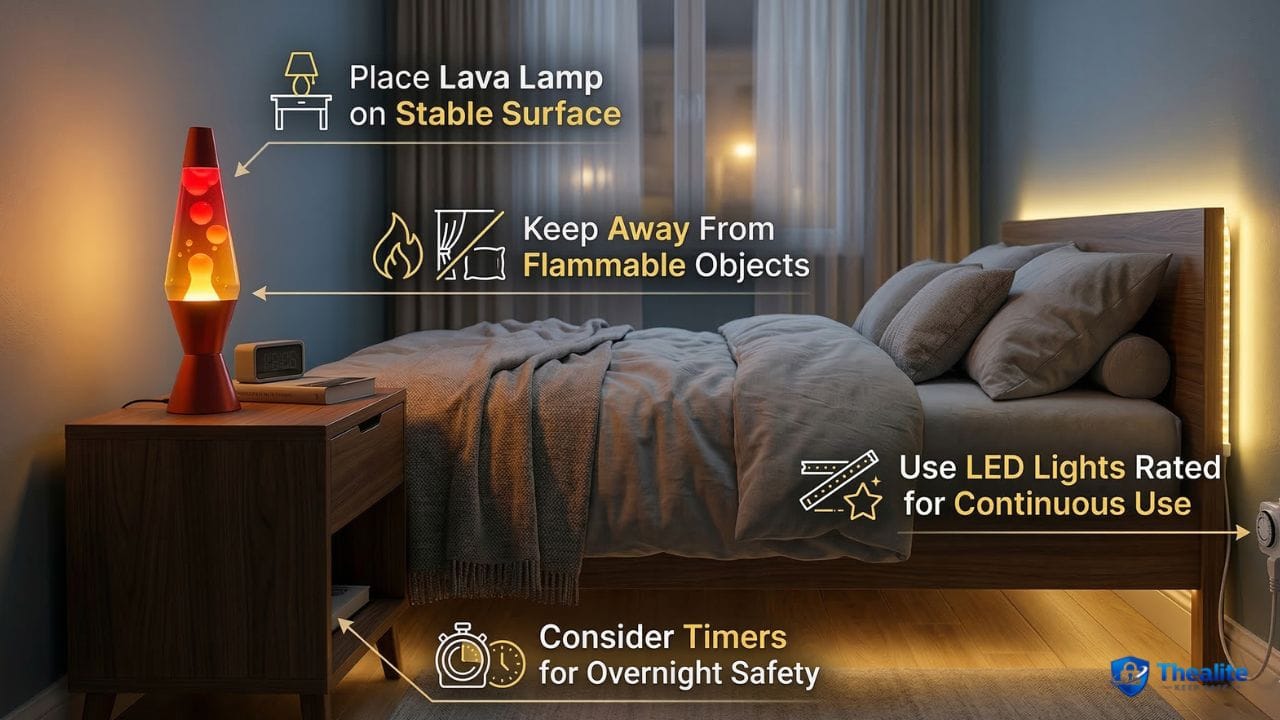
Never place a heat-generating fixture like a lava lamp on an unstable surface, a carpeted floor, or near the edge of a nightstand where it could easily be knocked over by a pet or a sleepy arm. Keep them far away from loose papers, books, and bedding. For LEDs, do not bundle excess strip length tightly into a ball while it is turned on, as this restricts airflow and traps heat. Just as you carefully figure out five safe places to keep medicines out of reach, choose locations for decorative lights that are free from heavy foot traffic and flammable clutter.
Why Timers and Auto Shut-Off Habits Help
The easiest way to enjoy your lights safely is by using a smart plug or a built-in timer. Setting your decorative lights to automatically shut off an hour after you usually fall asleep removes the human-error element entirely. This gives you the ambiance you want while falling asleep, without the background risk of leaving a high-wattage bulb burning in an empty room all night.
Signs an Electrical Item Should Not Be Left On
Always trust your senses when it comes to electrical safety. Unplug the device immediately if you notice:
- The power adapter or wall plug feels too hot to hold comfortably.
- The light flickers randomly or dims without you adjusting it.
- The plastic casing or power cord looks discolored, melted, or warped.
- You smell a faint burning plastic or ozone odor near the outlet.
Power Use and Wear Over Time
Leaving lights on continuously burns through their lifespan much faster. While LEDs are highly energy efficient, leaving them on 24/7 will eventually dim their output and burn out the individual diodes. If you are diligent about lowering your electric bill and knowing how to keep your money safe by avoiding unnecessary expenses, turning off decorative lights when they aren’t needed is an easy win for your budget.
Safer Overnight Lighting Alternatives
If you genuinely need a light to stay on all night for navigation or comfort, opt for a cool-touch LED wall plug-in nightlight equipped with a light sensor. These tiny devices use virtually no electricity, generate zero heat, and automatically turn off when the sun comes up, providing the safest possible overnight lighting solution.
Common Mistakes People Make With Decorative Lights
A common mistake is buying unbranded, counterfeit lighting online that lacks UL (Underwriters Laboratories) safety certification. Another frequent error is overloading a single extension cord or power strip with too many high-wattage devices. Ensuring overall household safety goes beyond just physical items; just as you take the time to learn how to keep your identity safe online to prevent cyber theft, or figure out how to keep important documents safe at home in a fireproof safe, routinely checking your home’s electrical load and unplugging risky devices prevents disasters before they happen.
Frequently Asked Questions (FAQ)
Is it safe to keep a lava lamp on all night?
No, it is not safe to keep a lava lamp on all night. They use hot incandescent bulbs to melt the wax, and running them for more than 8 to 10 hours can cause them to overheat, permanently ruining the lamp or creating a fire hazard.
Is it safe to keep LED lights on all night?
Yes, generally it is safe to keep high-quality LED lights on all night. LEDs produce very little heat, making them a much safer alternative to traditional bulbs for continuous use, provided their power adapter is well-ventilated.
Do lava lamps get too hot if left on too long?
Yes. If left on too long, a lava lamp will overheat. The liquid can become too hot, which stops the wax from flowing in distinct blobs, and the extreme heat can cause the glass globe to crack or shatter.
Are LED lights safer than traditional bulbs overnight?
Yes, LED lights are significantly safer than traditional incandescent or halogen bulbs because they convert energy directly into light rather than heat, drastically reducing the risk of accidental fires.
Should you sleep with decorative lights on?
While it is safe to sleep with cool-touch LEDs on, it is generally better for your sleep quality and energy bill to use a smart plug or a timer so the lights automatically turn off shortly after you fall asleep.
Where should you not place a lava lamp?
You should never place a lava lamp near flammable items like curtains or bedding, on a carpeted floor, in direct sunlight, or on an unstable, wobbly table where it could be knocked over.
Can LED strips overheat?
While the LED diodes themselves rarely overheat, cheap or faulty power adapters can get dangerously hot. Additionally, leaving a tightly coiled roll of LED strips turned on can trap heat and melt the plastic backing.
When should you replace a lamp or light strip?
You should replace a lamp or light strip immediately if it begins to flicker, if the power cord feels unusually hot to the touch, or if you notice any exposed, frayed wiring or a burning plastic smell.

As a digital marketer, she has received multiple international awards, including Campaign of the Year at the 2023 European Content Awards and Best Use of Content Marketing at the 2022 Global Search Awards. Nicai holds an MSc in Marketing (First Class Honours) from the UCD Smurfit Graduate Business School and she has also completed the Artificial Intelligence Programme at Oxford University’s Saïd Business School. She is also a contributing writer for publications such as Entrepreneur and Esquire.