A pond is a natural home base for ducks—but it’s also a magnet for predators and a place where small problems can turn serious fast. In many parts of the U.S., ducks on ponds face threats from raccoons, foxes, coyotes, bobcats, dogs, hawks, owls, snapping turtles, and even large snakes. Add water quality issues, weather extremes, and night-time risk, and it’s clear why “pond ducks” need a safety system—not just luck.
This guide gives a practical, layered plan for keeping ducks safe on a pond: secure night housing, predator-resistant fencing, safe pond edges, clean water practices, and emergency routines for storms, heat, and cold.
Quick Answer (The Duck Pond Safety System)
- Provide secure night housing (most duck losses happen after dark).
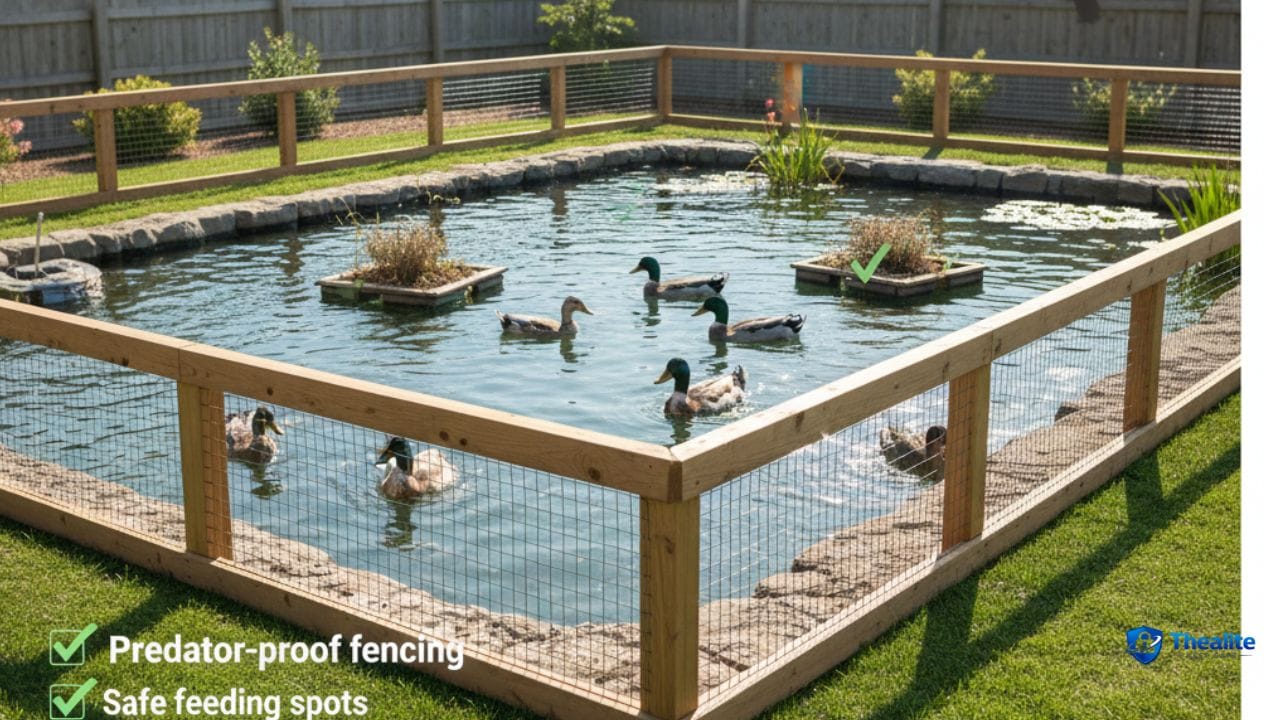
- Use predator-resistant fencing and/or electric poultry netting around the duck area.
- Create safe pond access: gentle ramps, shallow edges, and escape routes.
- Reduce predator attraction: remove feed at night, secure trash, control rodents.
- Add overhead cover or safe zones to reduce hawk attacks (especially for young ducks).
- Manage water quality and reduce algae/contamination risks.
- Plan for heat, cold, and storms with simple emergency routines.
Why Ducks on Ponds Are High-Risk
A pond gives ducks water and forage, but it also signals “food and wildlife” to everything in the area. Ducks are most vulnerable when:
- They’re sleeping (night predators).
- They’re molting or injured (slower movement).
- Ducklings are present (high predator target).
- The shoreline is steep or slippery (hard to escape).
- The pond is surrounded by tall cover predators can hide in.
Step 1: Night Housing Is Non-Negotiable
If you want your ducks to stay safe long-term, don’t leave them on the pond overnight. Many predators hunt at night, and ducks are less agile on land than chickens in some situations.
What a safe duck house should include
- Solid walls and roof (no gaps larger than about a finger width).
- Ventilation openings covered with hardware cloth (not chicken wire).
- A strong door with predator-resistant latches (raccoon-proof).
- Dry bedding area (straw/shavings) and protection from drafts.
Raccoon-proof latches (important detail)
Raccoons can open simple latches. Use two-step latches (carabiner/spring clip) or locks that require more than one motion.
Step 2: Fence for the Predators You Have
Fencing is how you turn a pond into a controlled habitat. Your best fencing choice depends on whether your main threats are dogs/coyotes, raccoons, or aerial predators.
Ground predator protection options
- Strong perimeter fencing with small openings (reduces dog/coyote access).
- Hardware cloth for vulnerable areas (stronger than chicken wire).
- Electric poultry netting as a high-deterrence layer where allowed/installed correctly.
Anti-dig protection
- Use an apron/skirt of hardware cloth along fence lines to discourage digging.
- Keep vegetation trimmed at the fence line so predators can’t hide while testing it.
Predator mindset crossover (especially coyotes): How to Keep Barn Cats Safe From Coyotes.
Step 3: Make the Pond Edge ‘Duck-Safe’
Ducks need easy entry and exit. Steep banks, slippery liners, and deep sudden drop-offs can trap ducklings and even adults during stress.
Safer pond setup ideas
- Provide at least one gentle slope or ramp for easy exit.
- Add textured surfaces (non-slip ramp material) to prevent sliding.
- Create shallow ledges or gradual shoreline zones where possible.
- Place floating platforms or logs (stable) as resting spots away from shore.
Escape routes matter
If a predator approaches, ducks need multiple directions to escape. Avoid having only one tight exit point from the water.
Step 4: Reduce Aerial Predator Risk (Hawks & Owls)
Adult ducks can sometimes evade hawks, but ducklings are much more vulnerable. Owls can hunt at dawn/dusk and night.
Practical aerial protection
- Provide covered areas near the pond (shrubs, shelters, or a run roof).
- Use overhead netting in duckling areas (most effective when practical).
- Avoid leaving ducklings unsupervised in open areas.
- Bring ducks in early before dusk if owls are active in your region.
Step 5: Don’t Feed Predators (Control Attractants)
Many predator problems start because the area becomes a food hub—spilled feed attracts rodents, which attracts snakes, which attracts larger predators.
Attractant control checklist
- Remove leftover feed before night.
- Store feed in sealed metal or heavy-duty containers.
- Clean up spilled grain regularly.
- Secure trash/compost and avoid leaving scraps near the pond.
Snake risk reduction (especially if rodents are present): How to Keep Snakes Out of Your Yard Safe for Pets.
Step 6: Water Quality and Health Safety
Ducks make water messy. Poor water quality can lead to skin issues, parasites, and increased disease risk. For a natural pond, you can’t sterilize it—but you can reduce problems.
Practical pond health tips
- Provide clean drinking water separate from the pond (pond water isn’t ideal drinking water).
- Limit feed in or near the pond edge (reduces nutrient load and algae).
- Trim vegetation around shorelines to reduce hiding spots and improve airflow/sunlight.
- Watch for algae blooms—especially in hot weather (treat as a warning sign).
- If you use a small man-made pond, consider filtration/aeration.
Step 7: Weather Safety (Heat, Cold, Storms)
Ponds can become dangerous in extreme weather: overheating, hypothermia, storms, and flooding all change risk.
Hot weather safety
- Provide shade near the pond and in the run/yard.
- Offer fresh water and watch for overheating signs (open-mouth breathing, weakness).
- Avoid long handling/transport during peak heat.
More: How to Keep Pets Safe in Hot Weather.
Cold weather safety
- Ensure ducks have a dry, draft-protected shelter at night.
- Keep drinking water from freezing (swap often; use safe heaters if appropriate).
- Be cautious with thin ice—ducks can slip or get stuck if they walk on it.
More: How to Keep Pets Safe in Cold Weather.
Storm/tornado readiness
- Secure loose items near the pond (wind hazards).
- Have a plan to bring ducks into a safer enclosed shelter early.
- Keep carriers or a small penned area ready for fast moves.
Emergency planning mindset: How to Keep Pets Safe During a Tornado.
Step 8: Daily Routine That Prevents Most Losses
Duck safety improves when you do small checks consistently.
- Morning: quick fence check + check for predator tracks/signs.
- Midday: verify shade/water; watch for hawk activity (especially with ducklings).
- Evening: remove feed, count ducks, and lock them in the house before dusk.
Copy/Paste Checklist: Keep Ducks Safe on a Pond
- Ducks locked in a secure house at night (raccoon-proof latches)
- Predator-resistant fencing or electric netting around duck area
- Anti-dig protection (apron/skirt) and trimmed vegetation near fences
- Safe pond access ramps/edges + escape routes
- Overhead cover or safe zones to reduce hawk/owl risk
- Feed removed at night; feed stored sealed; spills cleaned
- Clean drinking water provided separate from pond
- Weather plan: shade in heat, dry shelter in cold, storm readiness
FAQs
Is it safe for ducks to sleep on a pond at night?
Usually no. Night predators are common, and ducks can be vulnerable. A secure duck house at night is the safest routine.
What predators attack ducks on ponds?
Common U.S. threats include raccoons, foxes, coyotes, dogs, bobcats, hawks, owls, and sometimes snapping turtles or large snakes (region-dependent).
How do I protect ducklings on a pond?
Ducklings need extra protection: supervised time, overhead cover/netting, and a secure enclosed run. Avoid leaving ducklings unsupervised in open areas.
Do I need a fence if I have a pond?
If predators are present, yes. Fencing and secure night housing provide the biggest safety improvement.
What’s the biggest mistake pond duck owners make?
Leaving ducks out overnight and leaving feed accessible at night. Those two issues attract predators and increase losses.
Conclusion
To keep ducks safe on a pond, think in layers: secure night housing, predator-resistant fencing, safe pond edges, attractant control, and weather readiness. Most duck losses happen at night or during predictable high-risk times (dusk/dawn), so consistent routines—counting ducks, removing feed, and locking up—make the biggest difference.

As a digital marketer, she has received multiple international awards, including Campaign of the Year at the 2023 European Content Awards and Best Use of Content Marketing at the 2022 Global Search Awards. Nicai holds an MSc in Marketing (First Class Honours) from the UCD Smurfit Graduate Business School and she has also completed the Artificial Intelligence Programme at Oxford University’s Saïd Business School. She is also a contributing writer for publications such as Entrepreneur and Esquire.