Keeping cash at home is common in the U.S.—especially for emergencies like power outages, storms, or times when card systems are down. But cash at home also has real downsides: it can be stolen, destroyed in a fire, damaged by water, or simply lost. Unlike money in an insured bank account, cash at home usually isn’t protected.
So, is it safe to keep cash at home? It can be safe enough in small amounts when stored correctly—but it’s not a good place to keep large sums long-term. This guide explains the pros, risks, and the best practices for smart home cash storage.
Quick Answer
Keeping some cash at home for emergencies can be reasonable. For most households, the safer approach is to keep a small emergency amount at home, stored in a secure, fire- and water-resistant way and keep the rest in an insured bank or credit union account. Large cash stashes at home increase risk because cash can be stolen or destroyed, and it typically isn’t insured.
Why People Keep Cash at Home (The Benefits)
Home cash is useful in real situations:
- Power outages or storms when card readers and ATMs are down.
- Small purchases, tipping, or emergencies when you need money fast.
- Travel prep (small bills for taxis, tolls, tips).
- Budgeting (some people prefer cash envelopes).
The key is keeping it in a smart amount and storing it safely.
The Biggest Risks of Keeping Cash at Home
Cash at home has four main risks. Understand them before deciding how much to keep:
1) Theft
Burglars target common hiding spots: dresser drawers, closets, under mattresses, freezer boxes, and jewelry boxes. Cash is easy to steal and impossible to trace.
2) Fire and smoke
Cash is paper—fires and smoke damage can destroy it quickly. Even if it doesn’t burn, water from firefighting can ruin it.
3) Water damage and moisture
Leaks, floods, and humidity can damage cash. Stored cash can also develop odor or mildew if it’s kept in damp environments.
4) Loss or forgetting
People forget where they hid cash, especially months later. It’s also easy for cash to be thrown out accidentally during cleaning.
How Much Cash Should You Keep at Home?
There’s no one number that fits everyone, but the safest rule is keep enough for short disruptions, not long-term savings. Think in terms of what you’d need if cards/ATMs were unavailable for a day or two.
A practical way to decide
- Start small: enough for a couple days of basics (gas, groceries, prescriptions).
- Use small bills (easier to use during outages).
- Adjust based on your household size and local storm/power-outage risk.
If you’re tempted to keep a very large amount at home, that’s often a sign you should consider bank storage or a safe deposit box instead.
Where to Keep Cash at Home (Safe vs Hiding Spots)
The safest place for home cash is a secure container not a clever hiding spot.
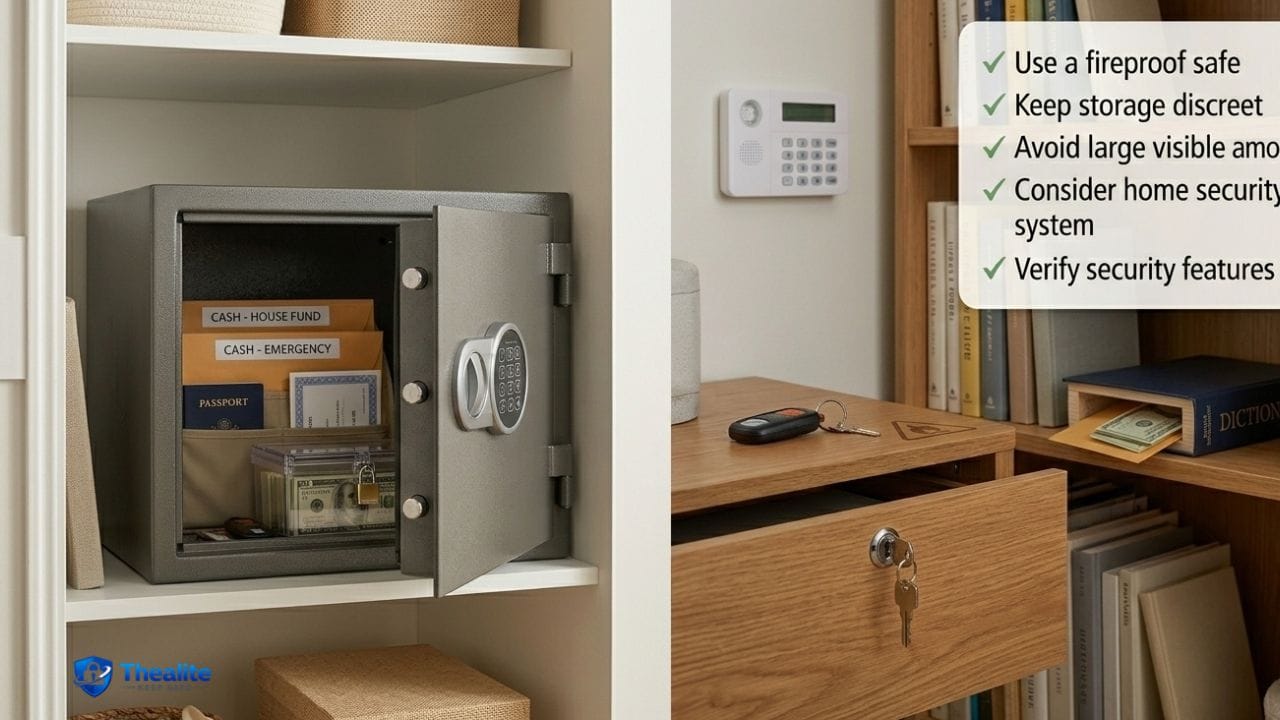
Best option: a quality, bolted-down home safe
- A safe that is bolted down is harder to steal.
- Fire-rated safes can add protection time in a fire.
- Keep the safe in a less-obvious location (not master bedroom closet).
Second-best: a fire/water-resistant document box (for smaller amounts)
- Good for small emergency cash.
- Easy to move if needed, but also easier to steal—so store it discreetly.
Avoid relying on common hiding spots
- Under the mattress, in drawers, in socks/shoes
- In kitchen cabinets, cereal boxes, freezer containers
- In the bathroom cabinet or laundry room
- In obvious ‘secret’ compartments everyone talks about online
If you learned the hiding spot from a viral video, burglars already know it.
Protect Cash From Moisture and Mold
Moisture can damage bills, especially if you store them in basements or in safes without moisture control.
- Store cash in a sealed bag or protective sleeve inside the safe/box.
- Keep cash elevated off the floor (flood/leak protection).
- Avoid basements and garages if you can.
- If you store cash in a safe, control moisture (desiccant/dehumidifier as appropriate).
Related moisture help: How to Keep Money From Molding in a Safe • How to Keep Moisture Out of a Safe • What to Put in a Safe to Keep Moisture Out
Privacy Rules (A Huge Part of Home Cash Safety)
Cash is safest when fewer people know it exists. Many thefts are inside knowledge or opportunity-based.
- Don’t tell casual friends or visitors you keep cash at home.
- Avoid posting about large cash on social media.
- If contractors/cleaners enter your home, secure cash out of sight.
- Limit who knows the safe location and codes.
Home Cash vs Bank: Which Is Safer?
In the U.S., money in an FDIC-insured bank or NCUA-insured credit union is generally safer from theft/fire/water risk than cash stored at home. Home cash is useful for short-term emergencies, but banks are built for long-term storage and security.
Related: Which Bank Is Safe to Keep Money • Is It Safe to Keep Money in Checking Account.
Should You Use a Safe Deposit Box for Cash?
Some people store cash in a safe deposit box, but you should understand access limits (bank hours) and how it fits your needs. For emergency cash you might need instantly, a safe deposit box is not ideal.
More: Can You Keep Cash in a Safe Deposit Box • What to Keep in a Safe Deposit Box.
What to Do If Cash Is Stolen at Home
Cash theft is hard to recover, but you can still take steps:
- Report the theft to local police and document what was taken.
- If the thief also accessed documents/cards, secure accounts and watch for identity fraud.
- Review home security weaknesses (locks, lighting, safe placement, who had access).
- Change safe codes and consider additional layers (bolting, alarms, cameras).
Copy/Paste Checklist: Is It Safe to Keep Cash at Home?
- Keep only a small emergency amount at home (not long-term savings)
- Store it in a secure container (bolted safe or fire/water-resistant box)
- Avoid common hiding spots (drawer, mattress, freezer, cabinet)
- Protect from moisture: sealed sleeve + elevated storage; control safe humidity
- Use small bills for outages and emergencies
- Keep it private (few people know; secure during guests/contractors)
- Keep the rest of your money in an insured bank/credit union account
FAQs
Is it illegal to keep cash at home in the U.S.?
Generally, no—keeping personal cash at home is legal. The real question is safety and practicality, not legality.
How much cash should I keep at home for emergencies?
Enough for short disruptions (a day or two of basics). The right amount depends on your household size and local outage risk, but avoid large long-term stashes.
What’s the safest place to keep cash at home?
A quality safe that’s bolted down is usually the safest option. For smaller amounts, a fire- and water-resistant document box can work if stored discreetly.
Can cash get damaged in a safe?
Yes. Moisture can cause odor or mildew in some environments. Use sealed storage and control humidity inside the safe.
Is cash safer at home or in a bank?
For long-term storage, a bank or credit union account is generally safer because it’s protected from theft/fire/water risks that can destroy cash at home.
Conclusion
Keeping cash at home can be safe enough in small amounts when it’s stored securely and protected from fire and moisture. But large cash stashes increase risk because cash is easy to steal and easy to lose in disasters. A smart plan is usually a hybrid: keep a small emergency stash at home, and keep the rest in an insured bank or credit union.

As a digital marketer, she has received multiple international awards, including Campaign of the Year at the 2023 European Content Awards and Best Use of Content Marketing at the 2022 Global Search Awards. Nicai holds an MSc in Marketing (First Class Honours) from the UCD Smurfit Graduate Business School and she has also completed the Artificial Intelligence Programme at Oxford University’s Saïd Business School. She is also a contributing writer for publications such as Entrepreneur and Esquire.