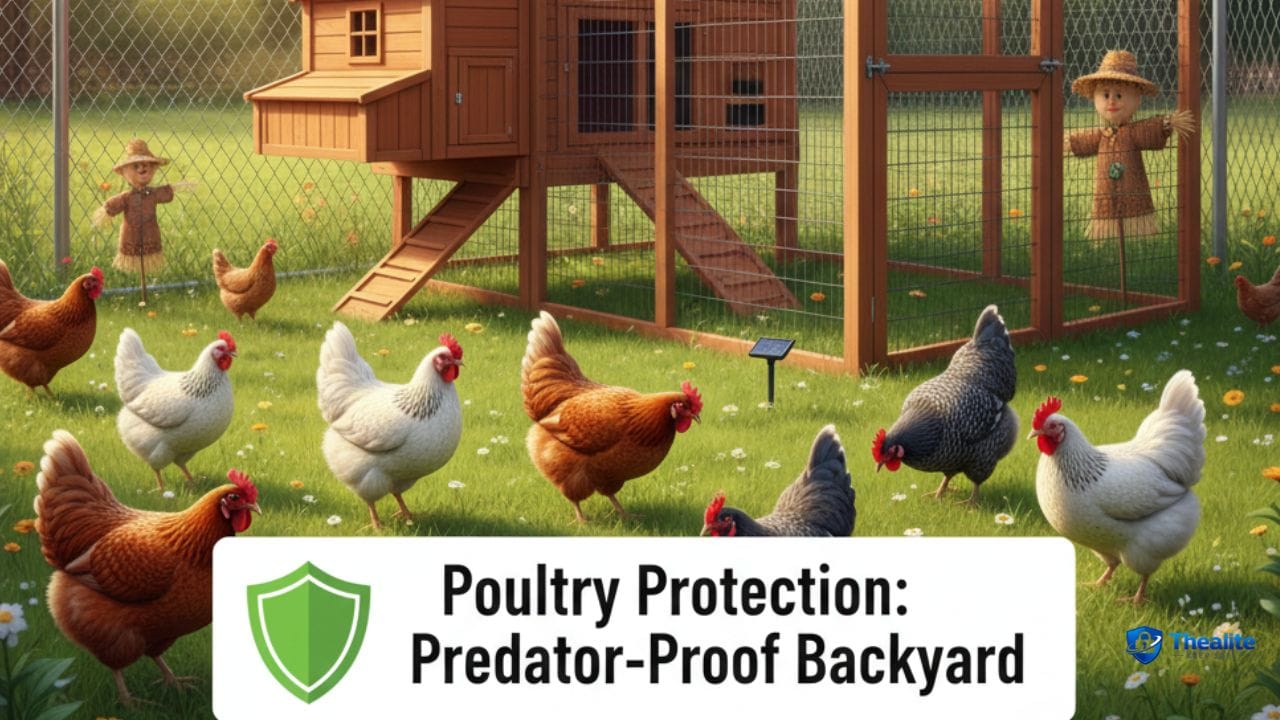
Free ranging is great for chickens: they get exercise, fresh greens, bugs, and mental enrichment. But it comes with real risks—especially predators. In many parts of the U.S., backyard flocks face threats from hawks, raccoons, foxes, coyotes, dogs, snakes, and even neighborhood cats that target chicks.
The secret to safe free ranging is not “trusting your luck.” It’s building a **layered safety system**: a predator-resistant coop and run, smart fencing, supervised range time, and consistent night lock-up routines. This guide gives practical steps you can apply whether you keep 3 hens or a larger backyard flock.
Related reading on your site: Is It Safe to Keep Baby Chicks in the House • How to Keep Pets Safe During a Tornado • How to Keep Pets Safe in Hot Weather • How to Keep Pets Safe in Cold Weather • How to Keep Snakes Out of Your Yard Safe for Pets
Quick Answer (The Free-Range Chicken Safety System)
- Use a predator-proof coop for nighttime (most attacks happen after dark).
- Build a secure run with hardware cloth (not chicken wire) for high-risk areas.
- Free range only during safer hours and bring chickens in before dusk.
- Use overhead protection or safe zones to reduce hawk attacks.
- Install fencing or electric poultry netting where predators are common.
- Keep feed secured and clean up spills to avoid attracting wildlife.
- Practice basic biosecurity to reduce disease risk.
- Have a storm and emergency plan (especially for extreme heat/cold).
What Free Range Chickens Need Protection From
Most losses come from a few predictable threats. Knowing them helps you build the right layers:
- Aerial predators: hawks, owls, eagles (region-dependent)
- Night predators: raccoons, opossums, foxes, coyotes, skunks
- Domestic animals: roaming dogs (a major risk), sometimes cats for chicks
- Snakes and rodents (eggs, chicks, feed contamination)
- Weather: heat waves, deep cold, storms, flooding
- Disease and parasites: mites, lice, worms, respiratory illness
Layer 1: Make the Coop Night-Safe (This Is Non-Negotiable)
Free range safety starts with what happens at night. Even if your chickens roam during the day, they should sleep in a **secure coop** every night. Most serious predators hunt after dark.
What a predator-proof coop looks like
- Solid walls and a tight roof (no gaps bigger than about a finger width).
- Strong latches predators can’t open (raccoons are skilled).
- Ventilation openings covered with hardware cloth (not chicken wire).
- No exposed weak spots at corners or under eaves.
Door and latch upgrades that matter
- Use two-step latches (carabiners or spring clips) that raccoons can’t manipulate easily.
- Check that doors close flush (no pry gaps).
- If you use automatic coop doors, test them often and keep a manual backup plan.
Layer 2: Build a Safe Run (Hardware Cloth Beats Chicken Wire)
If you have a run, treat it like a fortress. Chicken wire is meant to keep chickens in—not predators out. For predator protection, hardware cloth is the stronger choice.
Run safety essentials
- Use hardware cloth on sides and any openings.
- Add a roof or overhead netting (helps against hawks and climbing predators).
- Prevent digging: bury an apron of hardware cloth around the perimeter or use a skirt.
- Use secure latches on run doors (same raccoon logic).
Layer 3: Smart Free-Range Timing (Daylight Is Your Friend)
If you free range, do it on purpose. The safest routine is: **release after full daylight** and **lock up before dusk**. Predator activity spikes at dawn, dusk, and night.
Practical routine
- Morning: release after you’ve done a quick yard scan.
- Afternoon: keep an eye out for hawks and roaming dogs.
- Evening: call chickens back and lock up before dusk—no exceptions.
Layer 4: Reduce Hawk Risk (Overhead Cover and ‘Safe Zones’)
Hawks are one of the biggest free-range threats. You don’t need to eliminate all open space, but you should create areas where chickens can hide quickly.
Hawk protection strategies
- Provide overhead cover: trees, shade cloth, netting, or a covered run zone.
- Add ‘escape structures’: low shelters, pallets on blocks, or bushes (safe, not trapping).
- Avoid feeding in the open middle of the yard—feed near cover.
- Supervise younger birds and smaller breeds more closely.
Layer 5: Fence for the Predators You Actually Have
The right fence depends on what’s in your area. Some regions deal mostly with hawks and dogs; others have raccoons and coyotes routinely.
Fencing options (increasing protection)
- Standard yard fencing (helps with casual dogs, not determined predators).
- Hardware-cloth run enclosure (strong protection for a contained area).
- Electric poultry netting (high deterrence for ground predators when installed correctly).
If coyotes are common where you live, the same principles used for barn animal protection apply—see How to Keep Barn Cats Safe From Coyotes.
Layer 6: Don’t Attract Predators With Feed and Trash
Many predator problems start with easy food. Spilled feed attracts rodents, which attracts snakes, which attracts larger predators.
- Feed during the day and remove leftovers before night.
- Store feed in sealed metal or heavy-duty containers.
- Clean up spilled grain (especially near coop/run).
- Secure trash and compost so it doesn’t attract raccoons and skunks.
Layer 7: Weather Safety for Free-Range Flocks
Free ranging in extreme weather is risky. Heat, cold, and storms require adjustments.
Hot weather safety
- Provide shade and multiple water stations.
- Add electrolytes if your vet or poultry resource recommends (especially during heat waves).
- Avoid free ranging during the hottest part of the day; keep birds near shade.
- Watch for heat stress: panting, wings held away, lethargy.
Related heat planning: How to Keep Pets Safe in Hot Weather.
Cold weather safety
- Ensure coop is draft-controlled but well ventilated (moisture is a winter enemy).
- Keep water from freezing (swap often, use safe heaters as appropriate).
- Limit free ranging on icy days where slips can cause injuries.
Cold safety mindset: How to Keep Pets Safe in Cold Weather.
Storm safety
- Secure loose items in the run that can blow around.
- Have a plan to lock chickens in early if severe weather is coming.
- Keep carriers/crates available if you must relocate birds quickly.
Emergency planning mindset: How to Keep Pets Safe During a Tornado.
Layer 8: Basic Biosecurity and Health Checks
Predators aren’t the only threat. Disease and parasites can wipe out a flock or reduce egg production. A simple routine makes a big difference.
Biosecurity basics
- Quarantine new birds before mixing with your flock.
- Keep the coop dry and clean (wet bedding invites problems).
- Use dust baths (or provide an area) to help chickens manage mites naturally.
- Watch for symptoms: lethargy, poor appetite, pale comb, sneezing, diarrhea.
Predator Attack or Injury: What to Do
If a predator attacks, act quickly. Chickens can go into shock even from minor wounds.
- Remove the injured bird to a quiet, warm, safe space.
- Stop bleeding with gentle pressure (clean cloth).
- Clean wounds and contact a poultry-savvy vet if injuries are serious.
- Increase security immediately—predators often return once they’ve found food.
Free-Range Chicken Safety Checklist (Copy/Paste)
- Predator-proof coop for nighttime (secure latches, no gaps)
- Hardware cloth on vents/openings; digging prevention around run
- Covered run or overhead protection zones for hawks
- Free range only in daylight; lock up before dusk
- Fence or electric poultry netting where ground predators are common
- Feed stored sealed; remove leftovers before night; clean spills
- Weather plan: shade/water in heat; dry coop and unfrozen water in cold
- Basic biosecurity: quarantine new birds, keep coop clean/dry, monitor health
FAQs
What is the #1 rule for keeping free range chickens safe?
Lock them in a secure, predator-proof coop every night. Most serious predator losses happen after dark.
Is chicken wire enough to stop predators?
Chicken wire is mainly for containing chickens. For predator resistance, hardware cloth is much stronger and more reliable.
How do I protect chickens from hawks?
Provide overhead cover (netting/shade cloth/trees), create safe hiding zones, and avoid feeding in wide-open spaces where hawks have a clear approach.
Should I free range chickens if I have coyotes nearby?
You can, but you’ll need stronger layers: reliable fencing, a secure coop/run, and strict daylight-only ranging with early lock-up.
What should I do if a dog attacks my chickens?
Separate injured birds, address wounds and shock, and strengthen fencing immediately. Roaming dogs are a major backyard flock threat.
Conclusion
Free range chickens can be safe when you build layers: a predator-proof coop at night, a secure run with hardware cloth, smart ranging hours, hawk cover, and fencing that matches your local predators. Add good feed management, weather readiness, and basic health checks, and you’ll dramatically reduce losses while still giving your flock the benefits of outdoor freedom.

As a digital marketer, she has received multiple international awards, including Campaign of the Year at the 2023 European Content Awards and Best Use of Content Marketing at the 2022 Global Search Awards. Nicai holds an MSc in Marketing (First Class Honours) from the UCD Smurfit Graduate Business School and she has also completed the Artificial Intelligence Programme at Oxford University’s Saïd Business School. She is also a contributing writer for publications such as Entrepreneur and Esquire.