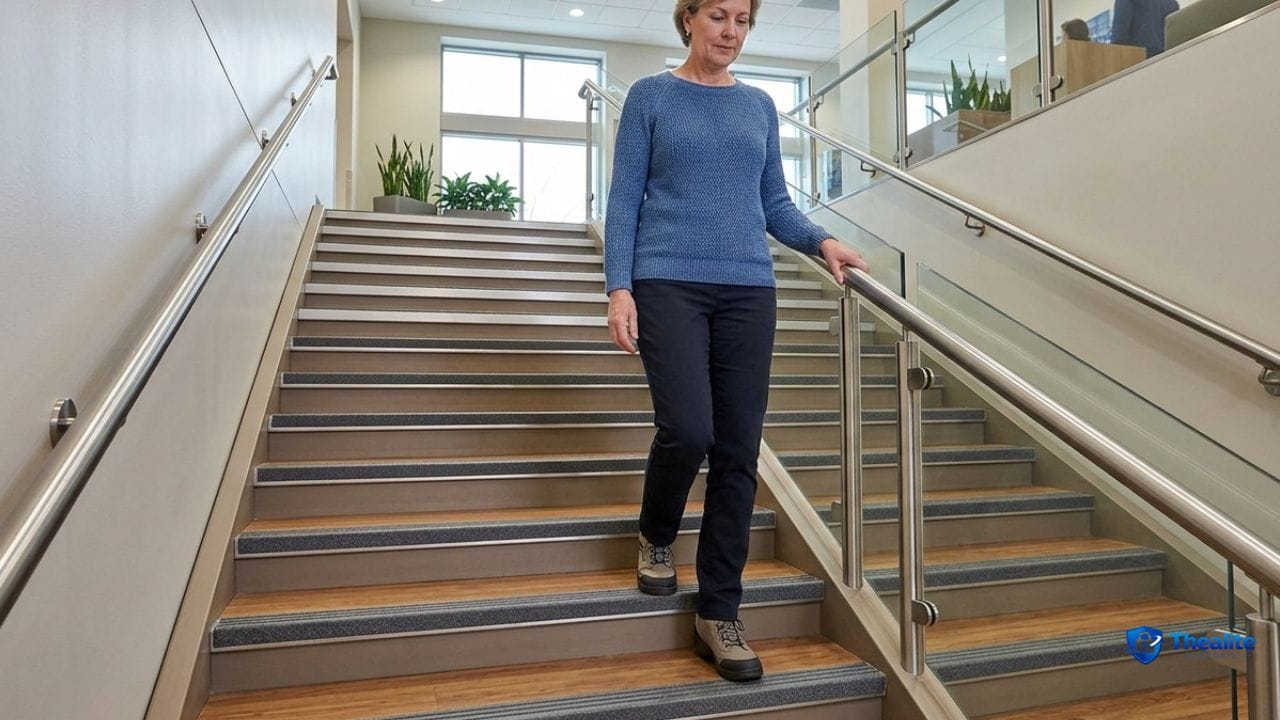
Stairs are one of the most common places people get hurt—at home and at work. A handrail looks simple, but it’s a powerful safety feature because it gives your body something stable to hold. When you slip, miss a step, or lose balance, a handrail can turn a potential fall into a quick recovery.
This guide (written for a U.S. audience) explains how stair handrails reduce injuries, what makes a handrail effective, and how to check if your handrails are doing their job.
Related reading on your site: How Do Handrails Keep You Safe • How Do Handrails on Stairs Help Keep You Safe (OSHA) • How Handrails on Stairs Help Keep You Safe • How Will These Rules Keep You Safe? • How to Keep Your Home Safe
Quick Answer
Handrails on stairs keep you safe by providing a reliable handhold that improves balance, helps you control your speed, and gives you an instant recovery point if you slip or miss a step. A sturdy, graspable, continuous handrail reduces the chance that a small mistake becomes a serious fall.
Why Stairs Cause So Many Injuries
Stairs combine multiple risk factors: changing elevation, smaller foot placement, and a forward/downward shift in weight. Common triggers include:
- Wet or dusty steps
- Poor lighting or shadows on step edges
- Carrying items (groceries, laundry, tools)
- Rushing or distraction (phones, kids, pets)
- Uneven step height or damaged stair nosing
- Clutter on stairs or landings
How Handrails Prevent Falls (Real Mechanics)
1) They give you something to grab instantly
Most stair falls begin as a small slip. A handrail gives you a recovery point so you can stabilize quickly before you tumble.
2) They improve balance control
A handrail provides an extra point of contact. That extra contact helps your body maintain balance as you shift weight step-to-step.
3) They reduce risky speed
People naturally slow down when using a rail. Controlled speed is especially important going down stairs.
4) They help when you’re carrying loads
Carrying items blocks your view and shifts your center of gravity. A handrail provides stability and can prevent a stumble from becoming a fall.
5) They support high-risk users
Kids, older adults, and anyone with limited balance benefit from a handrail. It reduces the severity and frequency of falls.
Handrail vs Guardrail: Simple Difference
A handrail is meant to be grasped for support while moving up or down stairs. A guardrail (guard) protects people from falling off an open edge (like a landing or balcony). Sometimes stair systems have both.
What Makes a Stair Handrail ‘Safe’?
A handrail only helps if it’s usable under real conditions. Key qualities:
Graspable and comfortable
- Easy to wrap your hand around (not too wide or flat).
- Not slick, sharp, splintered, or sticky.
Continuous where you need it
- Runs along the stair section where balance is shifting.
- Doesn’t stop early near the top or bottom where missteps happen.
Strong and stable
- No wobble; brackets are tight.
- Securely attached to studs/solid anchors.
Good clearance
There should be enough space between the rail and the wall so fingers can wrap around without scraping knuckles.
No snag hazards
- Smooth ends and surfaces.
- No protruding bolts that catch clothing or bags.
Common Handrail Problems (Red Flags)
- Loose or wobbly rail/brackets
- Rail ends that stop too early
- Rails blocked by furniture or stored items
- Rail too wide or flat to grip
- Splinters, rust, sharp edges, or cracked mounts
- Poor lighting that makes handrails hard to find quickly
Stair Safety Tips Beyond the Handrail
- Improve lighting at top and bottom of stairs.
- Add non-slip treads or traction strips if steps are slick.
- Keep stairs clutter-free (no shoes, toys, cords, laundry).
- Secure rugs/runners and fix loose stair nosing.
- Slow down—many falls happen when people rush.
Home safety foundation: How to Keep Your Home Safe.
Workplace Note (OSHA)
In workplaces, handrails and stair rail systems may be part of OSHA compliance. If you’re looking for OSHA-focused details and terminology, use the OSHA-specific article on your site.
Read: How Do Handrails on Stairs Help Keep You Safe (OSHA).
Handrail Inspection Checklist (Copy/Paste)
- Rail present and continuous where needed
- Secure brackets; rail doesn’t wobble
- Rail is easy to grip and comfortable
- Adequate clearance from wall/obstructions
- No sharp edges, splinters, rust, or snag points
- Stairs are well-lit and clutter-free
- Non-slip surfaces are used if steps are slick
FAQs
Do handrails really prevent falls?
Yes. Handrails provide a stable handhold that helps you recover from slips and missteps. Many injuries happen because there’s nothing to grab when balance is lost.
Is it more important to use a handrail going up or down stairs?
Both matter, but many people find descending riskier because your weight shifts forward. Using the rail going down is especially helpful.
What should I do if a handrail is loose?
Treat it as a safety hazard and repair it quickly. Loose rails can fail when someone puts weight on them.
Do stairs need handrails on both sides?
Many stairs are safer with handrails on both sides, especially for families with kids or older adults. Code requirements vary by location and stair design.
How can I make stairs safer without remodeling?
Tighten/repair the rail, improve lighting, add non-slip treads, and keep stairs clear of clutter.
Conclusion
Handrails on stairs keep you safe by giving you a dependable handhold—something you can grab instantly when you slip or lose balance. The best handrails are sturdy, graspable, and continuous, and they work best when paired with good lighting and clutter-free steps. If you maintain your handrails and use them consistently, you’ll prevent a large share of everyday stair injuries.

As a digital marketer, she has received multiple international awards, including Campaign of the Year at the 2023 European Content Awards and Best Use of Content Marketing at the 2022 Global Search Awards. Nicai holds an MSc in Marketing (First Class Honours) from the UCD Smurfit Graduate Business School and she has also completed the Artificial Intelligence Programme at Oxford University’s Saïd Business School. She is also a contributing writer for publications such as Entrepreneur and Esquire.