Keeping children safe doesn’t mean living in fear. It means building a few simple systems that reduce the most common risks—at home, outside, at school, and online. Most child safety problems happen in predictable situations: rushing, distraction, unsafe environments, and unclear rules.
This guide is written for U.S. families and focuses on practical, realistic steps. You’ll get age-appropriate safety rules, home and travel tips, online safety boundaries, and a few checklists you can copy/paste.
Quick Answer (The 8 Safety Layers)
- Make the home safer (locks, storage, smoke/CO alarms, and safe routines).
- Teach ‘stop-and-check’ habits near roads, water, and strangers.
- Use clear pickup and supervision rules (who is allowed, where, and when).
- Build online safety boundaries (privacy, messaging limits, and reporting).
- Practice emergency readiness (addresses, phone numbers, 911, and family plan).
- Use car and travel safety (car seats, seat belts, and public place plans).
- Teach body safety and trusted-adult rules (age-appropriate).
- Review and adjust as kids grow (rules change with age).
Step 1: Start With the Biggest Risks (Home + Supervision)
For most families, the highest everyday risks are accidents at home and outdoors—falls, poisoning, burns, drowning, and traffic. Supervision and environment design prevent more harm than any single gadget.
Home safety essentials
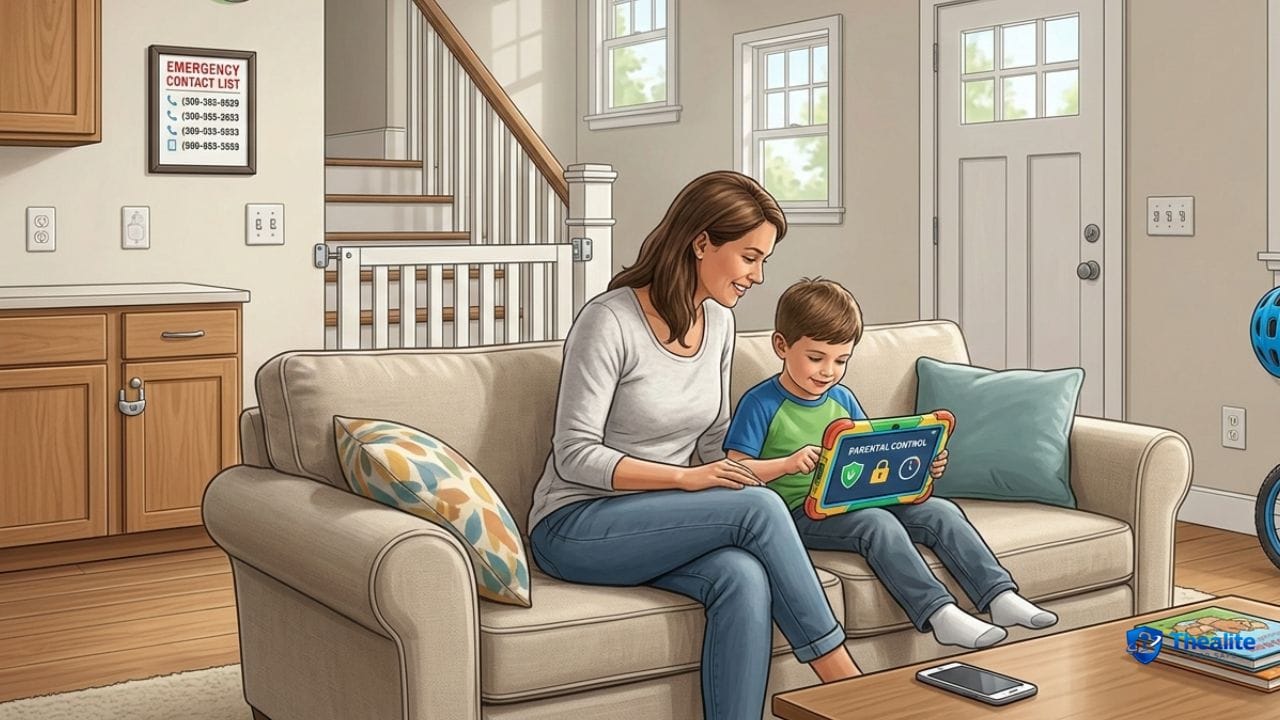
- Use working smoke alarms and carbon monoxide alarms.
- Lock up medications, cleaning products, alcohol, and cannabis products.
- Store sharp objects and tools safely; use childproof latches where needed.
- Anchor heavy furniture/TVs to prevent tip-overs.
- Use outlet covers and cord management for infants/toddlers.
- Keep small choking hazards out of reach (coins, magnets, batteries).
Home safety foundation: How to Keep Your Home Safe.
Step 2: Road and Neighborhood Safety
Traffic is a major risk. Kids need simple, repeatable rules—especially in driveways, parking lots, and neighborhood streets.
Simple rules kids remember
- Stop at the curb. Look left-right-left. Listen for cars.
- Hold hands in parking lots and near driveways (especially under age 7).
- Never chase a ball into the street—stop and ask an adult.
- Wear a helmet for bikes, scooters, and skateboards.
Driveway safety (often overlooked)
- Do a quick ‘walk-around’ the car before backing up.
- Don’t let kids play behind parked vehicles.
- Use a consistent pickup/parking routine so kids know where to stand.
Step 3: Stranger Awareness (Without Scaring Kids)
Instead of teaching kids to fear all strangers, teach clear safety behaviors: stay with trusted adults, don’t go anywhere alone, and know what to do if they feel unsafe.
Practical ‘stranger safety’ scripts
- If you get separated, stay where you are and find a mom with kids or an employee.
- Never go to a second location with anyone without checking with your parent.
- No secrets about touching; tell a trusted adult right away.
- If someone grabs you: yell, run to safety, and tell the first safe adult you see.
Deeper guide: How to Keep Your Child Safe From Predators.
Step 4: School Safety and Daily Routines
Kids are safest when routines are predictable: pickup plans, check-in expectations, and clear rules about who can take them home.
School routine checklist
- Teach your child their full name, your full name(s), and a phone number.
- Set a clear pickup plan (who, where, and what time).
- Use a family password for unexpected pickups (if your school allows).
- Make sure the school has updated emergency contacts.
- Teach kids what to do in drills in a calm, age-appropriate way.
Related: How to Keep Schools Safe.
Step 5: Online Safety (Phones, Games, Social Media)
Online safety is real-world safety. Kids face bullying, grooming attempts, scams, oversharing, and account takeovers. The best approach is boundaries + supervision + easy reporting.
Online safety rules that work
- Private accounts by default (especially for younger teens).
- No sharing personal info: address, school, phone number, schedules, or location.
- No meeting online friends in real life without a parent present.
- Parents have access to device settings and can review privacy controls.
- Kids can tell you if something weird happens without fear of losing the device immediately.
Useful guides: How to Keep Children Safe Online • How to Keep Your Child Safe on Social Media • How to Keep Kids Safe on Roblox.
Step 6: Travel and Public Places (Airports, Stores, Beaches)
Most public-place problems happen when families are distracted. A simple plan prevents panic if you get separated.
Public-place safety plan
- Choose a meeting spot (“If we get separated, meet at ___”).
- Teach kids to find a mom with kids or an employee if lost.
- Use bright clothing in crowded places for easier visibility.
- Take a quick photo of your child at the start of the day (for description if needed).
Beach/pool safety
- Use 1:1 supervision near water for young kids.
- Set a clear boundary line and check-in routine.
- Don’t rely only on floaties; use proper life jackets for weak swimmers.
Related: How to Keep Valuables Safe at the Beach.
Step 7: Car Safety (Car Seats, Seat Belts, Heat)
Car safety is one of the most important daily safety layers. The basics are non-negotiable: right seat, right fit, every ride.
Car safety basics
- Use the correct car seat/booster for your child’s age, height, and weight (follow the seat manual).
- Buckle every ride, even for short trips.
- Keep kids in the back seat when possible (safest area).
- Never leave kids unattended in a parked vehicle.
Step 8: Emergency Readiness (Kids Should Know 3 Things)
In emergencies, simple knowledge beats complicated plans. Teach kids three basics and practice occasionally.
The 3 essentials
- Their full name and your name(s).
- A phone number (or how to access emergency contact on a phone).
- Their home address (or at least street + city) and how to call 911.
Family emergency plan (simple version)
- Two meeting points: one near home, one outside the neighborhood.
- Out-of-state contact person (family member) everyone can call.
- Go-bag basics for kids: snacks, water, meds, comfort item, small flashlight.
Age-Based Safety Tips (Fast Guide)
Different ages need different rules. Here’s a practical overview:
Toddlers (1–3)
- Constant supervision near water, stairs, and kitchens.
- Lock up meds/cleaners and secure furniture.
- Teach “stop” and “come back” as safety commands.
Kids (4–9)
- Practice crossing streets and parking-lot rules.
- Teach full name + phone number + address basics.
- Set rules for being outside (stay in yard, check in).
Tweens/Teens (10–17)
- Online privacy and social media boundaries are critical.
- Discuss peer pressure, rides, parties, and safe decision-making.
- Use location sharing and check-in rules as a safety tool (not punishment).
Copy/Paste Child Safety Checklist
- Home: alarms working, hazards locked, furniture anchored
- Road: stop-and-check rules, helmets, driveway routine
- School: pickup plan, emergency contacts updated, family password (if used)
- Online: private accounts, no personal info sharing, clear reporting rules
- Public places: meeting spot + what to do if separated
- Car: proper seat/booster, buckle every ride, never left unattended
- Emergency: name, phone, address, and how to call 911
FAQs
What’s the most important rule for keeping children safe?
Use layers: safer home setup + clear supervision routines + online boundaries. No single rule covers every situation.
How do I teach safety without making kids anxious?
Use calm, practical scripts and practice occasionally (like fire drills). Focus on what to do, not scary stories.
What’s the biggest online risk for kids?
Oversharing personal information and private messaging with strangers. Privacy settings and reporting habits are key.
How can I reduce risk at school pickup?
Use a clear pickup plan, update contacts, and teach your child to only go with approved adults.
What if my child won’t tell me about online problems?
Create a “no trouble for telling” policy. If they report something, thank them first, then solve it together.
Conclusion
Keeping children safe is about systems, not perfection: a safer home, consistent rules outdoors, clear routines for school and travel, and strong online boundaries. Start with the biggest everyday risks, teach simple scripts kids can remember, and update rules as your child grows. A few small habits—done consistently—reduce risk dramatically.

As a digital marketer, she has received multiple international awards, including Campaign of the Year at the 2023 European Content Awards and Best Use of Content Marketing at the 2022 Global Search Awards. Nicai holds an MSc in Marketing (First Class Honours) from the UCD Smurfit Graduate Business School and she has also completed the Artificial Intelligence Programme at Oxford University’s Saïd Business School. She is also a contributing writer for publications such as Entrepreneur and Esquire.