This is a common question for U.S. gun owners: should you keep a gun loaded in your safe? There isn’t one universal answer, because the safest choice depends on your household (kids, visitors, roommates), your safe type (full-size safe vs quick-access lockbox), how often you access the firearm, and your ability to follow consistent handling routines.
What is universal unauthorized access is the biggest preventable risk. A loaded firearm doesn’t automatically mean “danger,” but it does raise the consequences of mistakes—especially if storage fails or handling is rushed.
This guide is safety-first. It does not cover tactics or how to harm anyone. It focuses only on storage decisions, risk reduction, and responsible routines.
Quick Answer
For most homes, the safest default is store firearms locked and secured, and consider storing them unloaded—especially if children or visitors could ever access the safe. However, some adults choose to store a firearm loaded in a locked quick-access safe as part of their personal safety plan. If you do that, safety depends on strict layers: a reliable lock, controlled access (code/biometric), safe placement, secure handling routines, and keeping the firearm out of anyone else’s reach—every time.
If your household includes children, teens, frequent guests, or anyone not trained/authorized, loaded storage increases risk if storage fails even once.
What “Loaded in a Safe” Actually Means
People mean different things by “loaded,” so clarify your situation first:
- Loaded firearm inside a full-size safe with other items (long-term storage).
- Loaded handgun inside a quick-access lockbox meant for controlled access.
- Loaded firearm stored with a magazine inserted vs magazine stored separately.
- Firearm stored in a safe with ammunition also inside (same safe vs separate container).
The safety tradeoffs change a lot depending on these details.
The Two Big Risks: Unauthorized Access and Negligent Discharge
When deciding loaded vs unloaded, focus on the two biggest preventable risks at home:
1) Unauthorized access
This includes children, teens, guests, visitors’ kids, roommates, or anyone who could get access to the safe code/key or an unlocked safe. If the firearm is loaded, a single access failure can become catastrophic.
2) Negligent discharge during handling
Most storage-related accidents happen during transitions—taking the gun out, putting it back, unloading/reloading, cleaning, or showing someone. Loaded storage can reduce the number of loading steps, but it also increases the consequences of a handling mistake if your routines are sloppy.
When Storing Unloaded Is Usually the Safer Choice
Unloaded storage is usually the safer default when any of these are true:
- Children/teens live in the home or visit often.
- You have roommates or frequent guests.
- Multiple adults share access and routines aren’t perfectly consistent.
- Your safe is a basic cabinet or a small portable safe that isn’t anchored.
- You store the firearm in a general-purpose safe where people also access documents, jewelry, or other items.
- You rarely need quick access (hunting or range firearms).
In these situations, unloading reduces the consequences of an access failure.
When Some Adults Choose Loaded Storage (And What Must Be True)
Some adults choose loaded storage in a safe for personal reasons. From a safety perspective, it should only be considered when:
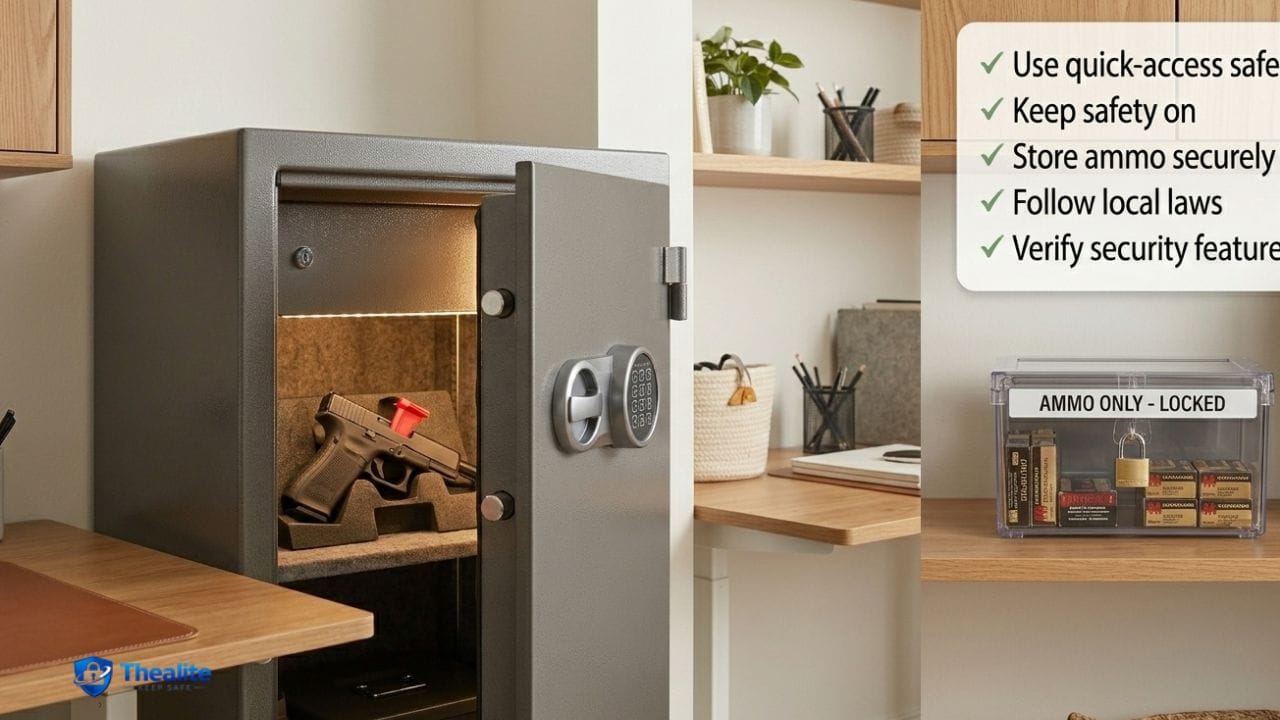
- The firearm is stored in a dedicated, reliable quick-access safe/lockbox.
- Only authorized adults know the code/biometric access method.
- The safe is mounted/anchored and placed in a secure location.
- You can commit to strict, consistent handling and storage routines.
- Children and untrained visitors cannot access the safe—ever.
In other words, loaded storage should be paired with stronger storage discipline, not weaker.
Full-Size Safe vs Quick-Access Safe: The Practical Difference
This is one of the most important distinctions.
Full-size gun safe (long-term storage)
- Often opened for multiple reasons (documents, valuables, gear).
- More people may know the code in some households.
- Risk: increased handling and access events can increase mistakes.
- Safer approach: store firearms secured, consider unloaded for general storage unless your setup is very controlled.
Quick-access handgun safe/lockbox (controlled access)
- Designed for limited, controlled access.
- Can be anchored to furniture and placed discreetly.
- If used, requires reliable locking and strict access control.
- Safer approach: if you choose loaded storage, this is generally the more appropriate container than a general-purpose safe.
Should You Store Ammo in the Same Safe?
Many households store ammunition securely, and some choose to store it separately from firearms as an extra safety layer—especially where kids are present. There isn’t one rule for every scenario, but these principles help:
- If kids/teens are in the home, consider locking ammunition separately to reduce unauthorized use risk.
- Keep ammunition dry and away from heat sources.
- Organize ammo so you’re not rummaging (less handling = fewer mistakes).
If you do store ammo in the same safe, ensure it’s still secured and organized, and that safe access is tightly controlled.
Reduce Risk If You Keep a Gun Loaded in a Safe
If you choose loaded storage in a safe, focus on layers that prevent both unauthorized access and handling errors.
Access control rules
- Limit access to authorized adults only (no code sharing).
- Don’t store safe keys where they can be found (drawers, nightstands, ‘hidden’ obvious spots).
- Use a unique code; avoid birthdays or repeating patterns.
- If the safe uses batteries, replace them on a schedule (dead batteries cause unsafe workarounds).
- Anchor the safe/lockbox so it can’t be carried away.
Handling rules (prevents negligent discharge)
- Choose one controlled area for handling (quiet, no distractions).
- Never handle firearms when rushed, tired, or impaired.
- When storing/retrieving, keep muzzle discipline and trigger discipline automatic.
- If you store loaded, avoid unnecessary loading/unloading cycles (more handling = more opportunity for mistakes).
- If you store unloaded, adopt a consistent process and stick to it every time (consistency reduces errors).
Household rules (kids and guests)
- Assume children can find things. If kids are present, locked storage is mandatory and access must be tightly controlled.
- Teach children an age-appropriate rule: Stop, don’t touch, leave the area, tell an adult.
- Before guests arrive (especially families), do a quick storage check: everything locked; keys secured.
Moisture and Rust: Safety Also Means Reliability
A safe that protects firearms from unauthorized access should also protect them from moisture damage. Rust and corrosion can affect function over time, so moisture control is part of responsible storage.
Helpful reads: How to Keep Moisture Out of a Gun Safe • Keep Guns From Rusting in Safe.
Basic moisture habits
- Keep safes in climate-stable areas when possible (garages/basements can be humid).
- Use safe-appropriate moisture control products and check them periodically.
- Don’t store wet cases/holsters inside the safe; dry first.
Legal Note: Safe Storage Rules Vary by State
U.S. safe storage laws vary by state and sometimes by city. In many places, there are additional rules or penalties if a child gains access to an unsecured firearm. Check your local requirements and consider a conservative safety approach—especially if children ever visit your home.
Decision Guide: What’s Best for Your Situation?
Use this quick decision guide:
If kids/teens are in the home or visit often
- Prioritize locked storage and strict access control.
- Unloaded storage is usually the safer default.
- Consider storing ammo locked separately.
If only trained adults live in the home and access is tightly controlled
- A locked safe is still mandatory when not under direct control.
- If you choose loaded storage, a dedicated quick-access safe is generally the more controlled container.
If you open the safe for many non-firearm reasons
- Consider unloaded storage for firearms inside that safe.
- Or separate: a dedicated handgun lockbox for controlled access, and a larger safe for long-term storage.
If your safe is portable or not anchored
- Anchor it or upgrade—otherwise it can be stolen.
- Until then, reduce risk: strict access control and conservative storage choices.
What to Do If You Find a Gun Unsecured
If you discover a firearm left out or unlocked:
- Keep kids/visitors away and secure it immediately (locked storage).
- Use safe handling rules if you must move it; don’t handle unnecessarily.
- Identify why storage failed (distraction, no routine, no nearby lockbox).
- Fix the system (add a lockbox, improve routines, reduce handling areas).
Copy/Paste Checklist: Loaded vs Unloaded Storage
- Locked storage every time when not under direct control
- Kids/teens/guests present? Default to unloaded + stricter access control
- If choosing loaded storage: use a dedicated quick-access safe, anchored and discreet
- Never share codes; don’t hide keys in obvious places
- Consider locking ammo separately (especially with kids)
- Use one controlled handling area; avoid rushed handling
- Moisture control in the safe to prevent rust
- Know local safe storage laws and follow the most conservative safe option for your household
FAQs
Is it safer to keep a gun unloaded in a safe?
For many households—especially those with children, teens, or frequent visitors—unloaded storage is the safer default because it lowers the consequences if access fails.
Can I keep a loaded gun in a quick-access safe?
Some adults choose that setup, but safety depends on strict access control, a reliable lock, anchoring the safe, and consistent handling routines. It’s not recommended in homes where kids or untrained visitors could gain access.
Should I store ammunition in the same safe as the gun?
Many people secure ammo as well, and some store it separately as an extra safety layer—especially in homes with children. The safest approach is the one that prevents unauthorized access in your household.
What’s the biggest risk with loaded storage?
Unauthorized access and the higher consequences of any storage failure. It also raises the stakes of mistakes during handling.
Does moisture in a safe matter for safety?
Yes. Rust and corrosion can affect reliability over time. Moisture control is part of responsible storage.
Conclusion
Whether you store a firearm loaded in a safe should be a careful, household-specific decision. The safest universal rule is locked storage with strict access control. If children or untrained visitors could ever access your safe, unloaded storage is usually the safer default. If only trained adults have access and you choose loaded storage, use a dedicated, anchored quick-access safe and follow consistent handling routines every time.

As a digital marketer, she has received multiple international awards, including Campaign of the Year at the 2023 European Content Awards and Best Use of Content Marketing at the 2022 Global Search Awards. Nicai holds an MSc in Marketing (First Class Honours) from the UCD Smurfit Graduate Business School and she has also completed the Artificial Intelligence Programme at Oxford University’s Saïd Business School. She is also a contributing writer for publications such as Entrepreneur and Esquire.