Home firearm safety is mostly about responsible storage and consistent routines. The biggest preventable risks at home are unauthorized access (especially by children or visitors), theft, and unsafe handling during storage or transport inside the house. A strong safety plan makes it hard for the wrong person to access a firearm—and easy for the responsible owner to store it safely every time.
This U.S.-focused guide walks through practical, safety-first steps for keeping guns safe at home. It does not cover tactical use or how to harm anyone—only secure storage, child safety, and risk reduction.
Quick Answer (The Safe Storage System)
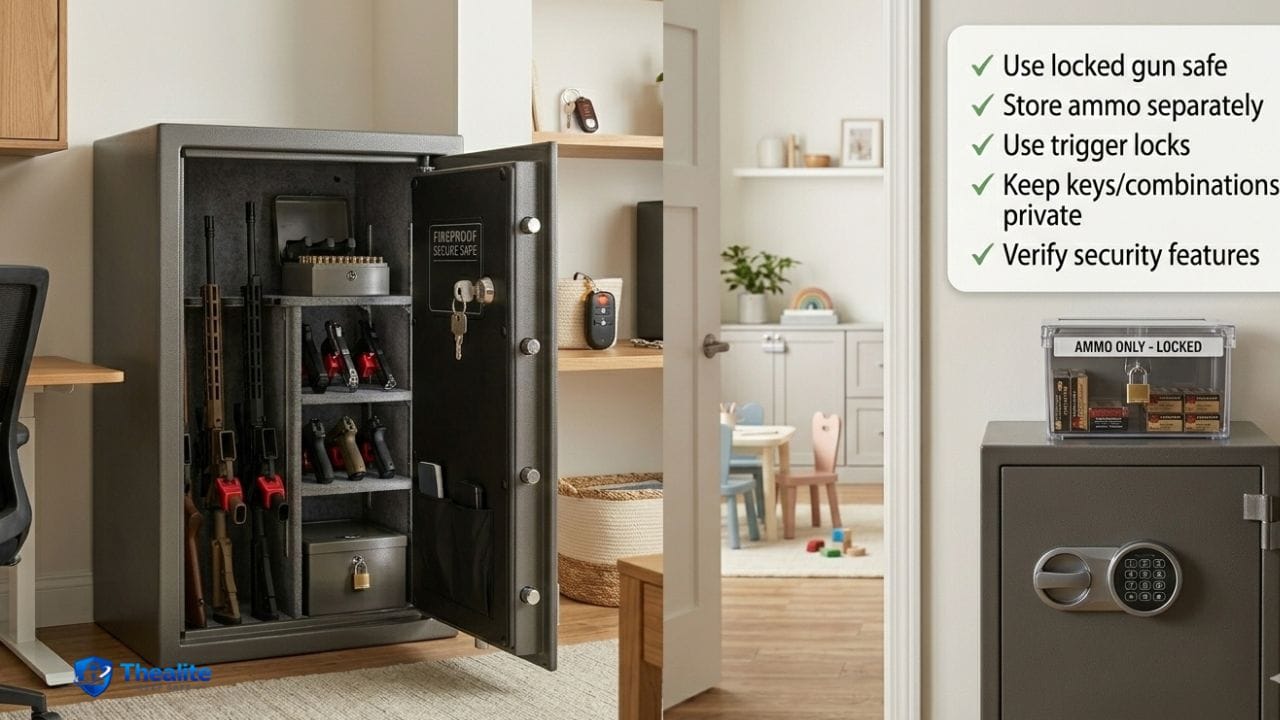
- Store every firearm locked (safe, lockbox, or locking cabinet) when not under your direct control.
- Keep keys/codes inaccessible to children and visitors; don’t hide keys in obvious spots.
- Use a consistent routine: return-to-safe immediately after use, cleaning, or carry removal.
- Consider securing ammunition separately—especially in homes with kids.
- Choose storage that fits your household (full-size safe vs quick-access lockbox).
- Reduce theft risk: bolt down safes, place them discreetly, and avoid advertising ownership.
- Prevent damage: control moisture to reduce rust and protect optics/paperwork.
- If a gun is found unsecured: secure it immediately and fix the storage system that failed.
Step 1: Safe Handling Rules Still Matter
Even when your focus is storage, safe handling basics prevent accidents during cleaning, moving, or securing a firearm.
- Treat every firearm as if it’s loaded.
- Keep the muzzle pointed in a safe direction.
- Keep your finger off the trigger until ready to shoot.
- Know your target and what’s beyond it (applies during handling/transport too).
Step 2: Pick the Right Storage Method
The best storage choice depends on who lives in the home, your space, and how many firearms you own.
Full-size gun safe
- Best for: multiple firearms and long guns; stronger theft deterrence when bolted down.
- Safety keys: locked every time, limited code access, bolted to floor/wall when possible.
Locking cabinet
- Best for: basic locked storage on a budget.
- Note: cabinets can be pried more easily than safes, so add layers (placement, alarms, privacy).
Quick-access lockbox (handguns)
- Best for: preventing child access while allowing controlled adult access.
- Choose reliable locks and secure/anchor the box if possible.
Cable/trigger locks (extra layer)
Locks can help reduce unauthorized use, but they’re best as an additional layer—not a replacement for locked storage.
Step 3: Childproofing and Household Rules
If children are ever in your home—even occasionally—secure storage is non-negotiable.
Childproofing rules that work
- Locked storage every time; no exceptions ‘just for a minute.’
- Keep keys/codes private; never share with minors.
- Do not store firearms in nightstands, dresser drawers, or closets.
- Use a consistent ‘return to safe’ routine after any handling.
- If friends’ kids visit, double-check storage (guest day = higher risk).
A simple kid script
Age-appropriate rule many families use: **Stop. Don’t touch. Leave the area. Tell an adult.**
Step 4: Theft Prevention
Theft prevention is part of safety. A stolen firearm is a major risk to the community and to you.
Theft-prevention steps
- Bolt the safe to the floor or wall when possible.
- Place the safe in a discreet location (not obvious to visitors).
- Avoid advertising ownership (social media posts, stickers on vehicles).
- Use home security basics: locks, lighting, and alarms/cameras if feasible.
- Limit who knows the safe location and code.
Related home security: How to Keep Your Home Safe.
Step 5: Ammunition Storage
Storage practices vary, but many households add safety by securing ammunition, often separately in homes with kids.
- Store ammunition in a locked container or locked portion of the safe.
- Keep ammo dry and away from heat sources.
- Label containers to reduce unnecessary handling.
Step 6: Moisture and Rust Control
Moisture is one of the biggest long-term problems in safes, especially in humid climates or spaces with temperature swings. A good setup reduces condensation and helps prevent rust.
Practical moisture control habits
- Keep safes in climate-stable areas when possible (garages often have swings).
- Use safe-appropriate moisture control (desiccants, dehumidifiers).
- Check periodically for condensation or rust spots.
- Don’t store wet cases/holsters in the safe—dry first.
More on moisture/rust: How to Keep Moisture Out of a Gun Safe • Keep Guns From Rusting in Safe • How to Keep a Safe Dry.
Step 7: Storage Routines That Prevent Mistakes
Most storage failures are routine failures—someone sets a firearm down ‘for a second’ and gets distracted.
A simple routine that works
- Designate one safe handling area in the home (controlled, no distractions).
- After any handling: secure immediately first, then do other tasks.
- Before guests arrive: quick check—everything locked, keys secured.
- If multiple adults: agree on shared rules (consistency matters).
Step 8: Vehicle and Temporary Storage
Vehicles increase theft risk. If you must store a firearm temporarily in a vehicle, follow local laws and use locked vehicle storage designed for firearms.
Related heat/vehicle safety: Is It Safe to Keep a Loaded Gun in a Hot Car • Is It Safe to Keep a Gun in a Hot Car.
Step 9: Know Your Local Laws
Safe storage laws vary by state (and sometimes by city). If children are in the home, many places have additional rules or penalties related to access prevention. Check your state/local requirements and update your plan if your household changes.
If You Discover an Unsecured Firearm
If you find a firearm left out or unlocked, prioritize safety first:
- Keep children/visitors away and secure the firearm immediately (locked storage).
- Use safe handling rules if you must move it; don’t handle unnecessarily.
- Identify why the system failed (distraction, no nearby lockbox, no routine).
- Fix the system (add a lockbox, improve routines, reduce handling areas).
Copy/Paste Checklist: How to Keep Guns Safe at Home
- Every firearm locked when not under direct control (safe/lockbox/cabinet)
- Keys/codes secured and private; never in obvious hiding spots
- Childproofing: no drawer/closet storage; teach ‘Stop, Don’t Touch, Leave, Tell’
- Secure ammo (often separately in homes with kids)
- Theft prevention: bolt safe down; discreet placement; don’t advertise ownership
- Moisture/rust control: climate-stable placement + desiccant/dehumidifier; dry gear before storing
- Routine: handle in one controlled area; secure immediately after use
- Vehicle storage minimized; avoid leaving firearms in cars when possible
- Know local safe storage laws; update plan when household changes
FAQs
What is the safest way to store guns at home?
Locked storage is the standard: a quality gun safe for multiple firearms or a secured lockbox for a handgun, with keys/codes kept away from children and visitors.
Should I keep guns and ammo stored separately?
Many households—especially those with children—choose to store ammunition locked and separate from firearms as an extra layer of safety. Local rules and personal needs vary.
Is a gun safe in the garage a good idea?
Garages often have temperature swings, humidity, and easier forced entry. If you must use a garage, focus on bolting the safe down and controlling moisture, but a climate-stable interior location is usually better.
How do I keep guns from rusting in a safe?
Control moisture and avoid storing wet items. Use safe-appropriate moisture control and periodically check for condensation or rust spots.
What should I teach kids about gun safety?
A simple, memorable rule is: Stop, don’t touch, leave the area, and tell an adult. Pair that with locked storage so kids don’t have access in the first place.
Conclusion
Keeping guns safe at home is about consistent locked storage, preventing unauthorized access, and reducing theft and rust risks. Choose storage that fits your household, bolt down safes when possible, keep keys/codes private, and build a routine that makes safe storage automatic.

As a digital marketer, she has received multiple international awards, including Campaign of the Year at the 2023 European Content Awards and Best Use of Content Marketing at the 2022 Global Search Awards. Nicai holds an MSc in Marketing (First Class Honours) from the UCD Smurfit Graduate Business School and she has also completed the Artificial Intelligence Programme at Oxford University’s Saïd Business School. She is also a contributing writer for publications such as Entrepreneur and Esquire.