Travel is supposed to be fun, but money problems can ruin a trip fast—whether that’s a stolen wallet, a hacked payment app, or a drained checking account after your card gets skimmed. The good news is you can dramatically reduce risk with a simple travel money system: split your funds, use safer carrying methods, and lock down your accounts before you leave.
This guide is written for U.S. travelers and covers practical, real-world steps to protect cash and cards on domestic trips and international travel. You’ll also get a quick recovery plan, so if something goes wrong, you know what to do immediately.
Related reading on your site: Keep Passport Safe While Traveling • How to Keep Valuables Safe at the Beach • How to Keep Your Phone Safe From Pickpockets • How to Keep Debit Card Safe
Quick Answer (The Travel Money System That Works)
To keep your money safe while traveling:
• Don’t carry everything in one place—split cash and cards.
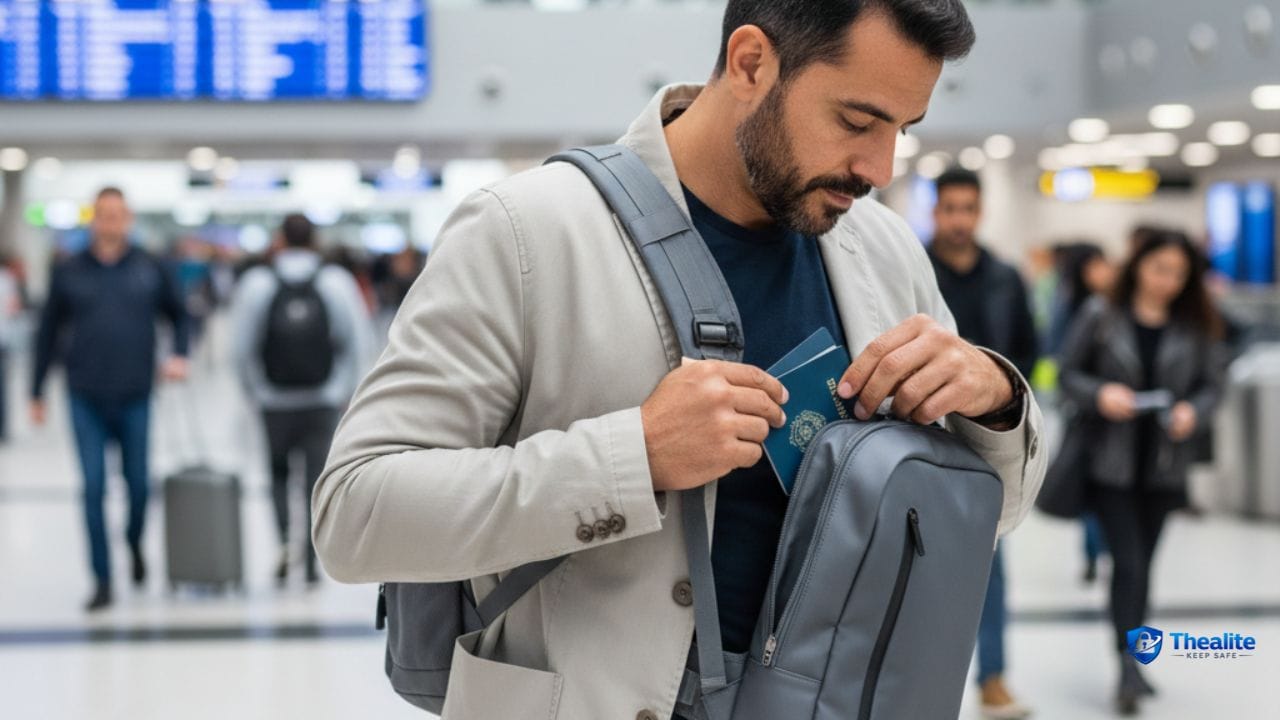
• Use a zippered front pocket or crossbody bag worn in front.
• Prefer credit cards over debit for purchases (when possible) and limit debit use to known ATMs.
• Keep a small “daily” cash amount accessible and a backup stash hidden.
• Turn on account alerts, travel notifications (if needed), and strong phone security.
• Have a rapid response plan: freeze cards, lock phone, and change key passwords if stolen.
Step 1: Don’t Carry All Your Money Together
The biggest travel money mistake is putting everything in one wallet or one bag. If that item is stolen, you lose your cash, cards, IDs, and the ability to access your accounts.
A safer split strategy
- Primary wallet: one payment card + small cash for the day.
- Backup card: stored separately (hotel safe, hidden pocket, or different bag).
- Emergency cash: a small stash in a separate location (not the same as your wallet).
- Digital backup: card numbers and bank contact info stored securely (not in plain notes).
Step 2: Choose the Right Way to Carry Money (Pickpocket-Resistant)
Pickpockets target easy wins: back pockets, open bags, and distracted travelers. Your carry method is the #1 defense.
Best carrying options
- Crossbody bag worn in front with zipper closed.
- Belt bag (fanny pack) worn in front.
- Zippered front pocket (tight fit).
- Inner jacket pocket with zipper or buttoned flap.
Avoid these travel habits
- Back pockets for wallets/phones.
- Open tote bags.
- Backpack outer pockets for cash/cards.
- Placing your wallet/phone on restaurant tables or bar counters.
Related: How to Keep Your Phone Safe From Pickpockets (your phone is often the key to your money).
Step 3: Use Credit Cards Strategically (They’re Often Safer Than Debit)
For many U.S. travelers, credit cards are safer for everyday purchases because they often offer stronger fraud protections and don’t directly expose your checking account balance. Debit cards can still be used—but it’s smart to limit debit use to cash withdrawals at trusted ATMs.
Best practices for cards
- Carry at least two cards (stored separately) in case one is blocked or lost.
- Use tap-to-pay when available (reduces card handling).
- Don’t hand your card to strangers; watch it when it leaves your sight.
- Turn on transaction alerts so you see charges immediately.
Step 4: Cash Safety: How Much to Carry + Where to Keep It
Cash is useful for tips, small purchases, and places that don’t accept cards. But carrying too much cash increases loss risk because cash is hard to recover.
A practical cash plan
- Carry only what you expect to spend that day.
- Keep a second small stash hidden for emergencies (separate from wallet).
- Use a money clip or small pouch inside a zippered compartment.
- Avoid flashing large bills in public.
Related home/backup cash guidance: How to Keep Cash Safe at Home (for after you return).
Step 5: ATM Safety (Avoid Skimmers and Bad Locations)
ATMs are common targets for skimmers, shoulder-surfing, and distraction theft. Use these rules to reduce risk.
Safer ATM habits
- Use ATMs inside bank branches when possible.
- Avoid ATMs in isolated areas, tourist traps, and late-night convenience stores.
- Cover the keypad when entering your PIN.
- If the card slot looks loose, bulky, or tampered with—leave and use another ATM.
- Take cash and put it away immediately before stepping aside.
Step 6: Protect Payment Apps and Mobile Wallets
Many travelers use Cash App, Venmo, Apple Pay, Google Pay, or banking apps. If your phone is stolen or compromised, money can move fast.
Mobile money safety checklist
- Use a strong phone passcode (6+ digits or alphanumeric) + biometrics.
- Turn on Find My / Find My Device and test it before travel.
- Use app-level locks/PINs for banking and payment apps if available.
- Disable lock-screen previews for sensitive notifications.
- Avoid public Wi‑Fi for banking unless you use a trusted VPN.
Related: Is It Safe to Keep Money in Cash App and Keep Bank Account Safe Online.
Step 7: Hotel, Rental, and Beach Money Safety
Where you sleep and where you relax are common theft zones—because people let their guard down.
In hotels and rentals
- Use a hotel safe for backup card, spare cash, and passport (if you trust it).
- Don’t leave wallets and cash on visible surfaces.
- Keep a small “grab-and-go” pouch for day trips (one card + small cash).
At the beach or pool
- Bring only what you need for the day—don’t take all cards/cash.
- Use a waterproof pouch you keep on you, not in a bag on the sand.
- If you must leave items, use the buddy system (one person stays with valuables).
Related: How to Keep Valuables Safe at the Beach.
Step 8: Document and Backup Your Essentials
If your wallet is stolen, having the right info makes recovery much faster. The goal is to avoid being stranded without access to money.
Before you leave, do this
- Save bank and card issuer phone numbers (and keep a copy offline).
- Know how to freeze/lock your cards in your banking apps.
- Photocopy or securely store ID/passport details (store securely, not in a plain note).
- Set up travel alerts/notifications if your bank recommends it.
Related: Keep Passport Safe While Traveling for document safety tips.
What to Do If Your Money, Wallet, or Cards Are Stolen (Fast Plan)
If theft happens, act quickly. The first hour matters most.
First 10 minutes
- Get to a safe location (don’t chase).
- Freeze/lock cards in your banking apps if possible.
- If your phone is missing too, use Find My / Find My Device to lock it.
First hour
- Call card issuers and your bank to report theft and cancel cards.
- Change your email password (email controls account resets).
- Call your carrier if your phone was stolen to suspend service.
Within 24 hours
- File a police report (useful for insurance and documentation).
- Monitor accounts closely and set fraud alerts if needed.
- Contact your hotel/venue—sometimes items are recovered quickly.
Common Mistakes Travelers Make
- Carrying all cards and cash together.
- Using a debit card for everything and exposing the checking account.
- Leaving money/phones on tables in busy places.
- Using random ATMs in tourist areas without checking for tampering.
- Not enabling account alerts and phone tracking before the trip.
Travel Money Safety Checklist (Copy/Paste)
- Split money: primary wallet + backup card + emergency cash (stored separately)
- Carry in front + zipped (crossbody or zippered front pocket)
- Use credit for purchases; limit debit to trusted ATMs
- Turn on transaction alerts for cards and bank accounts
- Enable Find My / Find My Device + strong phone passcode
- Avoid risky ATMs; cover PIN and watch for tampering
- Use hotel safe or secure storage for backups
- If stolen: lock cards, secure email, contact bank/carrier, file report
FAQs
What’s the safest way to carry money while traveling?
Split your money and cards. Carry only what you need for the day in a zippered front pocket or a crossbody bag worn in front, and store a backup card and emergency cash separately.
Should I use debit or credit while traveling?
Many travelers prefer credit cards for purchases because they often have stronger fraud protections and don’t directly expose checking funds. Use debit mainly for ATM withdrawals at trusted machines.
How much cash should I travel with?
Enough for daily spending and small emergencies, but not so much that losing it would ruin the trip. Keep most funds in cards/accounts and carry a limited daily amount.
Is it safe to use ATMs abroad or in tourist areas?
It can be, but choose bank-branch ATMs when possible, check for tampering, and cover your PIN. Avoid isolated or sketchy locations.
What do I do first if my wallet is stolen?
Lock/freeze cards immediately using your banking app or by calling issuers. Then secure email accounts and monitor transactions.
Conclusion
To keep your money safe while traveling, you don’t need expensive gear—you need a system. Split cash and cards, carry money in front and zipped, use safer payment methods, choose ATMs carefully, and lock down your phone and accounts before you leave. With a simple plan and a quick-response checklist, you can enjoy your trip with much less stress.

As a digital marketer, she has received multiple international awards, including Campaign of the Year at the 2023 European Content Awards and Best Use of Content Marketing at the 2022 Global Search Awards. Nicai holds an MSc in Marketing (First Class Honours) from the UCD Smurfit Graduate Business School and she has also completed the Artificial Intelligence Programme at Oxford University’s Saïd Business School. She is also a contributing writer for publications such as Entrepreneur and Esquire.